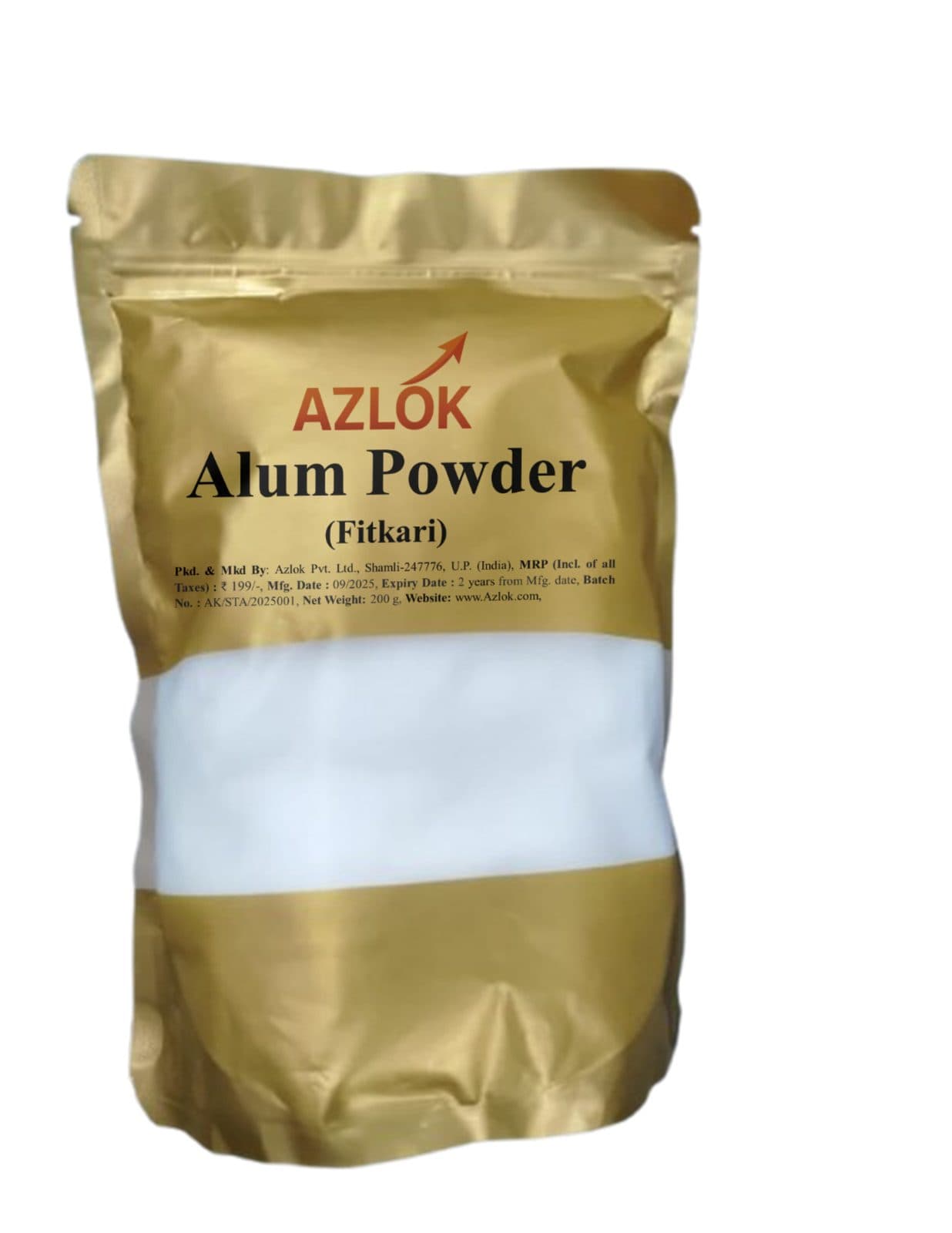
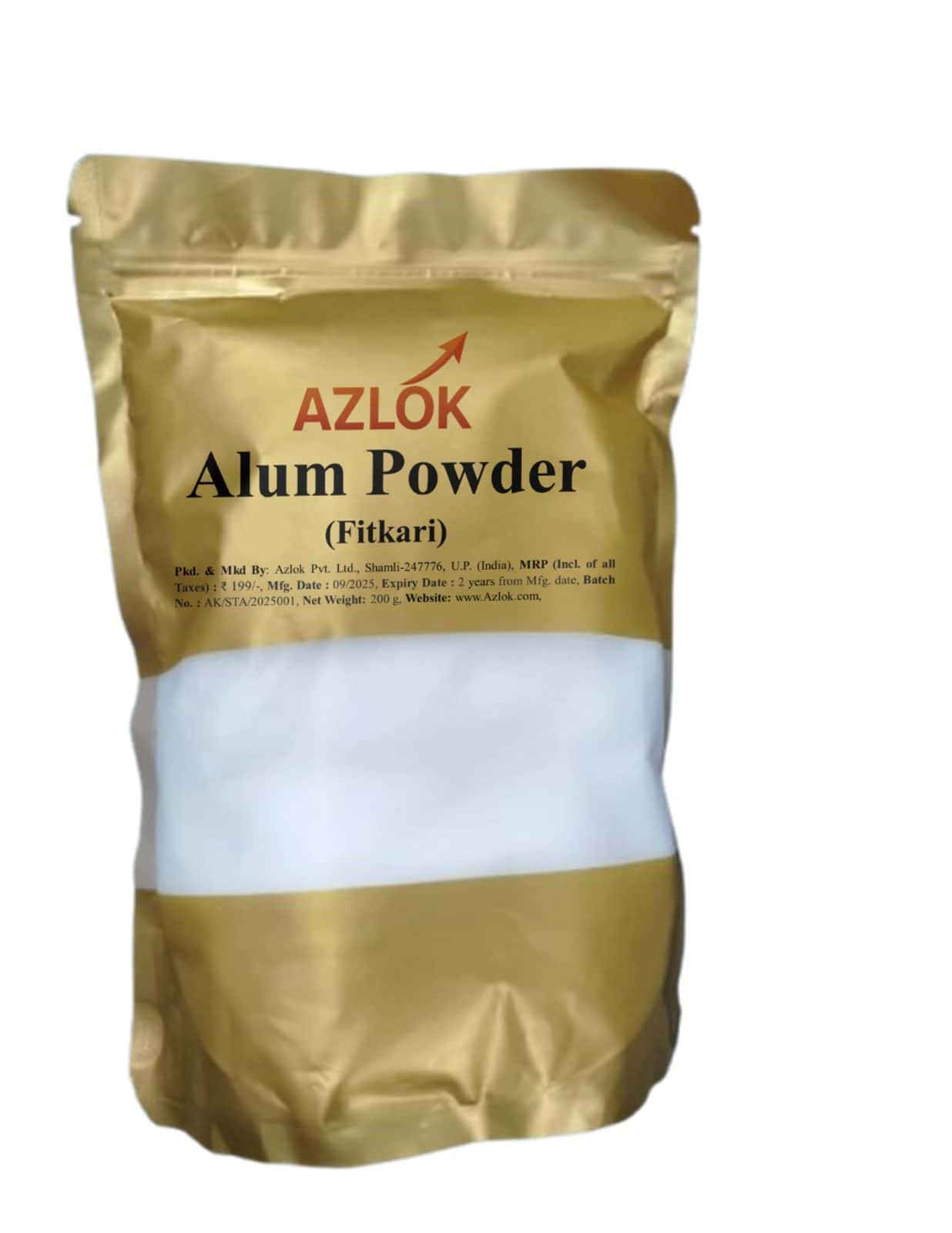
Powdered phitkari — potassium alum — is the same mineral as the barber's block, just milled so you can dissolve and measure it. That small change unlocks a surprising number of uses, because now you can stir it into water, make rinses, and dose it precisely.
Here's a practical rundown, with the amounts that actually matter.
Water clarifying (the classic use)
Alum is a coagulant. Add a pinch to cloudy water, stir, and it makes the fine suspended particles clump into larger flocs that sink — leaving clearer water on top to decant. It is a traditional pre-treatment step, not a substitute for proper disinfection or boiling when water safety is in question. Use sparingly: a little goes a long way, and over-dosing leaves a taste.
Skin and after-shave
Dissolve a little in water for an astringent face or after-shave splash — same skin-tightening, antiseptic action as the block, just easier to apply over larger areas.
Oral care
A very dilute alum rinse (a small pinch in a glass of warm water, swished and spat out — never swallowed) is a traditional remedy for minor mouth ulcers and gum soreness because of its astringent, antibacterial effect. Keep it occasional and weak.
Around the house
- Natural deodorant solution for underarms and feet.
- Soak for sweaty, odour-prone feet.
- Traditional setting agent in some natural dyeing (a mordant).
- Minor styptic for small shaving nicks (dab of paste).
Safety
Alum is for external and traditional topical/oral-rinse use — don't swallow it, and keep concentrations low. Discontinue if it irritates your skin, and store the powder airtight and dry so it doesn't cake.
Frequently Asked Questions
How much alum do I use to clear cloudy water?
Only a pinch per litre or so — just enough to make particles clump and settle, then decant the clear water. Too much leaves a taste. It's a clarifying step, not a replacement for boiling/disinfection when safety is uncertain.
Can I use alum powder for mouth ulcers?
A weak rinse (a small pinch in warm water, swished and spat — never swallowed) is a traditional remedy for minor ulcers and gum soreness. Stop if it irritates and see a dentist for persistent sores.
Is alum powder safe on skin?
Yes, as a dilute astringent splash or paste it's well tolerated by most people. It can be drying with heavy use — moisturise afterwards and patch test if sensitive.
How should I store alum powder?
Airtight and dry. Alum readily absorbs moisture and cakes; a dry spoon and a sealed jar keep it free-flowing.
Azlok Alum (Fitkari) Powder is pure potassium alum, milled for easy dosing — from water clarifying to skincare and oral rinses. Keep it sealed and dry.
Related reading
- Sandalwood Essential Oil: How to Use It for Skin, Calm and Fragrance
- Aluminium Candle Moulds: A Beginner's Guide to Making Pillar Candles at Home
- How to Use an Aluminium Pillar Candle Mould for Smooth, Even Candles
- Aluminium Pillar Candle Mould (2 x 2 Inch): A Beginner-Friendly Guide to Making Pillar Candles