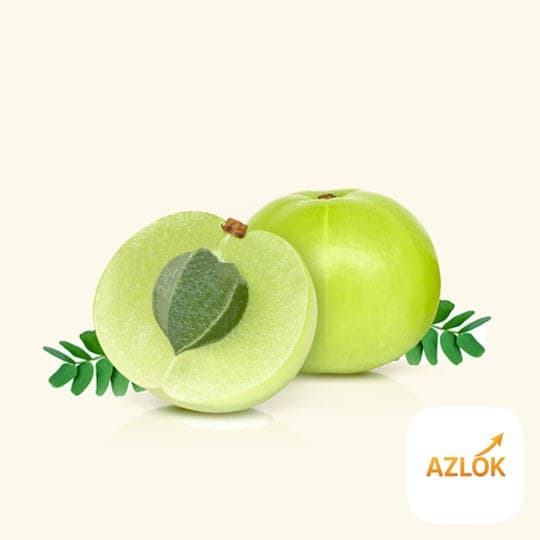

Amla (Gooseberry) Fruit Extract is a concentrated botanical liquid made from Indian gooseberries (Phyllanthus emblica), used at 1–2% in cosmetic formulations like serums, shampoos and hair oils to add antioxidants, vitamin C and polyphenols. Azlok's version is a 4:1 extract, meaning roughly 4 kg of fruit yields 1 kg of extract, so a little goes a long way. It is intended for non-edible, DIY and professional personal care use only.
What is Amla Fruit Extract?
Amla, also known as amalaki or aonla, has been a staple of Indian home care for generations. This liquid extract captures the water-soluble goodness of the fruit — antioxidants, tannins and vitamin C — in a form that mixes easily into modern formulations. Azlok offers it in both water-soluble (glycerin-based, alcohol-free) and oil-soluble (soy oil) forms, so you can pick the version that suits your recipe.
Key details makers ask about:
- Botanical name: Phyllanthus emblica (Emblica officinalis)
- CAS number: 90028-28-7
- Strength: 4:1 herb-to-extract ratio
- Appearance: colourless to pale yellow with a characteristic odour
- Free from: gluten, artificial colour, heavy metals and fertilisers
How to use it in formulations
The recommended dosage is 1–2% of your total formula. For a 100 g batch of lotion or serum, that works out to about 1–2 g of extract. Adding more won't necessarily improve results and can affect the texture or scent of your product.
- Water-soluble (glycerin) extract: blend into the water phase of face washes, shampoos, toners, gels and lotions.
- Oil-soluble (soy oil) extract: stir into hair oils, balms, serums and oil-based cleansers.
- Hair care: add to shampoos, conditioners and scalp oils where amla is traditionally valued.
- Skin care: use in face masks, creams and antioxidant serums.
Always add heat-sensitive actives like this extract during the cooling phase, once your formula has dropped below about 40°C, to protect the vitamin C and polyphenols.
Tips and safety notes
This is a cosmetic raw material, not a food or supplement. Please keep these points in mind:
- For external use only. Do not ingest the extract.
- Patch test your finished product on the inner forearm before wider use, especially on the face.
- The oil-soluble grade uses soy oil, so note this if you or your customers have soy sensitivities.
- The product contains BHT as a stability preservative in certain grades; check the label and COA for your batch.
- Keep out of reach of children and store away from direct sunlight.
- Include a broad-spectrum preservative in any water-containing formula to prevent microbial growth.
Buying and storage
Azlok supplies Amla Fruit Extract from 100 GM jars right up to 25 KG for small businesses, starting at ₹349. Because it is a 4:1 concentrate used at low percentages, even the smallest pack goes a long way in a home workshop.
For best shelf life:
- Store in a cool, dry place, tightly closed.
- Keep away from heat and sunlight.
- Use clean, dry tools when scooping or pouring to avoid contamination.
- The stated shelf life is 2 years when stored correctly.
Ask for the COA and MSDS relevant to the grade (water-soluble or oil-soluble) you buy — these documents help with formulation and, if you sell products, with compliance.
FAQ
Can I eat or drink Amla Fruit Extract?
No. This is a cosmetic-grade extract meant for topical formulations like serums, shampoos and hair oils. It is not intended for consumption.
How much should I add to my recipe?
Use 1–2% of your total batch weight. For 100 g of product, that is roughly 1–2 g of extract.
What is the difference between the water-soluble and oil-soluble versions?
The water-soluble grade is extracted in vegetable glycerin and blends into water-based products. The oil-soluble grade is extracted in soy oil and suits hair oils, balms and other oil-based formulas.
Does the extract need a preservative?
The extract itself is stabilised, but any finished product containing water needs its own broad-spectrum preservative to stay safe over time.
What does the 4:1 ratio mean?
It means the extract is concentrated so that about 4 kg of amla fruit yields 1 kg of extract, giving you a potent botanical at low usage levels.