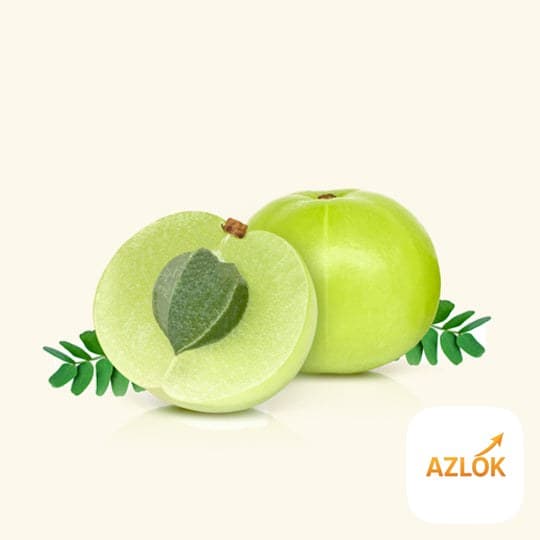

Amla oil is a nutrient-rich carrier oil made from the Indian gooseberry (Phyllanthus emblica), and its main use is to nourish the scalp and support stronger, healthier-looking hair. It carries the natural vitamin C, antioxidants and fatty acids of the amla fruit, which is why it has been a fixture in Indian hair care for generations.
What amla oil actually does
Amla oil works mostly on the scalp and hair shaft rather than being a miracle cure. Used regularly, it helps in a few honest, practical ways:
- Conditions the scalp and helps control dryness and flakiness.
- Reduces breakage by coating and softening the hair shaft.
- Improves texture, leaving hair feeling smoother and looking naturally shiny.
- Supports hair health when used consistently as part of a routine.
It is a liquid oil, yellowish to slightly green in colour, with the characteristic earthy amla scent that many people find familiar and comforting.
How to use amla oil
The classic method is a warm scalp massage. Here is a simple routine:
- Take a small amount of amla oil in a bowl. Warm it slightly by placing the bowl in warm water — do not overheat.
- Part your hair and apply the oil directly to the scalp with your fingertips.
- Massage gently in circular motions for a few minutes to help spread it evenly.
- Work the remaining oil down the lengths, paying attention to dry ends.
- Leave it on for 30 minutes to an hour, or overnight if you prefer, then wash with a mild shampoo.
Two to three times a week is plenty for most people. Because amla oil is fairly rich, a little goes a long way.
Blending with other oils
Amla oil blends well with several lighter carrier oils, which lets you adjust texture and feel:
- Coconut oil — for deeper conditioning and the traditional Indian oiling feel.
- Jojoba oil — closer to the scalp's natural sebum, lighter finish.
- Grapeseed oil — very light, good for those who dislike heavy oils.
A common mix is roughly equal parts amla oil and a lighter oil. You can also add a drop or two of an essential oil like rosemary or lavender for fragrance, but use it sparingly and diluted.
Tips and safety notes
Amla oil is meant for external, cosmetic use — for hair and scalp, not for eating.
- Patch-test first. Apply a little to your inner forearm and wait 24 hours to check for any irritation, especially if you have sensitive skin.
- Do not ingest. This is a cosmetic-grade oil for topical use.
- Mind the colour. The natural greenish tint can lightly stain very light fabrics, so protect pillowcases if you oil overnight.
- Keep away from children and store safely.
- If you have a scalp condition or ongoing hair loss, treat oiling as supportive care and speak to a doctor for medical concerns.
Buying and storage
Azlok's amla oil is sourced from Indian amla fruit and comes in sizes from a handy 100 gm bottle right up to 25 kg for makers and small businesses, with pricing starting at around ₹249. The smaller packs suit home users who want to try it, while the bulk sizes work for soap, oil-blend and cosmetic formulators.
To keep it fresh across its roughly two-year shelf life:
- Store in a cool, dry place away from direct sunlight.
- Keep the cap tightly closed to limit exposure to air.
- Use clean, dry hands or a spoon so you don't introduce water or contaminants.
If you are formulating products, the technical details — specific gravity around 0.931, refractive index near 1.480, flash point 218°C and CAS No. 90028-28-7 — are useful for spec sheets. Ask for the COA and MSDS when buying in bulk.
FAQ
Can I leave amla oil in my hair overnight?
Yes. Many people apply it at night and wash it out in the morning. Cover your pillow, as the natural tint can lightly mark light fabrics.
How often should I use amla oil?
Two to three times a week is a good routine for most hair types. Adjust based on how dry or oily your scalp feels.
Can amla oil be mixed with coconut oil?
Yes, it blends well with coconut, jojoba and grapeseed oils. Mixing with a lighter oil makes application easier and gives a less heavy finish.
Is amla oil safe for all hair types?
It generally suits most hair types, though it is fairly rich. Do a patch test first, and use smaller amounts if your hair is fine or your scalp is naturally oily.
Can I eat amla oil?
No. This is a cosmetic oil for external use on hair and scalp only. Do not ingest it.