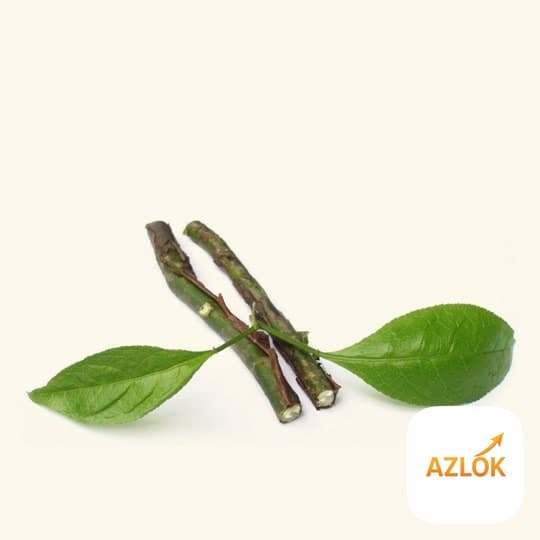
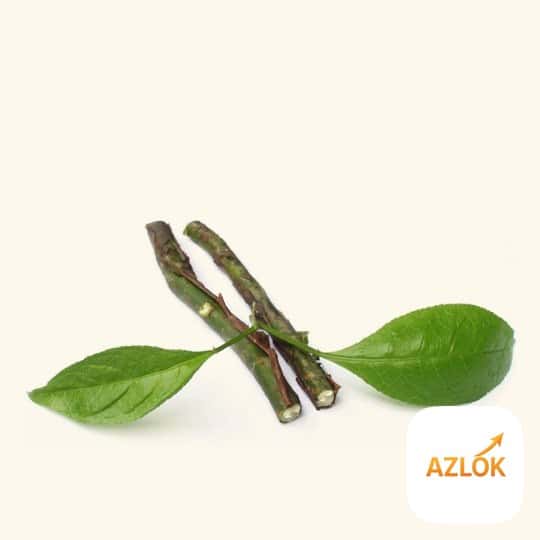
Amyris essential oil is a soft, woody, slightly sweet oil steam-distilled from the wood of the Amyris balsamifera tree. It works mainly as a long-lasting base note in perfumery and blends, and it is valued in skincare for conditioning dry, mature and sensitive skin. It is for external use only and should always be diluted before applying to the skin.
What is Amyris essential oil?
Sometimes called West Indian sandalwood (though it is botanically unrelated to true sandalwood), amyris is prized because its warm, mellow aroma resembles sandalwood at a friendlier price. The oil ranges from light yellow to yellow, has a specific gravity of around 0.966, and is soluble in alcohol. Its main constituents include valerianol, a-eudesmol and elemol, which give it that grounded, resinous depth.
At Azlok, we source amyris made from the wood by steam distillation, with a shelf life of about two years when stored well.
Common uses
- Perfumery: A fixative and base note that helps top and middle notes last longer on skin or in a candle.
- Skincare blends: Added in small amounts to carrier oils and creams for dry, mature or sensitive skin.
- Aromatherapy: Diffused for a calming, emotionally grounding atmosphere, often during evening wind-down.
- Candle and soap making: Contributes a soft woody warmth that pairs beautifully with citrus and spice.
- Massage oils: Blended into a base oil for a relaxing, stress-relieving rub.
How to use it
Amyris is potent, so a little goes a long way. Here are practical starting points:
- For skin: Dilute to roughly 1–2% in a carrier oil such as jojoba, sweet almond or fractionated coconut — about 6–12 drops of amyris per 30 ml of carrier. Do a patch test first.
- For diffusing: Add 3–5 drops to your diffuser. Because it is a base note, pair it with brighter oils so the blend does not feel heavy.
- For perfumery: Use it as the anchoring base, then build middle and top notes on top. It blends well with benzoin, bergamot, cardamom and carnation.
- For candles and soap: Follow your recipe's recommended fragrance load and test a small batch before scaling up.
Blending ideas
Amyris is forgiving and cooperative in blends. Try it with bergamot and cardamom for a fresh-woody accord, or with benzoin for a sweeter, resinous warmth. Its woody softness also rounds off sharper florals and citruses without overpowering them.
Safety notes
Please treat essential oils with respect:
- Meant only for external use — do not ingest.
- Always dilute before topical application and do a patch test on a small area first.
- Avoid direct sunlight on freshly applied blends.
- Keep out of reach of children and away from eyes.
- Pregnant or breastfeeding women, and anyone with a medical condition, should consult a doctor before use.
- Store away from open flames; the oil has a flash point around 200°F.
Buying and storage tips
Amyris oil is available at Azlok in sizes from 50 gm up to 10 kg, so you can pick a small bottle to experiment or a bulk pack for a soap or candle business. A 50 gm quantity starts at ₹599. Look for a clear COA and MSDS when buying in bulk.
To keep it fresh for its full two-year shelf life, store the bottle tightly capped in a cool, dark place away from heat and sunlight. Amber or dark glass helps protect the oil from light. Always close the cap promptly to reduce oxidation.
FAQ
Is Amyris essential oil the same as sandalwood?
No. Amyris comes from Amyris balsamifera and is a different plant, though its woody aroma is often used as a more affordable alternative to true sandalwood.
Can I apply Amyris oil directly to my skin?
No. Always dilute it in a carrier oil (around 1–2%) and do a patch test first. Undiluted essential oils can irritate the skin.
What does Amyris oil smell like?
Soft, woody and slightly sweet, with a warm, grounding, resinous character. It sits low as a base note and lingers.
What blends well with Amyris?
It pairs nicely with benzoin, bergamot, cardamom and carnation, and generally with citrus, spice and floral oils that need an anchoring base.
How long does Amyris essential oil last?
About two years when stored tightly capped in a cool, dark place away from heat and direct sunlight.