
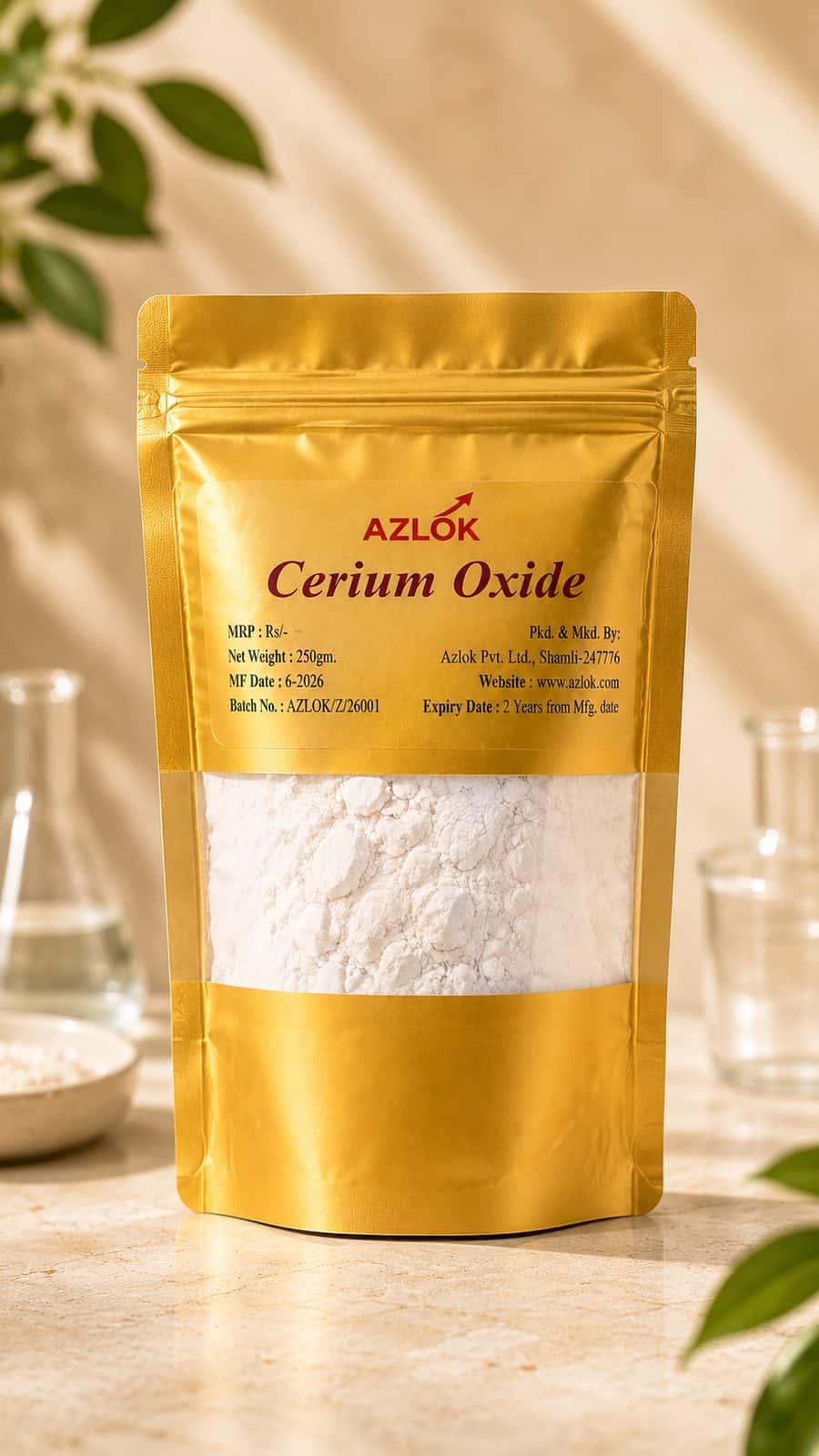
The Glass Polishing Secret That Professionals Don't Talk About Enough
There's a scratch on your car windshield. It has been there for weeks. Every time the sun hits it at the right angle, it catches your eye and bothers you. You searched online for solutions and found two options — replace the whole glass for thousands of rupees, or try something called cerium oxide powder.
If you picked the second option, you made the smart choice. Because that pale yellow powder, the one most people have never heard of, is the same thing professional glass polishers have been using for decades. It removes light scratches, water stains, and haze from glass surfaces in a way that no household cleaner or toothpaste hack can match.
Let's talk about what cerium oxide actually is, how to use it properly, and what else this surprisingly useful powder can do.
What Is Cerium Oxide?
Cerium oxide is a compound of the rare earth element cerium and oxygen. Its chemical formula is CeO₂. In powder form, it looks pale yellow to off-white, almost like a fine flour. It is also called ceria, cerium dioxide, or sometimes optical polishing powder.
Don't let the "rare earth" part scare you. Cerium is actually the most common of all rare earth elements. It is mined and processed at large scale, which keeps the price reasonable compared to other specialty chemicals.
What makes cerium oxide special is how it polishes. It doesn't just physically scrub a surface like sandpaper does. It works through a mix of mechanical and chemical action. The powder gently abrades the glass while also reacting with the silica in glass at a chemical level, filling micro-scratches and smoothing the surface. This combination is why it gives a clearer, deeper polish than other abrasives.
What Is Azlok?
Azlok is an Indian brand that sells practical, everyday products and raw materials through their website at azlok.com. Their range covers everything from kitchen spices to industrial chemicals and specialty powders like cerium oxide. The model is straightforward — quality products at fair prices, sold directly without a chain of middlemen adding cost at every step.
Their Cerium Oxide Powder (250g) is sized for home users, hobbyists, and small workshops. It is enough to handle multiple polishing jobs without buying a bulk industrial bag you will never finish.
Where Is Cerium Oxide Powder Used?
The uses go well beyond fixing a scratched windshield.
Glass Polishing and Scratch Removal
This is the big one. Cerium oxide is the standard polishing compound for glass in the optics industry, auto detailing, and glass restoration. It removes light scratches, wiper marks, water spots (hard water stains), and cloudiness from glass. It works on:
Car windshields and windows
Home windows and glass tabletops
Mirrors
Phone screens and watch crystals (with care)
Fish tanks and aquarium glass
Shower glass doors with hard water buildup
If the scratch is deep enough that your fingernail catches in it, cerium oxide alone may not fully remove it. But for light surface scratches and haze, it works beautifully.
Optical and Precision Lens Polishing
Camera lenses, telescope mirrors, microscope optics, and laboratory glassware are polished using cerium oxide in professional optical workshops. It gives the kind of scratch-free clarity that precision instruments need. This has been the industry standard for over fifty years.
Gemstone and Lapidary Work
People who cut and polish gemstones use cerium oxide as a final polishing compound. It gives a high shine on stones like quartz, obsidian, and agate. Lapidary hobbyists often prefer it over other compounds because the finish it produces is noticeably smoother.
Ceramics and Glass Manufacturing
In the ceramics industry, cerium oxide is used as an additive and polishing agent. It also works as a glass decolouriser — it removes the greenish tint that iron impurities leave in glass.
Catalytic Converters and Automotive
Cerium oxide is a key component in catalytic converters that reduce harmful emissions from vehicle exhaust. It is also used as a fuel additive in some diesel applications to improve combustion efficiency.
Other Industrial Uses
It shows up in UV-blocking coatings, self-cleaning oven surfaces, fuel cell technology, and semiconductor manufacturing. Every year, new applications are found for this compound as research continues.
How to Polish Glass with Cerium Oxide Powder
This is the part most people search for, so let's make it practical and clear.
What you need:
Cerium oxide powder
Clean water
A small bowl or container for mixing
A felt polishing pad (or a felt polishing wheel if you have a drill or rotary tool)
A spray bottle with water
Clean, soft cloth
Masking tape (to mark the scratch area)
Step 1 — Clean the glass. Wash the glass surface well with soap and water. Remove all dust, dirt, and grease. Any grit left on the surface can cause new scratches while you polish. Dry it completely.
Step 2 — Mark the area. Use a piece of masking tape on the back side of the glass (the opposite side from the scratch) to mark exactly where the scratch is. This helps you find it again once you start polishing, because the slurry will cover the surface and make it hard to see.
Step 3 — Mix the slurry. Put 2–3 teaspoons of cerium oxide powder in a bowl. Add a small amount of water and stir until you get a smooth, creamy paste — like thin pancake batter. Not too thick, not too watery. You can always add more water if it dries out while you work.
Step 4 — Apply and polish. Dip the felt pad into the slurry. Apply it to the scratched area and start polishing in small circular motions. If you are using a rotary tool with a felt wheel, keep the speed low to medium — around 1000 to 1500 RPM is enough. Too much speed creates heat, and heat can crack glass.
Keep the surface wet. Spray water on the area every minute or so. The slurry should never dry out on the glass while you are polishing.
Step 5 — Check your progress. After 3–5 minutes, wipe the area clean with a damp cloth and check. Light scratches often disappear in one round. Deeper ones may need two or three rounds. Be patient and don't press too hard — let the cerium oxide do the work.
Step 6 — Final clean. Once you are happy with the result, clean the entire surface with water and a soft cloth. Remove all traces of the slurry. Dry with a clean microfibre cloth.
That's it. The whole process takes 10 to 30 minutes depending on the scratch, and the result is usually impressive — especially the first time you try it and watch a scratch simply vanish.
Tips for Getting Better Results
A few things that experienced users learn over time:
Keep it wet. This is the most important tip. If the slurry dries on the glass, it stops polishing and can leave marks. Spray water often.
Don't press too hard. Cerium oxide works through chemistry as much as force. Gentle, steady pressure gives a better result than pushing hard.
Use a felt pad, not a cloth. Felt holds the slurry against the glass evenly. A regular cloth doesn't hold the powder well and gives uneven results.
Low speed if using a machine. High RPM creates heat. Hot glass can crack or develop thermal stress marks. Keep it slow and steady.
Don't expect miracles on deep scratches. If your fingernail catches in the scratch, it is deep. Cerium oxide can reduce how it looks, but may not remove it completely. For deep damage, professional glass repair or replacement may be needed.
How to Store Cerium Oxide Powder
Cerium oxide is one of the easiest materials to store:
Keep it in a sealed bag or airtight container to prevent dust from spreading. It is a fine powder and can get messy if left open.
Store in a cool, dry place. It is chemically very stable and does not react with air or moisture under normal conditions.
Keep it away from children — it is not toxic in the way acids or solvents are, but it is still a fine chemical powder that should not be inhaled or swallowed.
Shelf life is very long. Stored properly, cerium oxide powder does not expire or lose its polishing ability.
Why Azlok's 250g Pack Makes Sense
A little cerium oxide goes a long way. A single glass polishing job uses only a few teaspoons of powder. The Azlok Cerium Oxide Powder (250g) gives you enough for many polishing sessions — whether you are fixing a windshield scratch at home, restoring shower glass, or running a small glass repair workshop.
Buying a 1kg or 5kg industrial bag makes sense for factories. For everyone else, 250g is the practical sweet spot. You have enough to do real work, but you are not storing a bag of powder you will never finish.
And because Azlok sells directly from their own website, you know what you are getting — no relabelled mystery powder from random marketplace sellers.
Frequently Asked Questions
What is cerium oxide used for? It is mainly used for polishing glass and removing light scratches, water stains, and haze. It is also used in gemstone polishing, optical lens finishing, ceramics, catalytic converters, and several other industries.
Can cerium oxide remove scratches from glass? Yes, it removes light surface scratches very effectively. It works through a combination of gentle abrasion and chemical reaction with the glass. Deep scratches (where your fingernail catches) may be reduced but not fully removed.
How do you use cerium oxide powder? Mix it with water to make a smooth paste. Apply it with a felt pad and polish in small circular motions, keeping the surface wet. Wipe clean and check. Repeat if needed. The full steps are explained above.
Is cerium oxide safe to use? Yes, with basic care. Avoid breathing the fine powder — wear a dust mask when mixing. Avoid contact with eyes. It is not toxic like strong chemicals, but it is still a fine industrial powder. Wash your hands after use.
Does cerium oxide work on phone screens? It can help with very light scratches on glass phone screens. However, modern phone screens have special coatings that cerium oxide may remove along with the scratch. Test on a tiny area first, and know that the oleophobic (anti-fingerprint) coating may be affected.
How much cerium oxide do I need for one job? Very little. Two to three teaspoons mixed with water is usually enough to polish a windshield-sized area. The 250g pack from Azlok will last many sessions.
What is the difference between cerium oxide and aluminium oxide? Both are polishing compounds, but they work differently. Cerium oxide reacts chemically with glass, which gives a finer polish on glass surfaces. Aluminium oxide is a harder, more aggressive abrasive better suited for metals and harder materials. For glass, cerium oxide is the better choice.
What is Azlok? Azlok is an Indian brand that sells everyday essentials and specialty products directly through azlok.com. They focus on quality and fair pricing across a range of products — from kitchen spices to industrial raw materials like cerium oxide powder.
Need cerium oxide powder for your next polishing job? See Azlok Cerium Oxide Powder (250g).
Related Tags
Trending Products
Isopropyl Alcohol for cleaning (IPA) I 1000mL I 99.9% Pure
₹399
Ethanol 99.9% (Denatured) 500 mL,Analytical Grade, Laboratory Grade., generic
₹201
Sodium Citrate Food grade-700 grams|Cheese Stabilizer, Acid Regulator & Texture Enhancer|Emulsifier
₹211
Washing Soda Powder 450 GM (Super Trial Pack) 100% Pure Laundry Booster Sodium Carbonate
₹130
Ethanol 99.9% (Denatured) 1000 mL,Analytical Grade, Laboratory Grade., generic
₹399