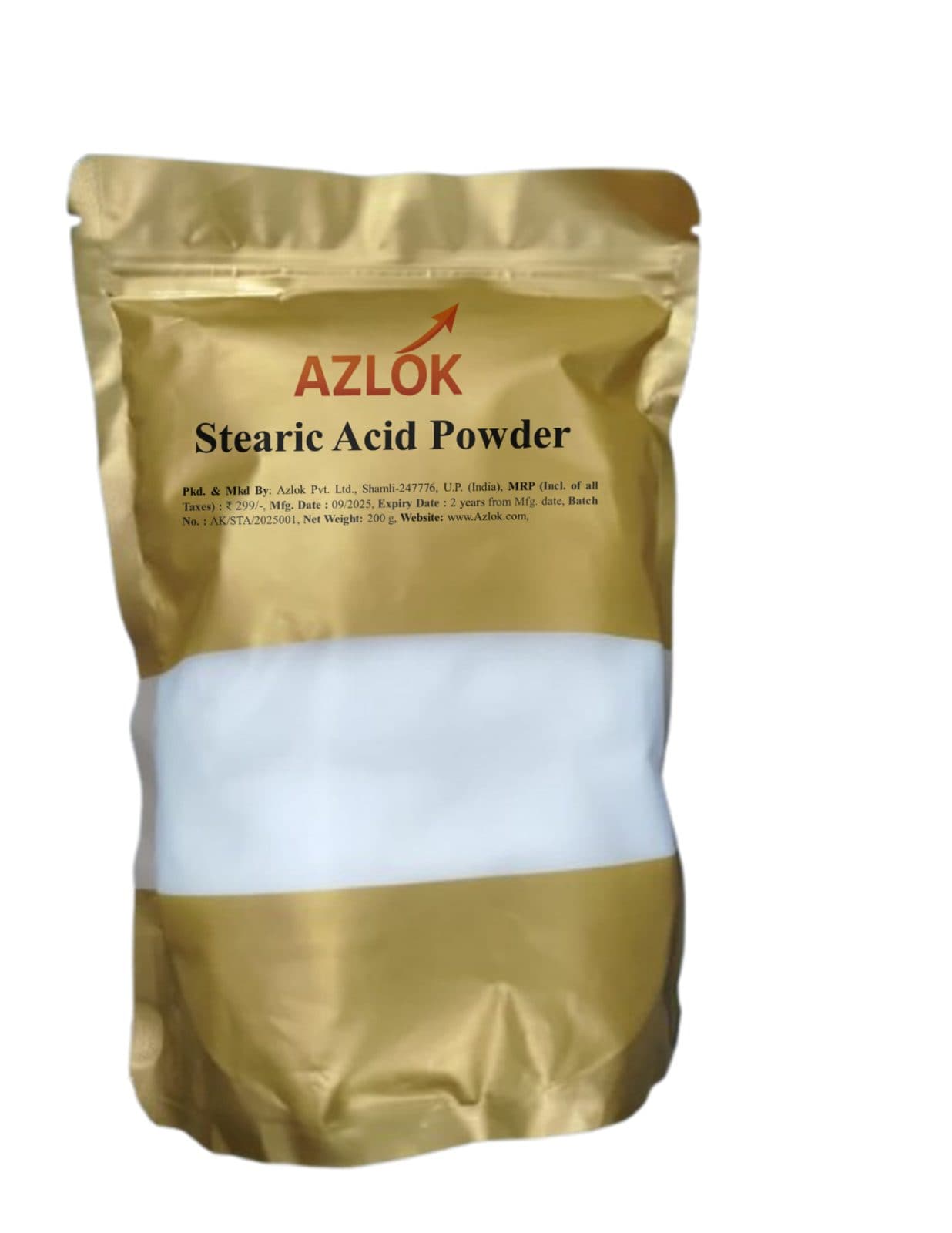
What It Is, What It Does, and Why So Many Industries Depend on It
You may not know the name stearic acid. But you have used it today. It was in your soap this morning. It was in the lotion you put on your hands. It was in the candle on your shelf and maybe even in the tablet you swallowed with water. Stearic acid is one of those quiet ingredients that shows up everywhere but never gets talked about.
If you are a soap maker, a cosmetic formulator, a candle crafter, or someone who works with rubber, plastics, or pharmaceuticals, you already know how useful this powder is. If you are just hearing about it for the first time, this guide will tell you everything you need to know in plain, simple words.
What Is Azlok?
Before we get into the chemistry, a quick word about where to find this product. Azlok is an Indian brand that sells everyday essentials and raw materials through their own website at azlok.com. They cover a wide range — from kitchen spices to industrial and personal care ingredients like stearic acid. The idea is simple: good quality products at fair prices, sold directly to you without the extra cost of middlemen and long supply chains.
Their Stearic Acid Powder is one of those practical listings that small businesses, home crafters, and formulators actually need but struggle to find from a reliable source online.
Now, back to the powder itself.
What Exactly Is Stearic Acid?
Stearic acid is a saturated fatty acid. Its chemical name is octadecanoic acid, and its formula is C₁₈H₃₆O₂. In simple words, it is a type of fat — a natural one that exists in many animal and plant sources.
In powder form, it looks like white or slightly yellowish flakes or fine powder. It feels waxy between your fingers. It has a very mild, faint smell — almost nothing. It melts at around 69°C, which means it is solid at room temperature but melts easily when heated.
Stearic acid is made from two main sources. Animal-based stearic acid comes from tallow (animal fat). Plant-based stearic acid comes from palm oil or coconut oil. Both types work the same way in most uses. If you need a vegetable-origin version for vegan products, just check the source before buying.
Why Is Stearic Acid Used in So Many Things?
Because it does several jobs at once, and it does them cheaply and safely.
It hardens things. Add stearic acid to soap, and the bar becomes firmer. Add it to a candle, and the wax holds its shape better. This hardening effect is one of its most common uses.
It thickens and stabilises. In creams, lotions, and balms, stearic acid acts as a thickener. It also works as an emulsifier — it helps oil and water mix together and stay mixed. Without it, your moisturiser would separate into layers.
It lubricates. In rubber and plastic manufacturing, stearic acid is used as a lubricant and mould release agent. It helps materials flow smoothly during production and come out of moulds cleanly.
It is safe for skin. Stearic acid is non-irritating for most people. It is approved for use in cosmetics and personal care products around the world. Your skin already produces fatty acids similar to stearic acid naturally.
One ingredient. Four different jobs. That is why it appears in so many product labels.
Common Uses of Stearic Acid Powder
Let's go through the main areas where this powder is used every day.
Soap Making
This is probably the most popular use among home crafters and small businesses. Stearic acid makes soap bars harder, gives them a smoother texture, and helps create a stable, creamy lather. Without it, many soap recipes produce soft bars that dissolve too quickly in water. Most soap makers add 1–5% stearic acid to their recipe depending on how firm they want the final bar.
Candle Making
Stearic acid is a candle maker's best friend. Adding it to paraffin wax (usually 3–5 tablespoons per kilogram of wax) makes the candle harder, raises the melting point so it burns slower, and helps the candle release from the mould more easily. It also reduces dripping and gives the candle a smoother, more opaque look.
Cosmetics and Skin Care
Creams, lotions, body butters, shaving creams, foundations — stearic acid is in many of them. It works as a thickener and emulsifier. When you make a cream at home or in a small lab, stearic acid is often the ingredient that gives the product its thick, smooth, creamy texture. It also helps the product feel good on skin instead of greasy.
Rubber and Plastics
In the rubber industry, stearic acid is used as an activator during vulcanisation (the process that makes rubber strong and elastic). It also acts as a lubricant in plastic processing, helping the material flow through machines and release from moulds without sticking.
Pharmaceuticals
Stearic acid is used as an excipient in tablets and capsules. It helps the powder flow smoothly in the tablet press and prevents ingredients from sticking to the machine. It also helps tablets hold their shape.
Other Uses
It shows up in crayons, paper coatings, textile finishing, metal polishing compounds, and even as a food additive in some countries (where it acts as an anti-caking agent). The list is long because the powder is that versatile.
How to Use Stearic Acid Powder — Quick Tips
If you are new to working with stearic acid, here are a few things that help:
Melt it gently. Stearic acid melts at around 69°C. Use a double boiler or low heat. Don't overheat it — high temperatures can cause it to smoke or discolour.
Add it to the oil phase. In cosmetic recipes, always melt stearic acid into your oils and butters first, then combine with the water phase. Adding it to water directly doesn't work well.
Measure carefully. A little goes a long way. In soap, 1–5% of the total recipe weight is usually enough. In candles, 3–5 tablespoons per kilo of wax. In creams, 2–5% is a common range. Too much can make products feel waxy or heavy.
Test small batches first. Every recipe reacts a little differently. Make a small test batch before scaling up, especially if you are selling the final product.
How to Store Stearic Acid Powder
Stearic acid is stable and easy to store, but a few basic rules keep it in good condition:
Keep it in a sealed container or bag away from moisture. It doesn't absorb water easily, but keeping it dry prevents clumping.
Store in a cool, dry place away from direct sunlight and heat sources. It won't melt at normal room temperature, but very hot storage areas (like a metal shed in summer) can soften it.
Keep it away from strong acids and oxidising agents. On its own it is very stable, but mixing with the wrong chemicals can cause reactions.
Stored properly, stearic acid powder has a long shelf life — well over a year without losing quality.
Why Buying the Right Stearic Acid Matters
Stearic acid sounds simple, and it is. But quality still varies. Low-grade or impure stearic acid can contain excess moisture, have an uneven melt point, or leave an off smell in your finished product. If you are making soap or cosmetics that people will put on their skin, the purity of your raw materials is not something to gamble on.
This is where buying from a source like Azlok makes life easier. You get a clean, consistent powder from a seller that puts product quality first, delivered to your door through their own website without the uncertainty of random marketplace listings.
Frequently Asked Questions
What is stearic acid made from? Stearic acid is a natural saturated fatty acid. It is made from animal fats (tallow) or plant sources like palm oil and coconut oil. Both types work the same way in most applications. Check the source if you need a vegan or plant-based version.
Is stearic acid safe for skin? Yes. It is widely used in cosmetics and personal care products around the world. It is non-irritating for most people and is approved for use in creams, lotions, soaps, and other products that touch the skin. Your body produces similar fatty acids naturally.
What does stearic acid do in soap? It makes the bar harder, gives it a smoother texture, and helps create a stable, creamy lather. Most soap makers add 1–5% stearic acid to their recipe.
What does stearic acid do in candles? It hardens the wax, raises the melting point (so the candle burns slower), reduces dripping, helps the candle release from moulds, and gives a smoother finish.
How much stearic acid should I use? It depends on the product. For soap, 1–5% of total weight. For candles, about 3–5 tablespoons per kilogram of wax. For creams and lotions, 2–5% is common. Always test a small batch first.
Can I eat stearic acid? Stearic acid is found naturally in many foods like chocolate, meat, and coconut oil. In its pure powder form, it is used as a food-grade additive in some countries. However, the powder sold for industrial or cosmetic use is not meant to be eaten. If you need food-grade stearic acid, make sure the product is specifically labelled for food use.
How is stearic acid different from palmitic acid? Both are saturated fatty acids found in similar sources. Stearic acid has 18 carbon atoms, palmitic acid has 16. In practice, commercial stearic acid often contains some palmitic acid as well. For most cosmetic and soap-making uses, this mix works fine.
What is Azlok? Azlok is an Indian brand that sells raw materials, everyday essentials, and specialty products through their website at azlok.com. They focus on quality at fair prices, selling directly to buyers without middlemen.