The One Spice Every Indian Kitchen Needs — and How to Pick a Good One
There is one spice you will find in every Indian kitchen, no matter the state, no matter the language, no matter the style of cooking. That spice is turmeric. We call it haldi in Hindi, manjal in Tamil, arisina in Kannada, pasupu in Telugu. The name changes, but the yellow jar is always there.
It goes into dal. It goes into sabzi. It goes into rice, curries, pickles, milk, and even face packs. Your grandmother used it. Her grandmother used it too. Turmeric is not a trend. It is a tradition that has been part of Indian life for thousands of years.
But here is something most of us don't think about: not all turmeric powder is the same. The colour may look similar, but the taste, the smell, and the purity can be very different. That matters more than you think — for your food and for your health.
Let's talk about what makes good turmeric, how to use it right, and where Azlok fits into the picture.
What Is Azlok?
If you have not heard of Azlok yet, here is the short version. Azlok is an Indian brand that sells everyday essentials — things your kitchen and home actually need, like spices, cleaning products, and daily-use items. They sell directly through their own website at azlok.com, which means no middlemen adding extra cost.
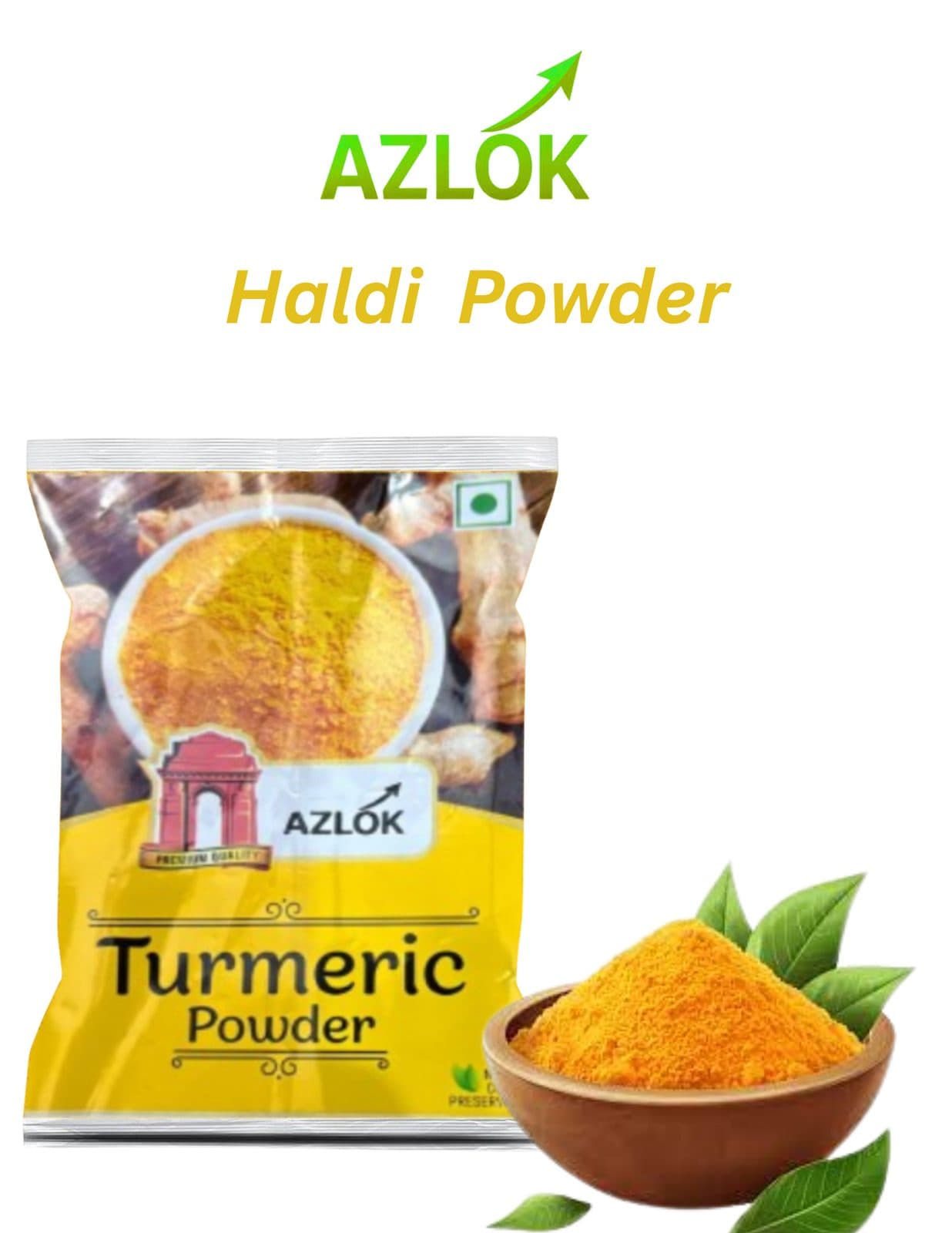
What makes them a little different is the focus on quality at a fair price. Instead of selling fifty products in flashy packaging, they keep the range tight and focused. Their Turmeric Haldi Powder (100g) is a good example — a simple, practical pack of clean turmeric for daily cooking. No fuss, just good spice.
What Exactly Is Turmeric Powder?
Turmeric comes from the root of the Curcuma longa plant. The fresh root looks a bit like ginger, but smaller and deep orange-yellow inside. To make powder, the roots are boiled, dried in the sun, and then ground fine. That bright yellow powder is what ends up in your masala dabba.
The yellow colour comes from a compound called curcumin. Curcumin is also the reason turmeric is famous for its health properties. But curcumin makes up only about 2–5% of turmeric, so the quality of the root and how it is processed matters a lot.
Why Turmeric Is Used in Almost Everything
Turmeric does three things at once, and no other single spice does all three as well.
It adds colour. That golden yellow in your dal, your curry, your biryani — that's turmeric. Even a small pinch changes the look of a dish completely. Without it, most Indian food would look pale and flat.
It adds flavour. Turmeric has a warm, slightly bitter, earthy taste. It is not strong or sharp like chilli. It works quietly in the background, giving food a fuller taste without taking over.
It has health benefits. This is the part the whole world is now talking about. Curcumin in turmeric has anti-inflammatory and antioxidant properties. Indian families have used haldi in warm milk (haldi doodh) for colds, sore throats, and body pain for generations. Modern research is catching up to what our grandmothers already knew.
How to Use Turmeric Powder in Cooking
Using haldi is simple. But a few small tips make a real difference.
Add it early. Unlike garam masala (which goes in at the end), turmeric works best when added early in the cooking — usually when you are frying onions, garlic, or other spices in oil. The heat and oil help release its colour and flavour into the dish.
Use a small amount. A quarter to half a teaspoon is enough for most dishes serving four people. Too much turmeric makes food bitter. Start small, taste, and learn what works for your style.
Pair it with black pepper. This is a useful trick. Black pepper contains a compound called piperine, which helps your body absorb curcumin much better. That's why many traditional recipes naturally include both — dal with haldi and a tadka of black pepper, for example.
Mix it with oil or fat. Curcumin dissolves in fat, not water. Cooking turmeric in oil, ghee, or coconut milk helps your body use it better. A glass of haldi doodh made with full-fat milk works for the same reason.
Common Uses for Haldi Powder
Turmeric shows up in more places than just curry:
Everyday cooking — dal, sabzi, curries, rice, kadhi, rasam, sambar
Marinades — mixed with salt, chilli, and oil for chicken, fish, or paneer before frying or grilling
Haldi doodh (golden milk) — warm milk with turmeric, a pinch of pepper, and a little honey or jaggery
Pickles and preserves — turmeric acts as a natural colour and mild preservative
Festival and wedding rituals — the haldi ceremony before weddings is a deep-rooted Indian tradition
Face packs and skin care — mixed with besan (gram flour) and milk or curd for a natural glow
It is one of those rare ingredients that works in the kitchen, the prayer room, and the bathroom shelf.
How to Tell If Your Turmeric Powder Is Pure
This is something worth paying attention to. Turmeric is one of the most commonly adulterated spices in India. Cheap turmeric powder is sometimes mixed with fillers like rice flour, chalk powder, or even artificial colour (metanil yellow, which is harmful). Here are a few simple tests:
Smell it. Good turmeric has a strong, warm, earthy smell. If it smells weak or like nothing, it is probably old or diluted.
Look at the colour. Pure haldi is a deep, natural yellow-orange. If it looks too bright or neon yellow, artificial colour may have been added.
Water test. Drop a pinch of turmeric into a glass of warm water. Pure turmeric settles at the bottom after a few minutes and colours the water yellow. If the colour spreads instantly or looks unnaturally bright, something extra may be in the mix.
Lime test. Add a drop of lemon juice to a small amount of turmeric mixed with water. It should turn a deeper red-orange. This is a normal reaction and shows curcumin is present.
Buying from a trusted source is the easiest way to skip these worries. A brand like Azlok that focuses on clean, quality products takes that doubt out of your hands.
Why Azlok Turmeric Haldi Powder (100g) Is a Practical Pick
Let's be honest — you don't need a 500g or 1kg bag of turmeric unless you run a restaurant. Most home kitchens use turmeric in small amounts, a quarter teaspoon here, a half teaspoon there. A huge bag sits open for months, slowly losing its smell and strength.
The Azlok Turmeric Haldi Powder (100g) is sized for how people actually cook at home. It stays fresh longer because you finish it before it goes stale. It's practical, not flashy.
And because Azlok sells directly through their website, you skip the chain of distributors and retailers that usually add cost without adding quality. You get clean turmeric at a fair price, delivered to your door.
How to Store Turmeric Powder at Home
Turmeric is tough, but it still needs a little care:
Keep it in an airtight container — a steel dabba, glass jar, or sealed packet works fine
Store it in a cool, dry, dark place — away from the stove and sunlight
Always use a dry spoon — moisture makes it clump and can cause mould
Don't keep it next to strong-smelling spices — turmeric can absorb other smells over time
Stored well, ground turmeric stays good for six months to a year. But fresher is always better in terms of flavour and colour.
Frequently Asked Questions
What is the difference between turmeric and haldi? They are the same thing. Turmeric is the English name. Haldi is the Hindi name. Different Indian languages have different names for it — manjal, pasupu, arisina, halad — but it is all the same spice.
Is turmeric powder good for health? Turmeric contains curcumin, which has anti-inflammatory and antioxidant properties. It has been used in Indian homes for centuries for colds, pain, and skin care. For serious health issues, always talk to a doctor, but as a daily food ingredient, turmeric is a healthy addition to your diet.
How much turmeric should I use in cooking? A quarter to half a teaspoon is enough for most dishes serving four people. Too much makes food bitter. Start small and adjust to your taste.
Can I drink turmeric every day? Yes, many people drink haldi doodh (turmeric milk) daily. Use a small pinch of turmeric in warm milk with a little black pepper and honey. It is a traditional Indian remedy that is safe for most people as part of a normal diet.
How do I know if my turmeric is pure? Check the smell (should be strong and earthy), the colour (natural yellow-orange, not neon), and try the water test — pure turmeric settles at the bottom in warm water. Buying from a trusted brand like Azlok is the simplest way to be sure.
Why is 100g a good size for turmeric powder? Most home kitchens use small amounts of turmeric daily. A 100g pack lasts a reasonable time and stays fresh because you finish it before it goes stale. Bigger packs often lose flavour before they are used up.
What is Azlok? Azlok is an Indian brand that sells everyday essentials like spices and household products directly through their website. They focus on quality products at fair prices without middlemen. You can explore their range at azlok.com.