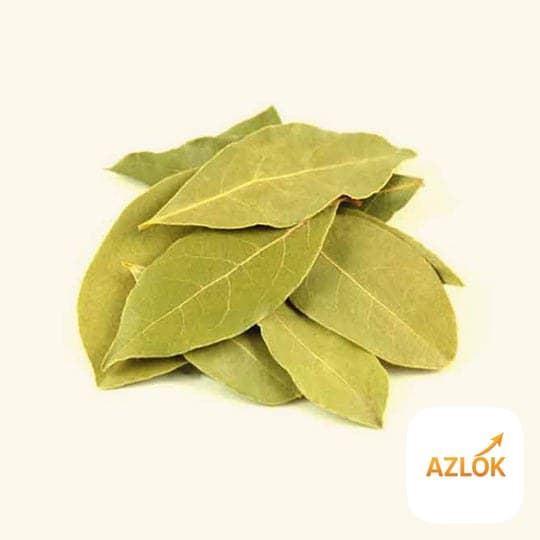

Bay Leaf Essential Oil is a warm, spicy, herbal oil steam-distilled from the leaves of the bay laurel plant (Laurus nobilis). It is used mainly in aromatherapy, natural perfumery and skincare formulations, and like all essential oils it is meant for external use only after proper dilution.
At Azlok we distil this oil from aromatic bay leaves and offer it in a wide range of pack sizes, so it suits both home hobbyists and small businesses making their own soaps, candles and body-care products.
What is Bay Leaf Essential Oil?
This is a colourless liquid with a characteristic, faintly medicinal-spicy scent. It carries the same clove-like, warm quality you notice when you crush a fresh bay leaf, but far more concentrated. A few key details worth knowing:
- Botanical name: Laurus Nobilis Leaf Oil
- Part used: Leaves
- Extraction method: Steam distillation
- Form: Liquid, soluble in alcohols
- Shelf life: 2 years
- Country of origin: India
Common uses
Because it is potent and highly aromatic, a little goes a long way. People typically reach for it in these ways:
- Aromatherapy: A drop or two in a diffuser gives a grounding, spicy-herbal atmosphere that many find comforting during cooler months.
- Skincare formulations: Added in small amounts to cleansing balms, face oils and toners to help refresh and cleanse the skin.
- Soap and candle making: A natural fragrance option for handmade cold-process soaps, melts and candles.
- Natural perfumery: As a middle-to-base note that blends well with citrus, rosemary, cedarwood and clove.
- Hair-care blends: A tiny amount in a carrier oil scalp treatment, always well diluted.
How to use it
Never apply undiluted essential oil directly to skin. Follow simple, safe practices:
- Dilute first. For skin use, keep the concentration low — generally around 1 to 2 percent in a carrier oil such as coconut, jojoba or sweet almond. That works out to roughly 1 to 2 drops per teaspoon of carrier oil.
- Patch-test. Apply the diluted blend to a small area on your inner forearm and wait 24 hours before wider use.
- For diffusing. Add 2 to 4 drops to your diffuser's water reservoir and run it in a ventilated room.
- For soap and candles. Follow your recipe's recommended fragrance load and test small batches first, since bay leaf oil is strong.
Blending ideas
Bay leaf oil pairs beautifully with other warm and fresh notes. Try combining it with:
- Sweet orange or lemon for a bright, uplifting blend
- Rosemary and eucalyptus for a clean, herbaceous mix
- Cedarwood or clove for a deeper, cosy winter scent
Safety notes
Concentrated bay leaf oil deserves respect. Keep these points in mind:
- For external use only. Do not ingest.
- Always dilute before skin contact and patch-test first.
- Avoid contact with eyes and mucous membranes.
- Keep out of reach of children and pets.
- If you are pregnant, nursing or have a medical condition, consult a qualified practitioner before use.
- Store away from open flames and heat.
Azlok manufactures essential oils for external use only. We do not formulate them to heal, cure, prevent or detect any ailment or disease.
Buying and storage tips
Good storage protects the aroma and extends shelf life. Keep the oil in its tightly closed container, away from direct sunlight and heat, ideally in a cool, dark cupboard. Used well, it keeps for about two years. When buying, choose a pack size that matches how quickly you will use it — hobbyists usually manage well with the smaller 100 GM pack, while soap and candle businesses may prefer bulk options. Azlok offers Bay Leaf Essential Oil starting at ₹499, with larger packs up to 20 KG for commercial requirements.
FAQ
Can I apply Bay Leaf Essential Oil directly to my skin?
No. It should always be diluted in a carrier oil, generally at 1 to 2 percent, and patch-tested before use. Neat application can cause irritation.
What does Bay Leaf Essential Oil smell like?
It has a warm, spicy, herbal aroma — clove-like and slightly medicinal — reminiscent of freshly crushed bay leaves but much more concentrated.
Is this the same as the bay leaves used in cooking?
It comes from the same bay laurel plant (Laurus nobilis), but it is a concentrated steam-distilled oil for external use, not a cooking ingredient. Do not ingest it.
How long does it last?
Its shelf life is about two years when stored in a cool, dark place with the cap tightly closed and away from heat and sunlight.
What can I make with it?
It is popular in aromatherapy diffuser blends, handmade soaps and candles, natural perfumes, and small-percentage additions to skincare and hair-care formulations.