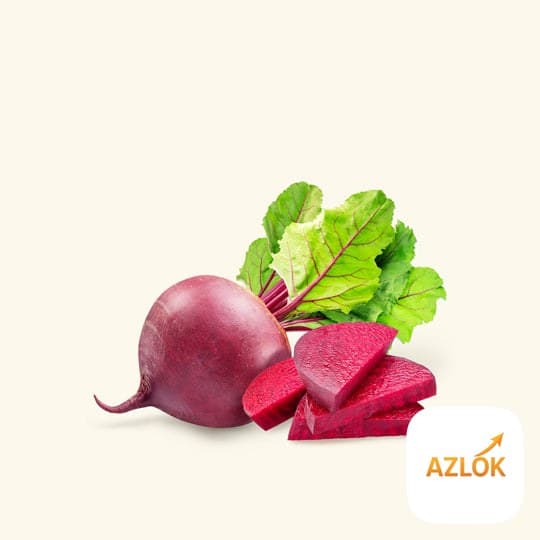

Beetroot Liquid Extract is a glycerin- or oil-based extract of Beta Vulgaris (the humble beetroot) made for cosmetic formulation, not cooking. Makers add it at around 1–2% to soaps, shampoos, creams, serums and face washes to introduce a beetroot-derived botanical into their DIY personal-care recipes. It is a transparent liquid, essentially tasteless and odourless, so it slots into formulas without changing their scent or texture.
What Beetroot Liquid Extract Is
Beetroot, or beets, is a bulbous sweet root vegetable that has long been valued as a nutrient-dense food. Azlok's extract takes that raw material and concentrates it into a liquid suited to skincare and haircare work. A few specifics worth knowing before you buy:
- Botanical name: Beta Vulgaris
- CAS number: 7659-95-2
- Strength: 4:1 herb-to-extract ratio, meaning 4 kg of herb yields 1 kg of extract
- Water-soluble version: alcohol-free, extracted using vegetable palm glycerin (vegetable glycerol)
- Oil-soluble version: soy oil used as the solvent
- Preservative: BHT (butylated hydroxytoluene)
- Free from: gluten, artificial colour, heavy metals and fertilizers
- Origin: India
Choose the water-soluble grade for water-based formulas like toners, gels, shampoos and lotions, and the oil-soluble grade for oil-based serums, balms and anhydrous products.
Where Makers Use It
This is a formulation ingredient, so its home is in DIY and small-batch cosmetics rather than the kitchen. Common applications include:
- Soap making (melt-and-pour and cold process)
- Shampoos and hair serums
- Face wash and cleansers
- Lotions, creams and body butters
- Facial serums and toners
- General DIY personal care for face, hair, skin and body
Because the extract is transparent and carries no odour or taste, it won't cloud a clear gel or fight with your fragrance blend.
How to Use It in a Formula
The recommended usage rate is 1–2% of your total formulation. That is a small addition by design, so measure by weight for consistency.
- Decide on your batch size and calculate 1–2% of the total weight.
- Pick the right solubility grade: water-soluble for water-based products, oil-soluble for oil-based products.
- Add the extract during the cool-down phase, once your batch has dropped below the temperature that could degrade delicate botanicals.
- Stir gently until fully incorporated.
- Always use a broad-spectrum preservative in any product that contains water, and follow good hygiene throughout.
Run a small trial batch first. It lets you check colour, clarity and how the extract behaves with the rest of your ingredients before you scale up.
Safety and Honest Notes
Treat this as a cosmetic raw material, not a food or supplement. A few sensible precautions:
- Keep it away from the reach of children.
- Avoid direct contact with the eyes; rinse with water if contact happens.
- Do the usual patch test on finished products before wider use, especially for facial formulas.
- The oil-soluble grade uses soy oil, so keep that in mind if you or your customers avoid soy.
- Do not treat any claims about beetroot's dietary benefits as promises for a topical product. What a vegetable does as food is a separate matter from what an extract does at 1–2% in a cream.
Buying and Storage
Azlok offers Beetroot Liquid Extract from a 100 gm bottle up to bulk 25 kg packs, so hobbyists and small businesses can both find a suitable size. Pricing starts at ₹299. Packaging is arranged as per requirement, and COA and MSDS documents are available for both the water-soluble and oil-soluble grades if you need them for your records.
Storage is straightforward:
- Keep it in a cool, dry place, away from direct sunlight and heat.
- Close the cap tightly after each use.
- Shelf life is around 2 years when stored properly.
FAQ
Can I drink Beetroot Liquid Extract or add it to food?
No. This is a cosmetic formulation ingredient made with glycerin or soy oil and preserved with BHT. It is intended for external DIY personal-care products, not for eating or drinking.
What is the right dosage in a recipe?
Use it at 1–2% of your total formula by weight. Start at the lower end for a trial batch and adjust after checking the result.
Which version should I choose, water-soluble or oil-soluble?
Match it to your base. Use the water-soluble (glycerin-based, alcohol-free) grade for water-based products like toners, gels and shampoos, and the oil-soluble (soy oil) grade for serums, balms and other oil-based formulas.
Will it colour or scent my product?
The extract is a transparent liquid that is essentially tasteless and odourless, so it will not add a strong beetroot colour or smell at recommended usage levels.
How long does it last and how should I store it?
It has a shelf life of about two years. Keep it tightly capped in a cool, dry place, away from heat and sunlight.