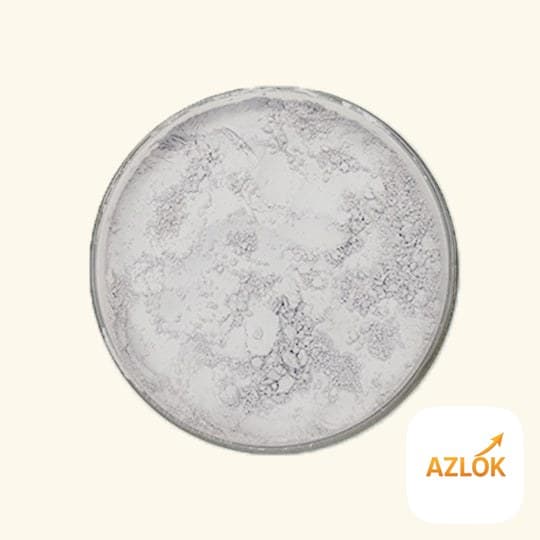

Brazilian Purple Clay Powder is a fine, naturally coloured cosmetic clay used mainly in face masks, exfoliating scrubs, body wraps and handmade soap. You simply mix the dry powder with water or another liquid to form a smooth paste, apply, and rinse off once it firms up. Azlok stocks it as an artificial-colour-free clay suitable for all skin types.
What is Brazilian Purple Clay?
Purple clay is one of the coloured Brazilian clays, prized in the cosmetics and soap-making world for its soft violet tone and gentle cleansing action. It is valued for drawing out excess oil and impurities while being mild enough for regular use. Makers often reach for it when they want a naturally toned clay without adding synthetic pigments.
Because it is finely milled, it blends easily and gives a silky feel in masks and melt-and-pour or cold-process soaps.
Common uses
- Face and body masks for deep cleansing and oil control.
- Exfoliating scrubs to lift away dead skin and unclog pores.
- Body wraps in spa-style routines.
- Hair masks for scalp cleansing.
- Soap making as a natural colourant and clay additive.
- Artisanal cosmetics such as bath bombs, cleansing bars and clay sticks.
How to use it as a face mask
A basic mask takes two minutes to mix.
- Take one teaspoon of Brazilian Purple Clay Powder in a small non-metal bowl.
- Add clean water, rose water or aloe vera gel a little at a time until you get a smooth, spreadable paste.
- Apply an even layer over clean skin, avoiding the eye area.
- Leave it for 8 to 10 minutes. Do not let it dry rock-hard, especially on dry skin.
- Rinse with lukewarm water and follow with a moisturiser.
Use it once or twice a week to start. Oily skin can usually handle more frequent use than dry or sensitive skin.
Using it in soap and scrubs
For cold-process or melt-and-pour soap, a common starting point is about one teaspoon of clay per 500 grams of soap base. Disperse the powder in a little oil or water first to avoid clumping, then blend it in at light trace. For a scrub, mix the clay with a carrier oil and a mild exfoliant like fine sugar, and use gently on damp skin.
Always test a small batch first, since clay affects the texture, lather and colour of the finished product.
Tips and safety notes
- Do a patch test on your inner arm before using a new clay on your face.
- Use non-metal bowls and spoons where possible, as clays are best mixed with glass, plastic or wood.
- Avoid letting a clay mask dry to the point of tightness on dry or mature skin; rinse a little earlier.
- Keep the powder away from the eyes and do not inhale the fine dust while measuring.
- This is a cosmetic ingredient for external use only. It is not for eating, and it is not a medicine or a cure for any skin condition.
- If you have a diagnosed skin problem, check with a dermatologist before adding new products.
Buying and storage
Azlok offers Brazilian Purple Clay Powder from a 100 gm pack at ₹149 up to bulk sizes of 500 gm, 1 kg, 5 kg, 10 kg, 20 kg and 25 kg, so both home hobbyists and small brands can buy what they need. The clay is manufactured in India and carries a shelf life of around two years.
Store it in an airtight container in a cool, dry place away from moisture and direct sunlight. Water is the enemy of clay powders, so always use a dry spoon and reseal the pack tightly. Kept dry, it stays free-flowing and easy to work with right through its shelf life.
FAQ
What skin type is Brazilian Purple Clay suitable for?
It is described as suitable for all skin types. Oily and combination skin may use it more often, while dry or sensitive skin should keep masks short and follow with moisturiser.
How often can I use a purple clay mask?
Once or twice a week is a sensible routine for most people. Watch how your skin responds and adjust; reduce frequency if you notice dryness or tightness.
Can I use it in cold-process soap?
Yes. Disperse it in a little oil or water and add it at light trace, roughly a teaspoon per 500 grams of base. Test a small batch to check colour and texture.
What can I mix the clay with besides water?
Rose water, aloe vera gel, plain yoghurt or a carrier oil all work well and can add extra slip or nourishment to your mask.
Does it contain artificial colour?
No. Azlok lists this clay as artificial-colour-free, so its violet tone comes from the clay itself.