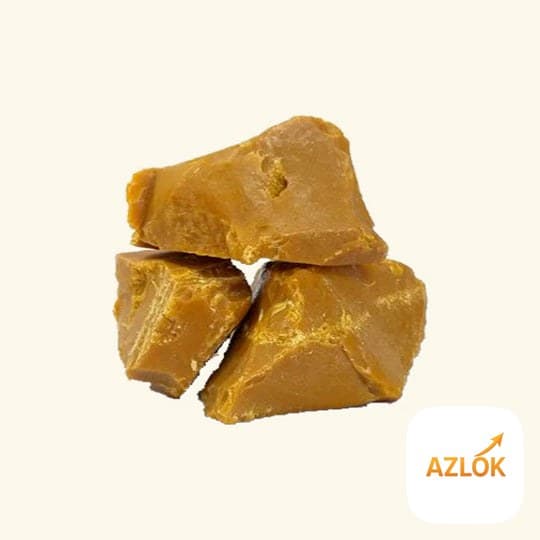

Carnauba wax is a hard, plant-based wax obtained from the leaves of the Brazilian carnauba palm (Copernicia cerifera). It is one of the hardest natural waxes with a high melting point, which is why makers reach for it when they want a glossy, durable finish in polishes, candles and balms. Azlok's carnauba wax is refined for use and comes in an off yellow to brown colour.
What is carnauba wax?
Also called Brazilian wax or palm wax, carnauba is harvested from the leaves and leaf buds of the carnauba palm, then cleaned and refined. Because it comes entirely from a plant, it is a popular vegan and eco-friendly choice. A few quick specifications worth knowing:
- INCI name: Copernicia Cerifera
- CAS number: 8015-86-9
- Melting point: around 68.3°C
- Saponification value: approximately 89.23
- Colour: off yellow to brown
- Nature: hard, brittle and solvent insoluble
Common uses of carnauba wax
Its hardness and shine make carnauba a workhorse across industry and DIY projects. Typical applications include:
- Automobile and floor waxes for a tough, high-gloss protective layer
- Shoe polishes that buff up to a deep shine
- Instrument and furniture polishes
- Dental floss coatings in food-grade grades
- Candle making, usually blended with softer waxes to raise the melting point
- Cosmetics and balms such as lip balms, mascara and solid lotion bars, where it adds structure and gloss
How to use carnauba wax
Carnauba is rarely used alone in cosmetics because it sets very hard and brittle. It works best as a small percentage in a blend with softer ingredients.
- Melt gently. Use a double boiler and warm the wax to about 70–75°C so it melts fully. Because the melting point is high, it needs more heat than beeswax or soy.
- Blend in a low ratio. In balms and lotion bars, many makers start with roughly 3–10% carnauba and make up the rest with carrier oils, butters or beeswax. Adjust to get the firmness you want.
- Stir well. Since carnauba is solvent insoluble and firm, keep stirring so it disperses evenly before pouring.
- For polishes, combine melted carnauba with a suitable oil or solvent base, pour into a tin, and let it set before buffing.
- Test a small batch first. Firmness varies with your other ingredients, so a small trial saves you from a whole batch that sets too hard.
Tips and safety
Carnauba wax is generally considered safe for cosmetic and food-contact uses in the right grade, but sensible handling still matters.
- Melt over indirect heat and never leave hot wax unattended near an open flame.
- Work in a ventilated space and avoid overheating, which can scorch the wax.
- Do a patch test on any finished skincare product before regular use.
- Keep the wax and hot melts away from children and pets.
- Use this product for its intended cosmetic, craft and industrial purposes; do not eat raw wax.
- Because it sets very hard, a little goes a long way, add it gradually.
Buying and storage
Azlok offers carnauba wax starting at ₹239, with pack sizes from a handy 100 gm right up to 20 kg for small businesses and bulk makers. For first-time users, the 100 gm pack is ideal for trials; candle and cosmetic sellers often prefer the 1 kg, 5 kg or larger packs.
Store the wax in a cool, dry place away from direct sunlight and heat. Kept properly, it has a shelf life of about two years. Keep the container sealed to protect it from moisture and dust, and always check the COA and MSDS for the details relevant to your application.
FAQ
Is carnauba wax vegan?
Yes. Carnauba is derived entirely from the leaves of the carnauba palm, so it is plant-based and suitable for vegan formulations, unlike beeswax.
What is the melting point of carnauba wax?
It melts at roughly 68.3°C, one of the highest among natural waxes, which is why it adds hardness and heat resistance to blends.
Can I make candles with only carnauba wax?
It is usually blended rather than used alone, because pure carnauba is very hard and brittle. Combining it with softer waxes gives a better, more stable candle.
Why is carnauba wax used in cosmetics?
It adds structure, gloss and a firm set to products like lip balms, lotion bars and mascara, typically at a low percentage of the total recipe.
How should I store carnauba wax?
Keep it sealed in a cool, dry place away from sunlight. Under these conditions it stays good for about two years.