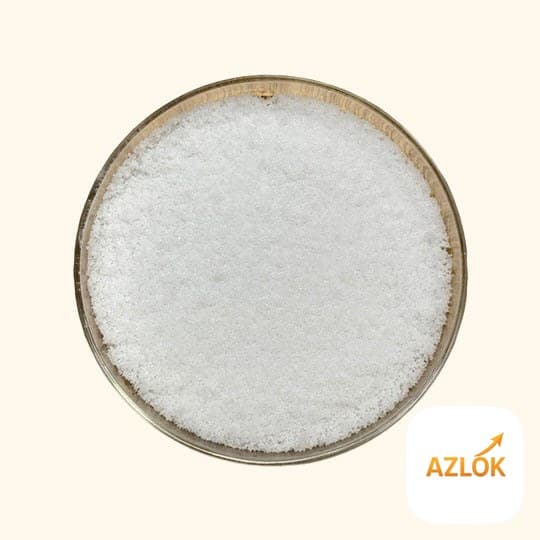

Caustic soda, also called sodium hydroxide or lye (chemical formula NaOH, CAS 1310-73-2), is a strong alkali used to adjust pH, saponify oils into soap, and cut through grease in cleaners. Azlok's caustic soda is a 99% pure, white, technical-grade product supplied as crystals/powder, made in India from brine through electrolysis. It is powerful and corrosive, so it must be handled with care.
What caustic soda is used for
Sodium hydroxide is one of the most widely used industrial and DIY chemicals. Because it is a pure, high-pH alkali, it shows up in a surprising number of everyday processes.
- Soap making: This is the classic use. When lye reacts with fats and oils, it triggers saponification, turning them into soap. Cold-process and hot-process bar soaps both depend on NaOH.
- pH adjustment: In cosmetic and personal-care formulations, small, carefully measured amounts act as a buffering agent to balance the pH of exfoliants, creams and gels.
- Cleaning products: It dissolves grease, fats and protein-based grime, which is why it is found in drain openers, oven cleaners and heavy-duty degreasers.
- Chemical synthesis: As a strong base, it is used in laboratories and small-scale manufacturing for neutralisation and other reactions.
How to use it in soap making
If you are new to soap, treat lye with respect and never guess quantities. A few ground rules keep the process safe and predictable.
- Weigh, don't scoop. Use an accurate scale and a tested lye calculator for your exact oils. The right ratio of NaOH to oils is what makes a safe, non-caustic finished bar.
- Always add lye to water, never water to lye. Slowly sprinkle the caustic soda into cold water while stirring. Doing it the other way can cause a violent, spattering reaction.
- Expect heat. The mixture heats up quickly and releases fumes. Mix in a well-ventilated area and let it cool as directed by your recipe before combining with oils.
- Cure the soap. Properly made cold-process soap needs weeks to cure, allowing the reaction to complete so no free lye remains.
Safety and handling
This is the part you cannot skip. Caustic soda is corrosive and can cause serious burns to skin and eyes, and permanent damage if swallowed or inhaled.
- Wear chemical-resistant gloves, goggles and long sleeves every single time.
- Work in a well-ventilated space and avoid breathing the dust or fumes.
- Keep well away from children, pets and food. Never store it in a drinking bottle or unlabelled container.
- Do not ingest. This is not a food-grade product; it is technical grade for making and cleaning.
- Keep it away from aluminium and certain other metals, which it can react with.
- If it contacts skin, rinse with plenty of cool running water immediately and seek medical help for anything more than a minor splash.
Buying and storage tips
Azlok offers caustic soda in 1 KG, 5 KG, 10 KG, 20 KG and 25 KG packs, starting at ₹249, so you can buy a small quantity for a first batch of soap or a bulk pack for a small business. A few storage pointers:
- Caustic soda is hygroscopic — it absorbs moisture and carbon dioxide from the air. Keep the container tightly sealed at all times.
- Store in a cool, dry place away from acids and moisture. Clumping usually means air has got in.
- Label the container clearly and keep it in a locked or out-of-reach spot.
- Shelf life is around 24 months when stored correctly.
FAQ
Is caustic soda the same as lye?
Yes. Caustic soda, sodium hydroxide and lye all refer to the same compound, NaOH. In soap making, "lye" most often means sodium hydroxide for bar soap.
Can I use caustic soda directly on my skin?
No. It is a strong alkali with a pH of 14 and will burn skin. It only becomes safe once fully reacted, for example in cured soap where no free lye remains.
Why must lye be added to water and not water to lye?
Adding water to lye can cause a sudden, violent reaction that splashes caustic liquid. Always sprinkle the caustic soda slowly into water while stirring.
Is this product food grade?
No. Azlok's caustic soda is 99% pure technical grade, meant for soap making, cleaning, cosmetic pH adjustment and chemical use — not for eating.
How should I store leftover caustic soda?
Keep it in its original sealed container in a cool, dry place away from moisture, acids and children. If it clumps or hardens, air has entered the pack.