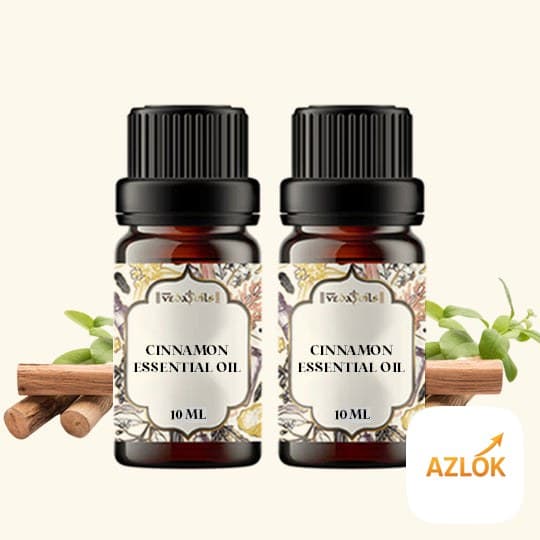
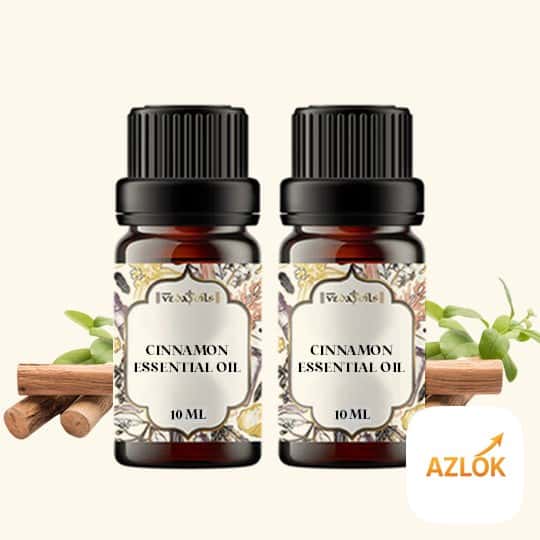
Cinnamon Bark essential oil is a steam-distilled oil from the bark of Cinnamomum zeylanicum, prized for its warm, sweet-spicy aroma and its two main constituents, cinnamaldehyde and eugenol. It is used mainly for diffusing, natural home fragrance, and adding scent to soaps, candles and DIY blends — always well diluted, because it is a strong, skin-sensitising oil.
What Cinnamon Bark Oil Is
This is a thin, liquid oil ranging from dark yellow to dark brownish in colour, with a characteristic spicy scent that most people recognise instantly. It is extracted from the bark rather than the leaf, which gives it a richer, sweeter aroma. Our Azlok 10 ml bottle comes from India and carries a shelf life of around two years when stored properly.
A few quick specs worth knowing: it is soluble in alcohols and fixed (carrier) oils and only slightly soluble in water, with a specific gravity of about 0.929 g/ml. That solubility matters when you plan a blend — you will disperse it in a carrier oil or alcohol base, not plain water.
Everyday Uses
- Diffusing and home fragrance: A drop or two in a diffuser fills a room with a cosy, festive scent. It is especially popular around Diwali and the cooler months.
- Soap making: Adds warmth to cold-process and melt-and-pour soaps. Follow safe fragrance-load guidelines for your recipe.
- Candle making: Blends into wax for spiced candles. Because it is potent, a little goes a long way.
- Room and linen sprays: Combined with a solubiliser or alcohol base, it works in DIY sprays and reed diffuser blends.
- Custom blends: It pairs beautifully with bergamot, grapefruit, lemon, lavender and wild orange, plus all common carrier oils.
How to Use It Safely
Cinnamon Bark oil is one of the stronger essential oils, so treat it with respect. It is a known skin irritant and sensitiser if used neat or in high concentrations.
- Always dilute. For any topical or leave-on DIY use, keep it to a very low percentage — around 0.5% or less — in a carrier oil such as coconut, almond or jojoba.
- Patch-test first. Apply a small diluted amount to your inner forearm and wait 24 hours before wider use.
- Ventilate. When diffusing, use in a well-aired room and start with a single drop.
- Keep away from children and pets, and store out of their reach.
- Do not ingest, and avoid contact with eyes and mucous membranes.
- Pregnant or breastfeeding women and anyone with sensitive skin should consult a professional before use.
Because it can be sensitising, less is genuinely better here. If a blend smells too strong, reduce the cinnamon and add more of a citrus or lavender note.
Simple Blending Ideas
- Warm citrus diffuser blend: 1 drop cinnamon bark + 3 drops wild orange + 2 drops bergamot.
- Cosy massage oil (patch-test first): 1 drop cinnamon bark diluted in 20 ml of a carrier oil, with a drop of lavender.
- Festive candle scent: Add cinnamon bark to your melted wax within your wax supplier's recommended fragrance load, balanced with a citrus oil.
Buying and Storage Tips
Buy small quantities you will use within the shelf life — a 10 ml bottle lasts a long time given how little you need per project. Azlok currently offers this Cinnamon Bark oil at ₹199 with a Buy 1 Get 1 Free pack, which is handy if you want to keep one for the kitchen crafts shelf and one for candle or soap work.
- Store in a cool, dark place, tightly capped, away from direct sunlight and heat.
- Keep the lid closed to slow oxidation and preserve the aroma.
- Note that this oil can be strong-smelling in bulk; a dark glass bottle helps protect quality.
- Its flash point is around 160°F, so keep it away from open flame until it is safely incorporated into your product.
FAQ
Can I apply Cinnamon Bark oil directly to my skin?
No. It is a potent skin sensitiser and should never be used neat. Always dilute it heavily in a carrier oil (roughly 0.5% or less) and do a 24-hour patch test first.
What does Cinnamon Bark oil blend well with?
It pairs nicely with bergamot, grapefruit, lemon, lavender and wild orange, and it mixes with all common carrier oils. Citrus oils help soften its intensity.
Is Cinnamon Bark oil the same as Cinnamon Leaf oil?
They come from the same plant but different parts. Bark oil is generally sweeter, richer and higher in cinnamaldehyde, while leaf oil has more eugenol and a slightly harsher note.
How long does the oil last?
About two years when stored correctly — in a cool, dark place with the cap tightly closed to limit exposure to air and light.
Can I use it in the diffuser every day?
You can diffuse it occasionally in short sessions with good ventilation, starting with just one drop. Because it is strong, many people prefer to use it sparingly rather than continuously.