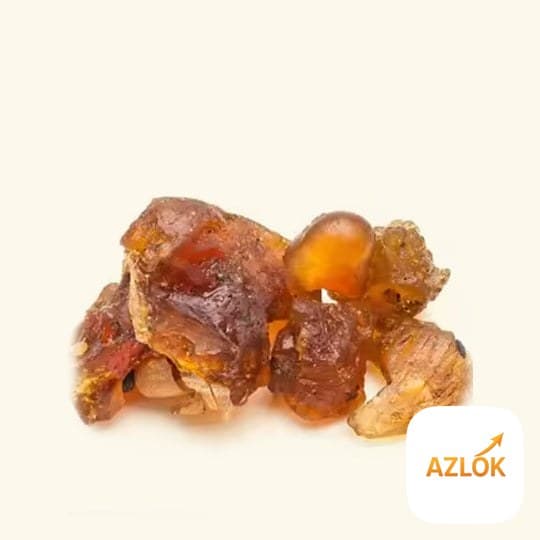

Copaiba Balsam Essential Oil is a warm, woody, resin-based oil steam-distilled from the copaiba tree (Copaifera officinalis). It is used mainly in skincare to calm irritated, red skin, in massage blends to support joint and muscle comfort, and in aromatherapy for a grounding, relaxing mood. Like all essential oils, it is meant for external use only and must be diluted before it touches your skin.
What is Copaiba Balsam Essential Oil?
Copaiba is tapped as a natural resin from the trunk of the copaiba tree, which is native to South America. That resin is then processed by steam distillation to produce the oil. The result is a medium-to-thick liquid, yellow to brown in colour, with a mellow woody-balsamic scent that many people find comforting rather than sharp.
Because it is derived from resin rather than a flower or leaf, copaiba behaves a little differently from lighter oils. It has a slower evaporation rate, which makes it a useful base or fixative note in blends. Azlok stocks Copaiba Balsam Essential Oil in sizes from 100 GM right up to 25 KG, so it suits both home users and small formulators.
Common uses
- Skincare: Added to serums, balms and lotions to calm redness and soothe irritated or blemish-prone skin.
- Massage blends: Diluted in a carrier oil to support tired muscles and joint comfort after activity.
- Aromatherapy: Diffused for a warm, woody atmosphere that helps with relaxation and emotional balance.
- Handmade products: Used in wound-care style balms, soaps and natural cosmetics where a woody base note is wanted.
How to use it
Copaiba is a concentrated oil, so a little goes a long way. Always dilute before applying to skin.
- Patch test first. Mix a drop into a teaspoon of carrier oil, apply to your inner forearm and wait 24 hours to check for any reaction.
- For massage: Blend roughly 2 to 3 drops of copaiba per 10 ml of a carrier oil such as coconut, sweet almond or jojoba.
- For skincare: Add a few drops to an unscented lotion or serum base rather than applying neat.
- For diffusing: Use a few drops in a diffuser, on its own or blended with complementary oils.
It blends beautifully with Ylang Ylang, Vetiver, Cedarwood, Jasmine and Lavender, and it is soluble in alcohol and mixes with all types of carrier oils. Its thicker consistency means it settles nicely under floral or citrus top notes.
Safety notes
- External use only. Do not ingest it.
- Always dilute before topical application, and do a patch test each time you try a new blend.
- Avoid direct sunlight on treated skin after use.
- Pregnant or breastfeeding women should consult a doctor before using it.
- Keep out of reach of children and away from eyes.
Buying and storage tips
Look for clear specifications when you buy: genuine copaiba has a specific gravity around 0.917, a refractive index of roughly 1.490 to 1.520 at 20°C and a high flash point above 246°C. Azlok lists these details along with COA and MSDS documentation, which is worth checking before you build it into a product batch.
Store the oil in a tightly closed bottle, away from heat, light and moisture. Amber or dark glass is ideal. Kept properly, it has a shelf life of about two years. If the aroma turns sharp or off, it is time to replace it.
FAQ
Can I apply Copaiba Balsam Essential Oil directly to my skin?
No. Dilute it in a carrier oil first and always do a 24-hour patch test. Undiluted essential oils can irritate the skin.
What does Copaiba Balsam smell like?
It has a warm, woody, balsamic aroma that is soft rather than overpowering, which makes it a good grounding base note in blends.
Which oils blend well with copaiba?
It pairs well with Ylang Ylang, Vetiver, Cedarwood, Jasmine and Lavender, and mixes with all common carrier oils.
Is it safe during pregnancy?
Consult your doctor before use if you are pregnant or breastfeeding. When in doubt, avoid it until you have professional advice.
How long does it last once opened?
Roughly two years when stored in a sealed dark bottle away from heat and light. Discard it if the smell changes noticeably.