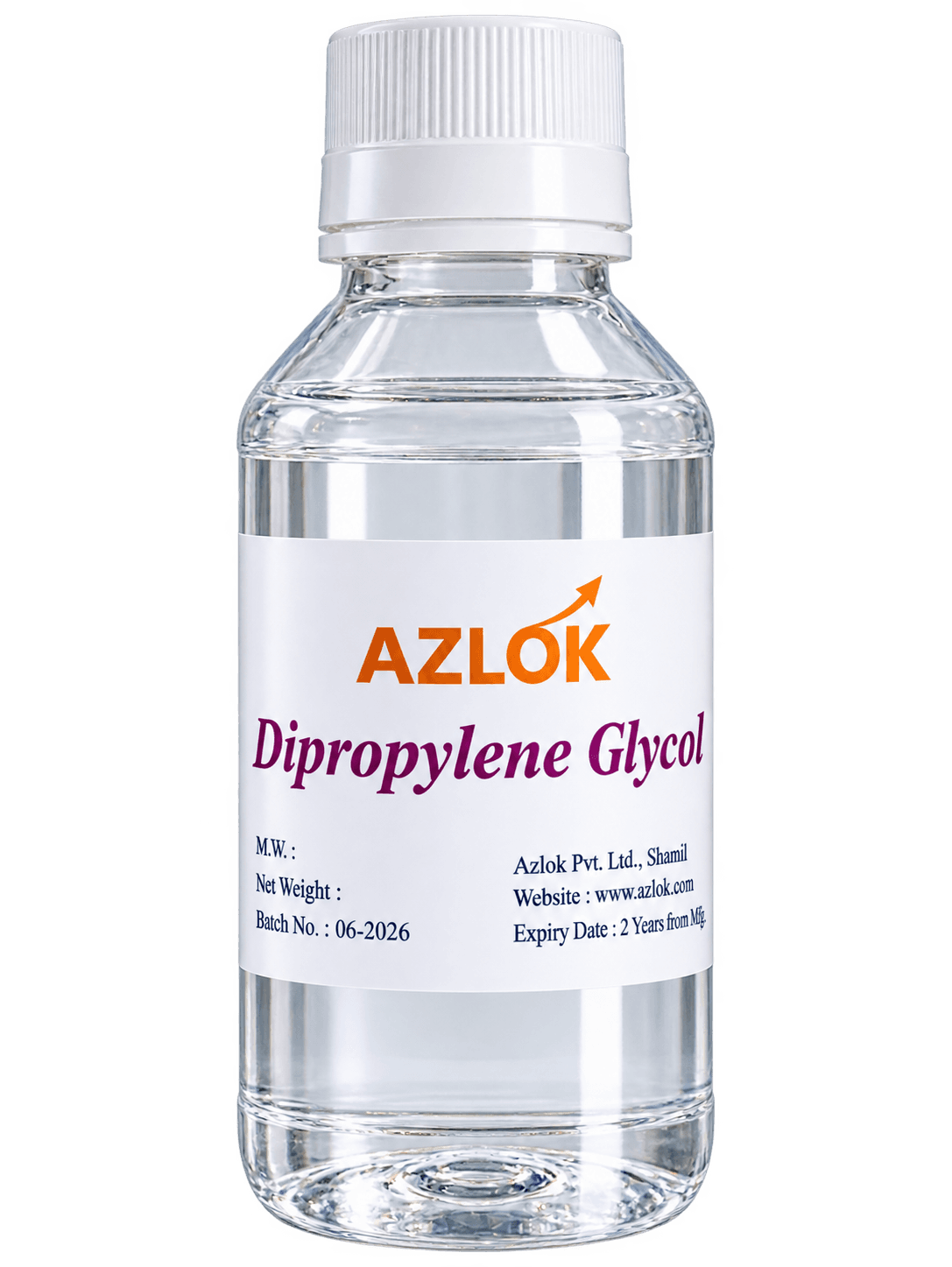
Dipropylene Glycol (DPG): What It Is and How to Use It in Fragrance and DIY Blends

Dipropylene glycol, usually shortened to DPG, is a clear, colourless, nearly odourless liquid used mainly as a diluent and solvent for fragrance oils, and as a carrier in cosmetics and personal care products. If you make perfumes, room sprays or reed diffusers, DPG is what you use to thin down concentrated fragrance oils without changing their scent.
What Is Dipropylene Glycol?
DPG belongs to the glycol family of organic compounds. It has low volatility, meaning it does not evaporate quickly, and it mixes well with both fragrance oils and many other cosmetic ingredients. Because it is practically odourless, it dilutes a scent's strength without adding any smell of its own. This is exactly why it is so popular among perfumers and candle- and diffuser-makers.
Common Uses
- Fragrance dilution: The most common use. DPG lets you blend strong perfume concentrates down to a workable strength for testing, sampling and finished products.
- Reed diffusers and room sprays: As a low-volatility base, it helps carry fragrance and slows evaporation so a diffuser lasts longer.
- Cosmetics and personal care: It acts as a solvent and humectant-style carrier in lotions, deodorants and similar formulations.
- Industrial and formulation work: DPG is used as a general-purpose solvent where a stable, low-odour liquid is needed.
How to Use DPG for Fragrance
The idea is simple: mix your fragrance oil with DPG to reach the concentration you want. A typical starting point for testing is a ratio somewhere between 20 and 50 percent fragrance to DPG, though this depends entirely on the strength of your oil and the end use.
- Measure your fragrance oil by weight for accuracy.
- Add DPG gradually and stir gently until fully blended.
- Let the blend rest for a few hours so the components marry, then smell-test on a scent strip.
- Adjust up or down and record your ratios so you can repeat a successful blend.
Always confirm compatibility with your specific application. For example, if you are adding fragrance to a candle wax or a soap base, follow that base's guidelines rather than assuming DPG alone is suitable.
Safety and Handling
DPG is widely used, but treat it like any raw chemical and handle it sensibly.
- Work in a well-ventilated space and avoid prolonged skin contact; wear gloves when handling larger quantities.
- Keep it away from eyes. Rinse with plenty of water if contact occurs.
- Do not ingest. This is a raw material for formulation, not a food or beverage ingredient.
- Keep containers tightly closed and out of reach of children and pets.
- If you are making leave-on skin products, patch-test the finished formula and follow the usage limits recommended for your ingredients.
When in doubt, check the safety data sheet and the recommended usage levels for your particular product type.
Buying and Storage Tips
Azlok stocks dipropylene glycol in sizes from a handy 100 gm pack up to bulk 25 kg quantities, so you can buy a small amount to test your blends before committing to a larger batch. Choose a size that matches how quickly you go through it, since buying too much at once can mean it sits in storage for months.
- Store in a cool, dry place away from direct sunlight and heat.
- Keep the lid firmly closed to prevent moisture pickup and contamination.
- Use clean, dry tools when measuring to keep the batch pure.
- Label decanted bottles clearly with the contents and date.
Stored properly, DPG has a long, stable shelf life, which makes buying a moderate quantity a practical choice for regular makers.
FAQ
What is dipropylene glycol used for?
It is mainly used as a diluent for fragrance oils and as a solvent or carrier in cosmetics, personal care products, reed diffusers and industrial formulations. Its low odour and low volatility make it especially useful for thinning perfume concentrates.
Does DPG have a smell?
DPG is nearly odourless, which is why it is preferred for diluting fragrances. It lets you reduce a scent's intensity without introducing any competing smell of its own.
What ratio of DPG to fragrance oil should I use?
There is no single rule. Many makers start testing somewhere between 20 and 50 percent fragrance to DPG and adjust based on the oil's strength and the intended product. Always record your ratios so you can reproduce results.
Is dipropylene glycol safe to use?
DPG is widely used in cosmetics and fragrance work when handled correctly. Use it in a ventilated area, avoid eye contact, keep it away from children, and never ingest it. For skin products, patch-test the finished formula and follow standard usage guidelines.
How should I store DPG?
Keep it in a cool, dry place, out of direct sunlight, with the container tightly closed. Use clean tools and label your bottles. Stored this way it stays stable for a long time.