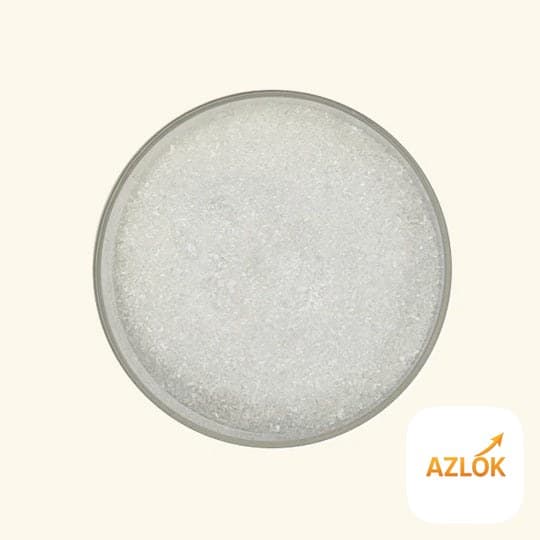

Epsom salt is magnesium sulfate (MgSO4), a naturally occurring mineral compound that dissolves easily in water and is used mainly for relaxing bath soaks, foot soaks, gentle body scrubs and simple skincare routines. Despite the name, it is not table salt and is not meant to be eaten. Azlok's Epsom Salt is a technical-grade, crystalline product at around 99% purity, suited to personal care and DIY use.
What Epsom salt actually is
Chemically, Epsom salt is magnesium sulfate, made up of magnesium, sulfur and oxygen. It appears as colourless to transparent crystalline granules with a faint bitter odour and a mildly acidic pH of roughly 5.5 to 6.5. It is commercially produced by reacting magnesium carbonate with sulfuric acid. You may see it listed under its alternative name, magnesium sulfate, or by its CAS number 7487-88-9.
Because it dissolves so readily in warm water, it is a favourite ingredient for bath and foot products, and its coarse texture makes it a handy exfoliant in scrubs.
Common uses at home
- Relaxing bath soak: Dissolve a generous handful in a warm bath to unwind after a long day.
- Foot soak: Soften rough, tired feet by soaking them in warm water with Epsom salt.
- Exfoliating body scrub: Mix with a carrier oil for a gritty scrub that sloughs off dead skin.
- Soothing skin irritations: Many people find a diluted soak calming for itchy or irritated patches.
- Post-workout comfort: A warm soak is a traditional way to ease the feeling of sore, overworked muscles.
How to use it
For a bath soak
Add about 1 to 2 cups of Epsom salt to a full warm bath and stir until dissolved. Soak for 15 to 20 minutes, then rinse with plain water and moisturise afterwards, since warm water can leave skin feeling dry.
For a foot soak
Stir 2 to 3 tablespoons into a basin of warm water. Soak your feet for 10 to 15 minutes, then dry thoroughly, especially between the toes.
For a body scrub
Combine roughly half a cup of Epsom salt with two to three tablespoons of a carrier oil such as coconut or almond oil. You can add a couple of drops of an essential oil if you like. Massage gently onto damp skin in circular motions, avoiding the face and any broken skin, then rinse. Use once or twice a week at most.
Safety notes worth reading
Epsom salt is generally well tolerated for external use, but a few precautions matter:
- Do not ingest this technical-grade product. It is intended for cosmetic and topical use, not for internal consumption.
- Patch-test first. Apply a small diluted amount to your inner arm and wait 24 hours before wider use, particularly if you have sensitive skin.
- Avoid broken or freshly shaved skin and keep it away from your eyes. Rinse well if it stings.
- Keep out of reach of children and store away from food items to prevent confusion with edible salt.
- If you have a skin condition, diabetes or any health concern, check with a doctor before starting regular soaks.
Buying and storage
Azlok offers Epsom Salt in a wide range of pack sizes, from a handy 500 g pouch starting at ₹159 up to 1 kg, 5 kg, 10 kg, 20 kg and 25 kg for regular users, spas and small businesses. Made in India, it carries a shelf life of around 24 months when stored well.
To keep it fresh, store the salt in an airtight container in a cool, dry place away from direct sunlight and moisture. Because it readily absorbs water from the air, a tightly sealed jar prevents clumping. If it does harden into lumps, it usually still dissolves fine in warm water.
FAQ
Is Epsom salt the same as regular salt?
No. Table salt is sodium chloride, while Epsom salt is magnesium sulfate. They are different compounds, and Epsom salt is used for soaks and scrubs, not for seasoning food.
Can I drink Epsom salt water?
This technical-grade Epsom salt is meant for external, cosmetic use only. Do not ingest it. Any internal use of magnesium sulfate should only be under medical guidance with an appropriate pharmaceutical-grade product.
How much Epsom salt should I add to a bath?
About 1 to 2 cups in a full warm bath is a common amount. For a foot soak, 2 to 3 tablespoons in a basin of warm water works well.
Does Epsom salt expire?
It has a shelf life of roughly 24 months. Kept dry and sealed, it stays usable; exposure to moisture may cause clumping but does not necessarily spoil it.
Can I use Epsom salt on my face?
It is best kept to the body rather than the delicate facial skin. Some people use a very dilute soak, but always patch-test first and avoid the eye area and any broken skin.