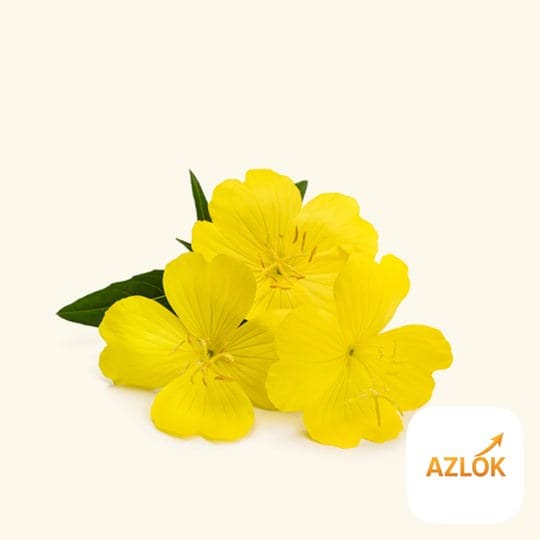

Evening primrose oil is a lightweight carrier oil cold-pressed from the seeds of Oenothera biennis, prized for its high content of essential fatty acids, especially gamma-linolenic acid (GLA). You can use it on its own as a facial oil, blend it with heavier carrier oils, or add it to homemade creams, serums and soaps to help keep skin soft and supple. It is meant for topical and formulation use, not for casual ingestion.
What is evening primrose oil?
The oil comes from the small seeds of the evening primrose flower. Because it is cold-pressed, it retains the delicate fatty acids that give it a reputation as a “high-end” botanical oil. It is thin and absorbs fairly quickly, which makes it pleasant to use on the face and easy to combine with other ingredients. The colour ranges from yellow to dark yellow, and it has a mild, characteristic odour.
Key specifications for makers: botanical name Oenothera biennis, CAS No. 65546-85-2, specific gravity 0.9100–0.9350 at 25°C, refractive index around 1.484, flash point 240°C. It is soluble in alcohol and oils but insoluble in water.
Common uses
- Facial oil: A few drops massaged into clean skin at night can help skin feel soft and comfortable, particularly if it tends to be dry or rough.
- Carrier for essential oils: Dilute essential oils like lavender or geranium in evening primrose oil before applying to skin.
- Serum blends: Combine with jojoba, rosehip or argan oil to build a lightweight face serum.
- Soap and candle making: Add as a superfatting or luxury oil in cold-process soap and skin balms.
- Hair and scalp: Work a small amount into the scalp and lengths as a pre-wash treatment for dry, brittle hair.
How to use it
- Start with clean, slightly damp skin so the oil spreads easily.
- Warm 3–5 drops between your palms and press gently into the face and neck.
- If blending with essential oils, keep the essential oil at roughly 1–2% of the total mixture for face use.
- For a richer body treatment, mix evening primrose oil with a heavier oil such as almond or coconut in equal parts.
- Apply at night if you find the finish too dewy for daytime.
Tips and safety notes
- Patch test first. Apply a little to your inner forearm and wait 24 hours before wider use, especially if you have sensitive skin.
- For external use. Do not ingest this cosmetic-grade oil; dietary supplements are a separate, regulated product.
- Keep away from children. Store bottles out of reach and away from heat.
- Watch for oxidation. Fatty-acid-rich oils can turn rancid; a sharp, off smell means it is time to discard.
- Consult a professional if you are pregnant, on medication, or managing a skin condition before adding any new oil to your routine.
Buying and storage
Azlok stocks cold-pressed evening primrose oil in sizes from 100 GM up to 20 KG, so it suits both home users and small businesses making skincare or soap in batches. Prices start at ₹299, and packaging can be arranged as per requirement for bulk orders. The oil is of Indian origin and carries a shelf life of about two years when stored well.
To keep it fresh:
- Store in a cool, dark place away from direct sunlight.
- Keep the cap tightly closed to limit contact with air.
- For larger quantities, decant into a smaller amber bottle for daily use so the main stock is opened less often.
- Refrigeration can extend freshness in warm, humid climates.
FAQ
Is evening primrose oil good for the face?
Yes, it is a light facial oil that many people use to help dry or dull-looking skin feel softer. Because it absorbs relatively quickly, it works well as a night-time oil or blended into a serum.
Can I use it undiluted on skin?
As a carrier oil, it can be used directly on the skin after a patch test. However, essential oils should always be diluted in it rather than applied neat.
How is Azlok's evening primrose oil extracted?
It is cold-pressed from the seeds, a method that avoids high heat and helps preserve the oil's natural fatty acids.
How long does it last?
The shelf life is around two years when stored in a cool, dark place with the cap sealed. Discard it if the smell turns sharp or rancid.
Can I use it in soap and candle making?
Yes. It is popular as a luxury or superfatting oil in cold-process soaps and skin balms. For candles it is used sparingly, mainly in skin-contact products rather than wax blends.