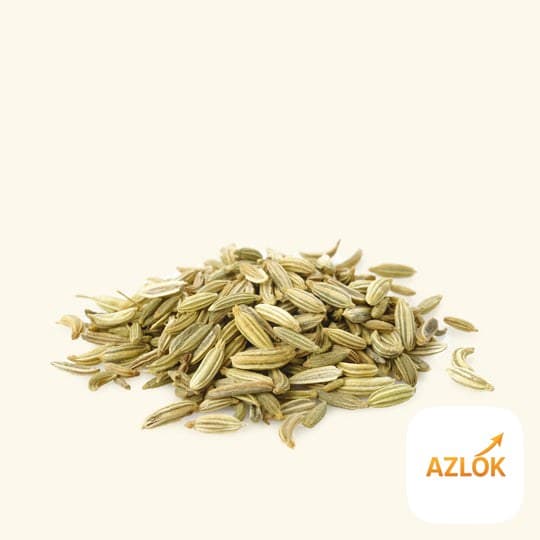
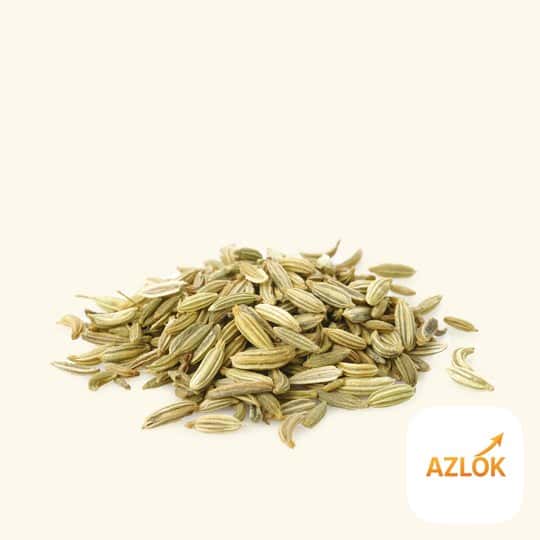
Fennel seed oil is an aromatic herbal oil cold pressed from the seeds of Foeniculum vulgare, prized for its sweet, liquorice-like scent and its long history in traditional home care. At Azlok, it is used mainly for external purposes such as aromatherapy, soap and candle making, and hair care products. It is meant only for external use, so treat it as a fragrant ingredient rather than something to swallow.
What is fennel seed oil?
Fennel is a tall herb with feathery leaves and yellow flowers. The oil is drawn from its dried seeds and carries the plant's characteristic warm, slightly spicy aroma. Azlok's fennel seed oil is cold pressed, colourless to slightly green, and soluble in alcohol. Its main constituents include alpha-phellandrene, methyl chavicol (estragole), limonene and menthone, which together give it that distinctive sweet-anise fragrance.
A few quick specifications for makers and small businesses: botanical name Foeniculum vulgare, CAS No. 8006-84-6, specific gravity around 0.961 gm/ml, refractive index 1.545, flash point 145 degrees Fahrenheit, and a shelf life of about two years.
Common uses
- Soap and candle making: A little goes a long way to add a warm, herbal note to cold-process soaps, melt-and-pour bases and scented candles.
- Aromatherapy: Diffused in small amounts, its comforting aroma is popular for relaxation and creating a fresh room scent.
- Hair care formulations: Used in shampoos, hair oils and scalp blends for its fragrance and traditional appeal.
- Skincare and cleansing bars: Added to wash-off products and balms where a herbal scent is wanted.
- Massage and topical blends: Diluted well into a carrier, it features in warming rub-style formulations.
How to use it
Fennel seed oil is concentrated, so it should always be diluted before it touches skin. As a general guide for external, leave-on products, keep it to roughly 1 percent of the total blend, and even lower for facial products. Mix it into a neutral carrier such as coconut, almond or jojoba oil before applying.
- Blend it: Add a few drops to 10 ml of carrier oil, or measure by weight for larger batches.
- Patch test: Apply a small amount to the inner forearm and wait 24 hours before wider use.
- For diffusing: Use only a few drops in your diffuser and ventilate the room.
It pairs beautifully with rosemary, sandalwood and cinnamon oils, so keep those in mind when building a signature soap or candle fragrance.
Safety notes
Please read these carefully before you begin:
- External use only. Do not ingest the oil.
- Always patch test before applying to skin, and dilute properly.
- Avoid direct sunlight on treated skin, as citrus and herbal oils can increase sensitivity.
- Pregnant women should consult a doctor before use.
- Keep away from children and store the bottle tightly closed.
- Because it contains estragole, use it sparingly and follow sensible dilution limits.
Buying and storage
Azlok offers fennel seed oil in a wide range of pack sizes, from a 100 GM bottle for home hobbyists up to 5 KG, 10 KG, 20 KG and 25 KG for small businesses and bulk formulators. The 100 GM size is priced at Rs. 579, which makes it easy to try before committing to larger quantities.
To keep the oil fresh through its two-year shelf life, store it in a cool, dark place away from heat and direct sunlight. Keep the cap sealed tightly to slow oxidation, and label your bottle with the opening date. If the aroma turns sharp or the colour changes markedly, it is past its best and should be replaced.
FAQ
Is fennel seed oil a carrier oil or an essential oil?
It is a concentrated aromatic oil listed here under carrier oils, but it should be diluted like an essential oil. Blend it into a neutral base such as coconut or jojoba before applying to skin.
Can I eat or drink fennel seed oil?
No. This product is meant for external use only. Do not ingest it. If you want fennel for cooking, use whole or ground fennel seeds instead.
What does fennel seed oil smell like?
It has a warm, sweet, liquorice- or anise-like aroma with a slightly herbal edge, which is why it works well in soaps, candles and relaxing diffuser blends.
Which oils blend well with fennel seed oil?
It blends nicely with rosemary, sandalwood and cinnamon oils. These make good starting points for building soap and candle fragrances.
How much should I use in a skincare blend?
Keep it low, around 1 percent of the total blend for leave-on products, and less for facial use. Always patch test first and avoid sun exposure on treated skin.