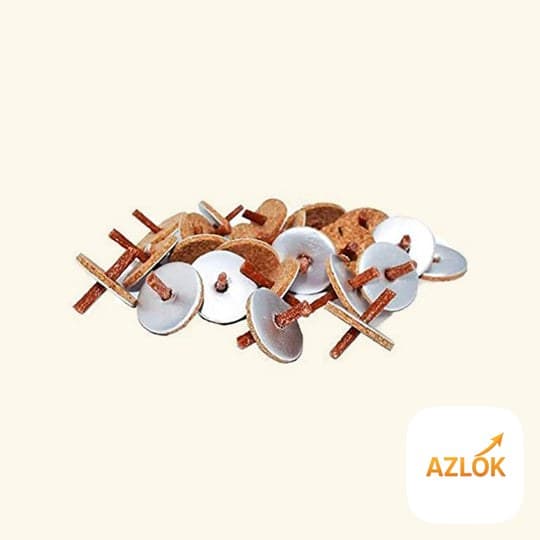

Floating wicks, also known as Parsi Vat, are small cork-based wicks that float on the surface of oil so they never sink to the bottom of your diya or bowl. Because cork is buoyant and absorbs very little oil, one wick can keep burning for a long time using only a thin layer of oil on top of water.
What are floating wicks made of?
These wicks use cork, an impervious, naturally buoyant material. The cork disc holds a small wick and sits on the oil, so it stays lit without drowning. This is the traditional design behind the Parsi Vat, long favoured for oil lamps in Indian homes and places of worship.
Compared with plain cotton wicks, cork floating wicks soak up far less oil. Cotton draws oil constantly and can waste it, while a cork wick pulls up only what it needs. The result is a steadier, cleaner flame and noticeably less oil used per hour of light.
Why people choose cork floating wicks
- Cost-effective: Less oil absorbed means longer burn time from the same quantity of oil.
- Reusable: Once the oil is spent, many wicks can be dried and used again.
- Clean and smokeless burning: A controlled flame produces less soot than an over-soaked cotton wick.
- Compact and portable: Each wick is roughly 3 x 3 x 2 cm, so a pack takes up almost no space.
- Eco-friendly: Cork is a natural, renewable material.
Common uses
- Religious and spiritual practices: Ideal for akhand jyot and everyday puja diyas.
- Festive decorations: Float several in a wide bowl of water for Diwali and other celebrations.
- Aromatherapy and relaxation: Add a few drops of essential oil to a scented, gentle glow.
- Emergency lighting: A reliable, low-cost light source during power cuts.
- Home décor: Floating lights in glass bowls or brass urlis add warmth to any corner.
How to use floating wicks
- Take a shallow bowl, diya or glass container.
- Fill the base with water, then pour a thin layer of oil on top. Ghee or vegetable oils work well.
- Gently place the cork wick on the oil surface so it floats flat.
- Let the wick absorb oil for a few seconds, then light the tip.
- To use multiple wicks, space them apart in a wider bowl so the flames don't crowd.
The water base is a handy safety feature: once the oil burns down, the flame reaches the water and puts itself out.
Safety notes
- Never leave a lit diya or lamp unattended.
- Keep flames away from curtains, paper and other flammable items.
- Place lamps on a stable, heat-resistant surface.
- Keep wicks and lit lamps out of the reach of children and pets.
- Do not overfill with oil, and ensure the area has some ventilation.
Buying and storage tips
Azlok offers these floating wicks on a Buy 1 Get 1 Free basis, with packs of 50, 250, 500 and 1000 (you receive an equal number free). Starting at ₹99, they suit both a single household and small businesses that light many lamps. Cork is light, so even the largest pack stays compact.
Store the wicks in a dry, airtight container away from moisture and direct sunlight. Dry cork lights easily and burns cleanly, so keeping the pack sealed helps them last. If you plan to reuse wicks, let them dry fully before storing again.
FAQ
What is a Parsi Vat wick?
Parsi Vat is the traditional name for a floating cork wick used in oil lamps. It floats on the oil surface, burns steadily and doesn't sink, which is why it has been used in Indian homes and prayer rooms for generations.
Do floating wicks really save oil?
Yes. Cork absorbs much less oil than cotton, so the wick draws up only what it needs. You can keep a diya lit for longer using a smaller amount of oil.
Which oil works best with cork floating wicks?
Ghee and common vegetable oils both work well. Pour a thin layer of oil over a water base, float the wick on top, and light it once it has absorbed a little oil.
Can floating wicks be reused?
Often, yes. After the oil is spent, let the wick dry completely and it can be used again. Discard any wick that is charred or falling apart.
Are these wicks safe indoors?
They are safe for normal indoor use when supervised. Place lamps on a stable, heat-resistant surface, keep them away from flammable items and children, and never leave a flame unattended.