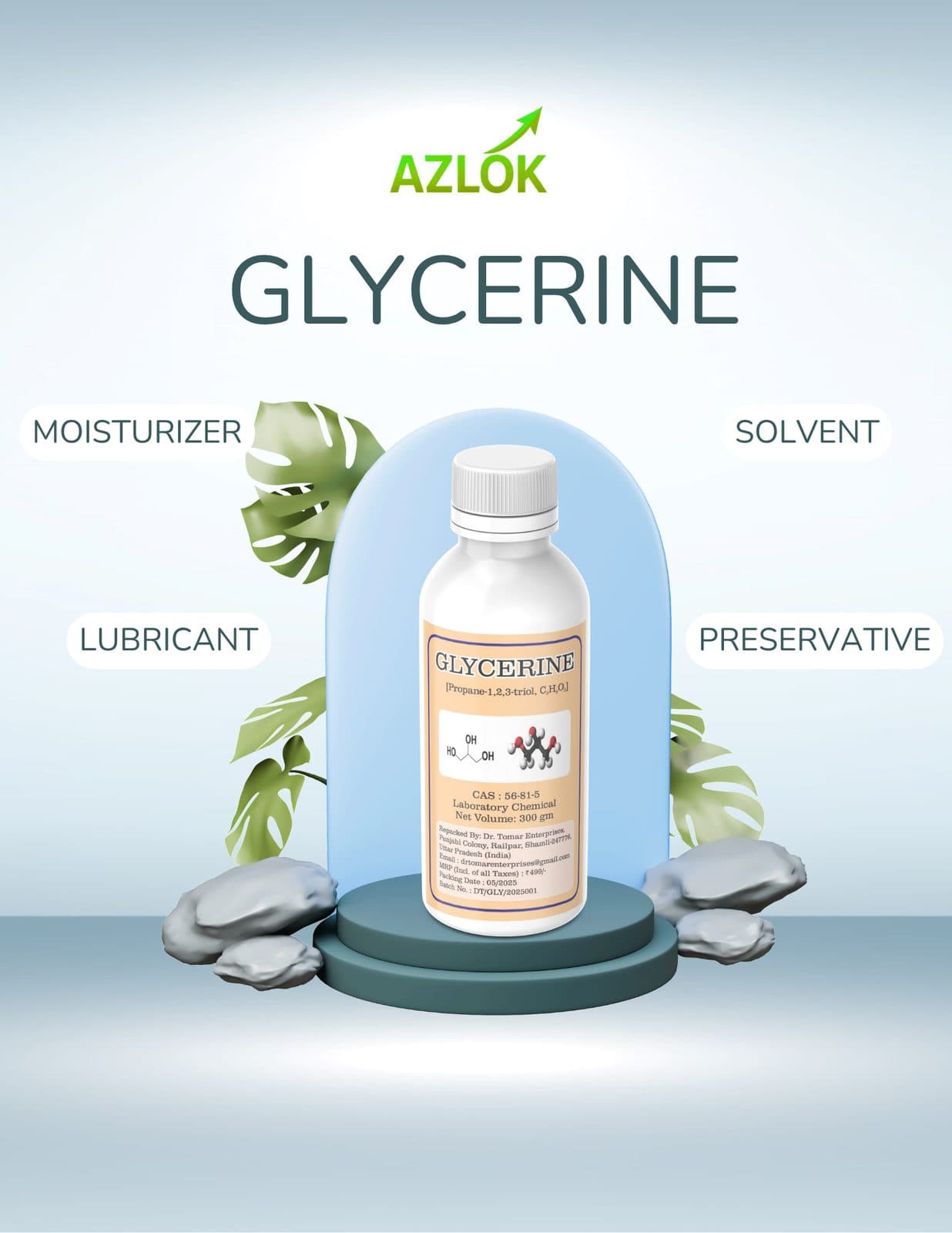
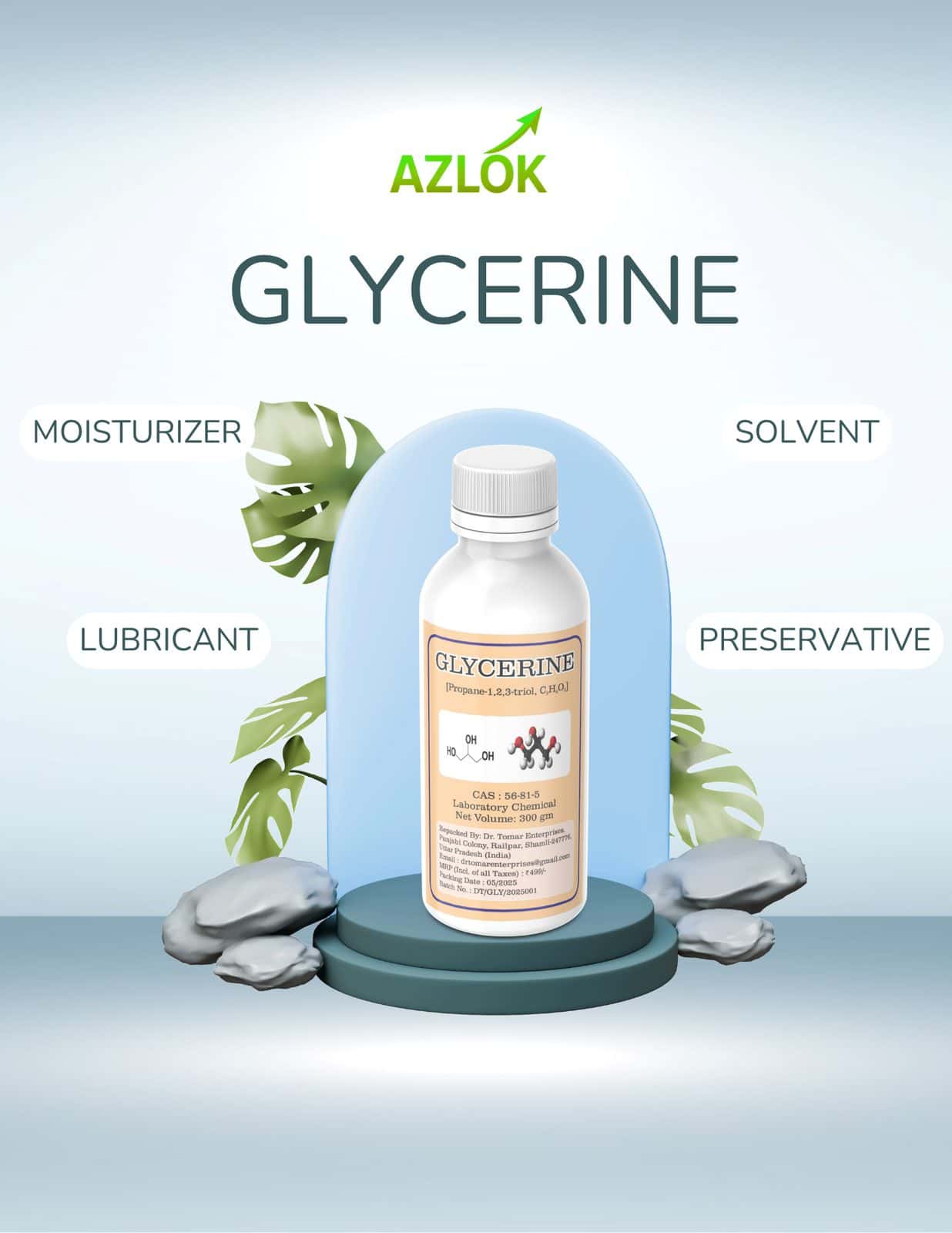
Glycerine (glycerol, C₃H₈O₃) is a clear, syrupy, odourless liquid that has been in chemists' shops forever — and it remains one of the best-value skincare ingredients you can buy. It's a humectant: it attracts and holds water.
But there's a catch most people miss, and getting it right is the difference between soft skin and tight, dehydrated skin.
How glycerine works (and the one rule)
Glycerine pulls moisture toward itself. Applied to damp skin or used diluted, it draws water from the air and deeper layers and holds it at the surface — that's the plump, hydrated feel. The rule: never apply neat glycerine to dry skin in very dry air. With no humidity to draw from, it can pull water out of your skin instead. Always dilute it, and apply to slightly damp skin.
For skin
- Daily hydration: mix a few drops into rose water (roughly 1 part glycerine to 4–5 parts rose water) and mist or pat onto damp skin.
- Cracked heels/elbows: a thicker glycerine-and-water mix at night, ideally sealed with a cream.
- Lips: a tiny dab as a simple lip moisturiser.
For hair
A few drops in a spray bottle of water makes a light de-frizz/curl-refresh mist — again, the diluted-and-damp principle applies. Too much neat glycerine in dry weather leaves hair sticky.
Around the home
Glycerine is food- and cosmetic-grade versatile: it keeps fondant and icing pliable, preserves softness in homemade soaps, and is used to keep things from drying out. Always check you have the right grade for the job.
Frequently Asked Questions
Can I apply glycerine directly on my face?
Dilute it — neat glycerine is too strong and, in dry air, can pull moisture out of skin. Mix a few drops into rose water or water and apply to slightly damp skin.
What is the correct glycerine-to-rose-water ratio?
About 1 part glycerine to 4–5 parts rose water is a good, comfortable everyday hydrating mist for most skin.
Does glycerine darken or lighten skin?
Neither — it's a humectant that hydrates. It doesn't bleach or tan skin; it just makes it softer and more supple when used correctly.
Is glycerine good for dry, cracked heels?
Yes — a thicker glycerine-water mix at night, sealed with a cream or socks, is a classic, cheap fix for cracked heels and rough elbows.
Azlok Glycerine is a pure, multi-purpose humectant for skin, hair and home use. Remember the golden rule: dilute it, and apply to damp skin.