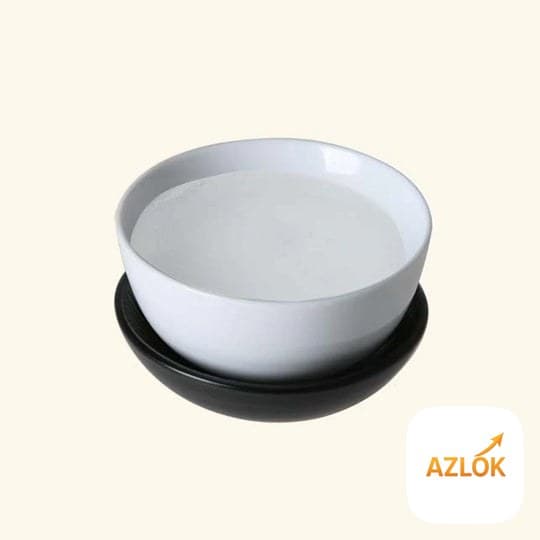

Glycolic acid is a small alpha hydroxy acid (AHA) used in skincare to gently exfoliate the surface of the skin, helping to loosen dead cells and improve texture. In cosmetic formulation it is a common active ingredient in toners, serums, face creams, body washes, scrubs and soaps. Azlok's glycolic acid is a technical-grade raw material meant strictly for external, formulated use — never for direct application at full strength or for ingestion.
What is glycolic acid?
Also called hydroxyacetic acid or glycol acid, it is the smallest member of the AHA family, which makes it able to penetrate the skin more readily than larger acids. It occurs naturally in sugar crops, but the commercial grade is usually made synthetically by hydrolysing molten monochloroacetic acid with sodium hydroxide, followed by re-acidification.
Some quick technical details for formulators:
- Chemical formula: C2H4O3
- CAS number: 79-14-1
- Molecular weight: 76.05 g/mol
- Form: colourless liquid with a characteristic odour
- pH: around 3 to 4
- Solubility: soluble in water, alcohol and acetic acid
- Grade: Technical Grade
Common uses in cosmetics
Because it works on the outer layer of skin, glycolic acid appears in a wide range of personal-care products. Formulators typically add it to:
- Exfoliating toners and face mists
- Brightening serums and night creams
- Body washes, cleansers and deodorants
- Facial and body scrubs
- Cold-process and melt-and-pour soaps
The right concentration depends entirely on the product type and the pH you are aiming for. Leave-on products usually contain far less active than professional rinse-off treatments, so always follow a tested formulation rather than guessing.
How to use it in a formulation
Glycolic acid is water-soluble, so it is added to the water phase of a formula. A few practical pointers:
- Dilute properly. Never use it neat on skin. Blend it into your base at the small percentage your recipe calls for.
- Adjust the pH. AHAs need a mildly acidic environment to function, but too low a pH is harsh. Many formulators neutralise partially with an alkali such as sodium hydroxide solution to reach a skin-friendly pH.
- Patch test the finished product. Apply a small amount to the inner forearm and wait 24 hours before wider use.
- Pair with sun care. Exfoliating acids can make skin more sensitive to sunlight, so recommend daytime SPF with any leave-on AHA product.
Safety notes you should not skip
This is a technical-grade acidic raw material, so treat it with respect:
- For external, formulated use only — do not ingest and do not apply undiluted.
- Wear gloves and eye protection while handling the concentrate, and work in a ventilated area.
- Keep it away from children and pets, and store it clearly labelled.
- Avoid use on broken, irritated or ailing skin.
- Keep the MSDS handy and follow it if a spill or splash occurs — rinse skin or eyes thoroughly with water.
Buying and storage tips
Azlok stocks glycolic acid in pack sizes from 100 GM up to 25 KG, so hobbyists making a single batch and small businesses running production can both buy what they need. It carries a shelf life of around 24 months when stored well. Keep the container tightly closed, away from direct sunlight and heat, in a cool dry place. Because it is corrosive in concentrate, store it apart from food and use acid-resistant measuring equipment. If you sell finished products, ask for the COA and MSDS to keep your records complete.
FAQ
Is glycolic acid safe for home DIY skincare?
It can be, when it is diluted to a suitable low percentage, adjusted to a skin-friendly pH, and patch-tested. The raw concentrate is acidic and must be handled with gloves and care. If you are new to formulating, start with a proven, tested recipe.
What percentage of glycolic acid should I use?
There is no single answer — it depends on the product and pH. Leave-on products generally use much lower amounts than rinse-off treatments. Follow a reliable formulation rather than adding it by eye.
Can I apply glycolic acid directly to my face?
No. This technical-grade material is meant to be blended into a formula, not applied neat. Undiluted acid can cause irritation or burns.
How should I store glycolic acid?
Keep it in a tightly sealed, labelled container in a cool, dry, shaded place, away from children and food. Stored properly it lasts around 24 months.
Does glycolic acid make skin sun-sensitive?
AHAs can increase sensitivity to sunlight, so it is wise to include daytime sun protection when using leave-on glycolic acid products.