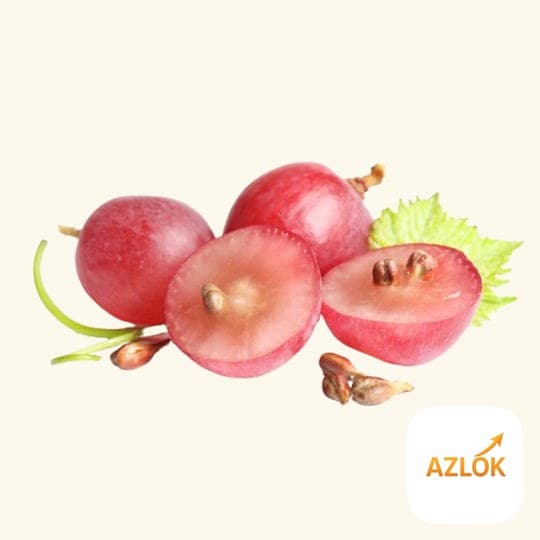
Grape Seed Liquid Extract: A Practical Guide for DIY Skincare and Formulations

Grape Seed Liquid Extract is a concentrated botanical extract made from the seeds of the grape (Vitis vinifera), used mainly as an active ingredient in skincare, haircare and cosmetic formulations at around 1-2%. Azlok's version is offered in both water-soluble (alcohol-free, extracted using vegetable glycerine) and oil-soluble (soy oil) forms, so you can pick the one that matches your recipe.
What is Grape Seed Liquid Extract?
This is a 4:1 herb-to-extract liquid, which means 4 kg of grape seed raw material is used to yield 1 kg of finished extract. It is naturally tasteless and odourless, which makes it easy to work into a wide range of blends without altering the fragrance or flavour of your base. Grape seeds are known for containing plant compounds sometimes referred to as leucoanthocyanins or proanthocyanidins (you may also see the trade name activin), which is why the extract is popular in cosmetic work.
Key details worth knowing:
- Botanical name: Vitis vinifera
- CAS number: 8024-22-4
- Solubility: water-soluble (glycerine-based) or oil-soluble (soy oil)
- Preservative: contains BHT (butylated hydroxytoluene)
- Free from: gluten, artificial colour, heavy metals and fertilisers
Common uses in formulations
Because it blends invisibly and carries no scent, formulators reach for grape seed extract in many kinds of products:
- Facial serums and creams as a botanical active
- Toners and mists (use the water-soluble grade)
- Lotions and body butters (oil-soluble grade for anhydrous bases)
- Hair conditioners and leave-in blends
- Soap and bath products where a plant extract is wanted
Match the grade to your base: the glycerine-based water-soluble extract goes into the water phase of an emulsion or into water-based products, while the soy-oil-based version suits oils, balms and the oil phase.
How to use it
The recommended usage rate is 1-2% of the total formulation. A little goes a long way, so there is no benefit to overdosing your recipe.
- Decide whether your product is water-based or oil-based, then choose the matching grade.
- Weigh your ingredients rather than measuring by volume for accuracy.
- Add the extract during the cool-down phase of an emulsion (typically below 40°C) to protect the plant compounds.
- Stir gently and thoroughly until fully incorporated.
- Always use a suitable broad-spectrum preservative in any product that contains water — the BHT here protects the extract itself, not your finished formula.
Safety and honest notes
This is a cosmetic raw material, not a food or medicine. Please keep these points in mind:
- Keep it away from children.
- Avoid direct contact with the eyes; rinse well with water if contact happens.
- Do a small patch test on skin before using a new finished product.
- The oil-soluble grade uses soy oil, so note this if you or your customers have soy sensitivities.
- We make no medical or therapeutic claims — use it for its cosmetic and formulation value.
- If you are producing products to sell, request the COA and MSDS for the exact grade you buy and check local regulations.
Buying and storage
Azlok stocks Grape Seed Liquid Extract from 100 gm packs right up to bulk 25 kg quantities, so it suits both hobby makers and small manufacturers. Pricing starts at ₹299, and packaging is arranged as per requirement. The product is made in India and carries a shelf life of about two years when stored well.
To keep it in good condition, store the container in a cool, dry place away from direct sunlight and heat. Close the cap tightly after each use to limit air exposure, and always decant with clean, dry tools to avoid contamination.
FAQ
Is Grape Seed Liquid Extract safe to eat or drink?
No. This is a cosmetic-grade extract intended for topical formulations. Do not ingest it and keep it out of reach of children.
Which grade should I choose — water-soluble or oil-soluble?
Choose the water-soluble (glycerine) grade for water-based products like toners, mists and the water phase of creams. Choose the oil-soluble (soy oil) grade for balms, body oils and the oil phase of emulsions.
How much should I add to my recipe?
The recommended usage is 1-2% of the total weight of your formulation. Weigh ingredients for accuracy and add the extract during the cool-down stage.
What does the 4:1 ratio mean?
It means the extract is concentrated so that 4 kg of grape seed raw material yields 1 kg of finished extract, giving you a stronger botanical input per gram.
Does it contain a preservative?
Yes, it contains BHT to protect the extract. Even so, any finished water-containing product you make will still need its own broad-spectrum preservative.