Isopropyl Alcohol (IPA): What It Is, Where It's Used, and How to Pick the Right Grade
If you've ever cleaned a smudged camera lens, wiped down a circuit board, or watched a nurse swab your arm before a jab, you've already met isopropyl alcohol. It's one of those quietly essential chemicals that shows up everywhere — labs, factory floors, hospitals, repair benches — and most people never think twice about it until they need a bottle and realize they don't know which kind to buy.
So let's clear that up. Here's a straight, practical look at what IPA actually is, what it does well (and what it doesn't), and how to choose between the grades you'll see for sale.
What is isopropyl alcohol?
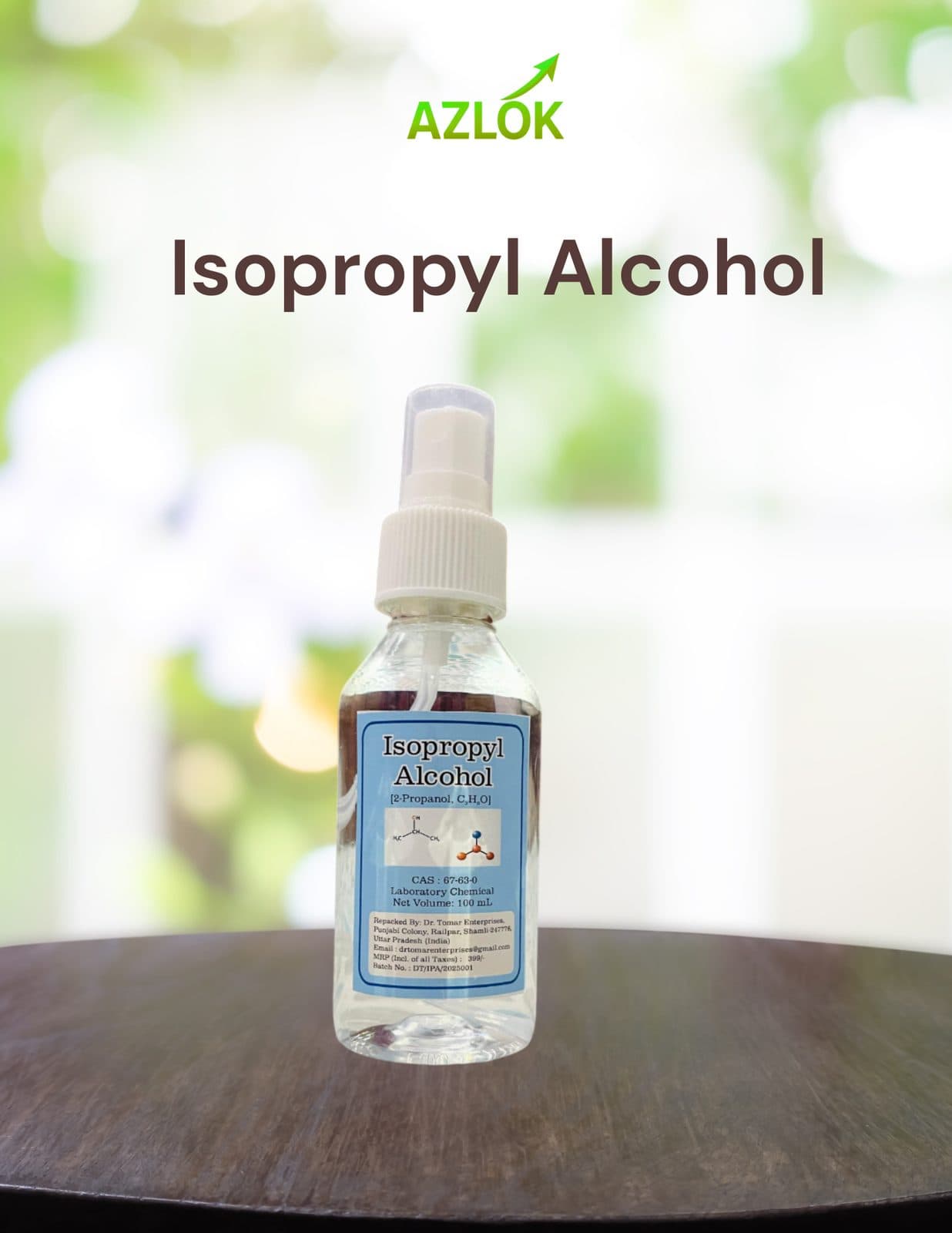
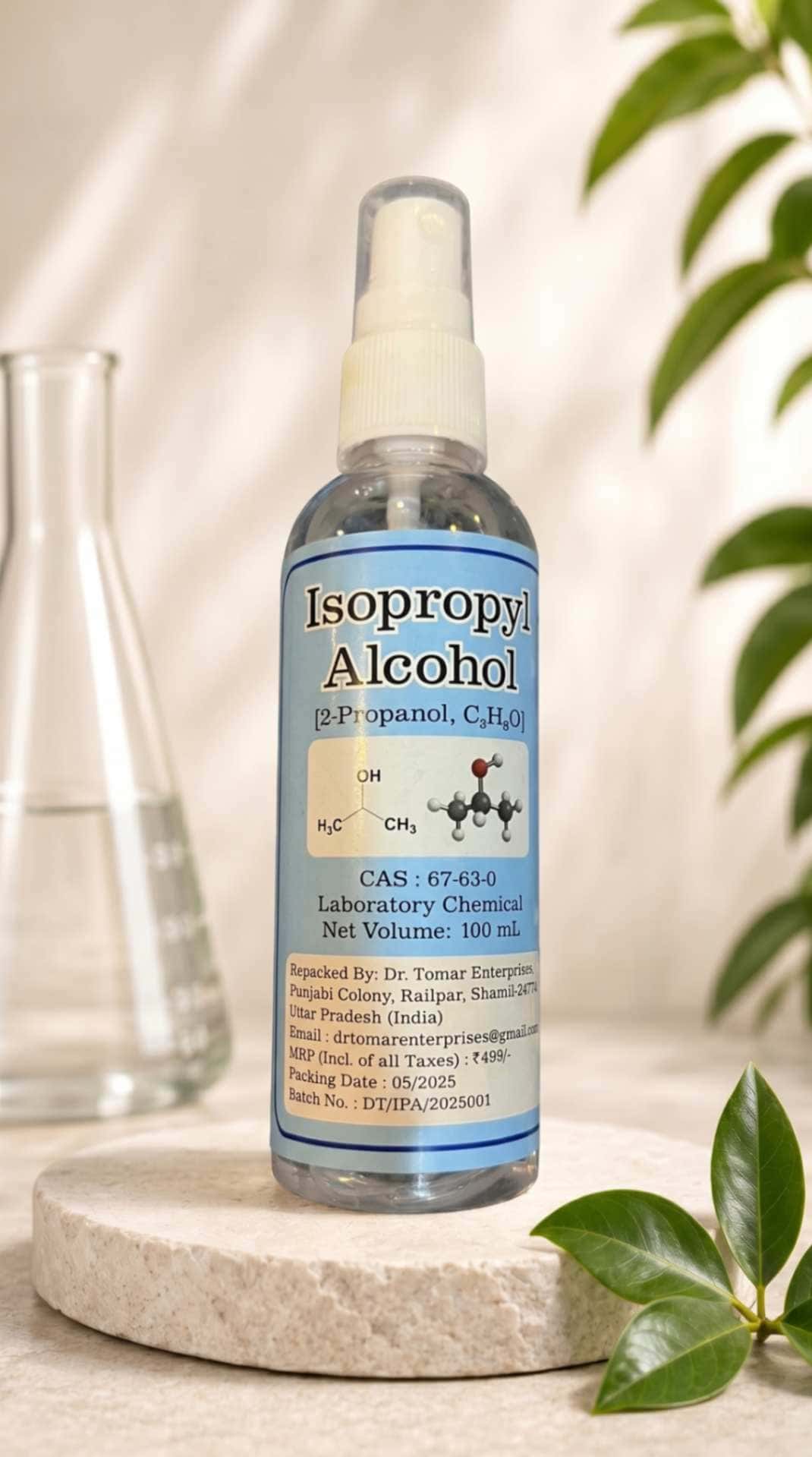
Isopropyl alcohol — also called isopropanol, 2-propanol, or just IPA — is a colourless, fast-evaporating solvent with the chemical formula C₃H₈O. It mixes freely with water and dissolves a wide range of oils, greases, and residues that water alone leaves behind. It also kills most bacteria and many viruses, which is why it pulls double duty as both a cleaner and a disinfectant.
The short version: it lifts grime, it disinfects, and it dries without leaving a film. That combination is hard to beat, and it's the reason a single chemical ended up in so many different industries.
The grades that matter: 70% vs 99%
This is the question that trips most buyers up, so it's worth getting right. The number on the label is the concentration of alcohol by volume, with the rest being water. And counterintuitively, more alcohol is not always better.
99% IPA (and similar high-purity grades) is what you want for anything electronic or moisture-sensitive. Because it's nearly anhydrous, it flashes off almost instantly and leaves essentially no residue. Use it for cleaning circuit boards, connectors, optical lenses, print heads, and any precision part where leftover water would cause corrosion or short-circuits.
70% IPA is the better disinfectant, which surprises people. The water content actually helps here: it slows evaporation so the alcohol stays in contact with the surface long enough to penetrate microbial cell walls and do its job. For wiping down surfaces, skin prep, and general sanitising, 70% is the workhorse.
A rough rule of thumb: if you're killing germs, reach for 70%. If you're cleaning electronics or anything that hates water, reach for 99%.
Common uses for IPA
The applications stretch across a lot of sectors. A few of the big ones:
Electronics and IT — degreasing PCBs, cleaning thermal paste off CPUs, restoring grimy contacts, prepping surfaces before soldering.
Healthcare and labs — surface disinfection, instrument cleaning, skin antisepsis, and as a solvent in countless lab procedures.
Manufacturing and industry — degreasing metal parts, cleaning before bonding or painting, and as a process solvent in coatings, inks, and adhesives.
Printing — fountain solutions in offset printing and cleaning print heads and rollers.
Pharma and cosmetics — a carrier and solvent in formulations, plus equipment cleaning under hygiene protocols.
Everyday and DIY — removing adhesive residue, cleaning whiteboards and screens, prepping surfaces for tape or vinyl, and degreasing tools.
If a task involves dissolving something oily or sanitising something quickly, IPA is usually somewhere on the shortlist.
How to choose the right IPA for your job
Three things actually decide which product you should order:
Purpose. Disinfecting points you toward 70%; precision cleaning and electronics point you toward 99%. Get this wrong and you'll either leave residue where you didn't want it or get weaker germ-killing than you expected.
Purity and grade. Technical grade is fine for general industrial cleaning. For pharma, lab, or sensitive manufacturing, look for a grade with a clear specification — pharmaceutical or reagent grade where it's called for.
Volume and packaging. A small bottle suits a repair bench; a drum or bulk pack makes sense for a production line. Buying at the right scale saves both money and the hassle of constant reordering.
Handling IPA safely
IPA is genuinely useful, but it's also highly flammable, so a little care goes a long way:
Keep it well away from open flames, sparks, and any source of ignition. The vapours catch easily.
Work somewhere ventilated. Breathing concentrated fumes in a closed room will give you a headache fast.
Wear gloves for prolonged contact — it dries out skin and can irritate it.
Avoid contact with eyes, and don't ingest it. It is not the same as the alcohol in drinks and is toxic if swallowed.
None of this is exotic; it's the same common sense you'd apply to any solvent. Treat it with a bit of respect and it's perfectly safe to use.
Storing isopropyl alcohol
Store it in a cool, dry, well-ventilated spot, out of direct sunlight and away from heat. Keep the container tightly closed — IPA evaporates and also slowly absorbs moisture from the air, which can dilute high-purity grades over time. Keep it clear of incompatible materials like strong oxidisers, and out of reach of children. Stored properly in its original sealed container, it has a long, stable shelf life.
Why buying the right IPA matters
Cheap, mystery-purity alcohol is a false economy. If the concentration isn't what the label claims, your electronics cleaning leaves streaks, your disinfection underperforms, or your process results drift. Sourcing IPA with a clear, consistent specification — and the right grade for your application — is the difference between a product that just works and one you have to second-guess every time.
If you're sorting out which grade and pack size fits your needs, you can check the available isopropyl alcohol options here and match the purity to the job rather than guessing.
Frequently asked questions
Is isopropyl alcohol the same as rubbing alcohol? Mostly, yes. "Rubbing alcohol" is a common name for isopropyl alcohol solutions, usually around 70%, sometimes with additives. High-purity 99% IPA is the same base chemical at a much higher concentration.
Which is better for disinfecting, 70% or 99% IPA? 70%. The water content slows evaporation so the alcohol stays on the surface long enough to kill microbes effectively. 99% evaporates too fast to do that as well.
Can I use isopropyl alcohol to clean my laptop or phone screen? Yes, with care. A small amount of high-purity IPA on a microfibre cloth (not sprayed directly onto the device) cleans screens and electronics well because it leaves no residue. Power off first and let it dry fully before switching back on.
Will IPA damage plastics or painted surfaces? It can. IPA is a strong solvent and may dull, soften, or strip certain plastics, paints, and coatings. Test on a hidden spot first if you're unsure.
Is isopropyl alcohol flammable? Yes, very. Both the liquid and its vapour are highly flammable, so keep it away from flames, sparks, and heat, and use it in a ventilated area.
What's the shelf life of isopropyl alcohol? Long, if stored correctly. Kept sealed in a cool, dark place away from heat and moisture, it stays stable for years. The main risk is gradual evaporation or moisture absorption from a loosely closed container.