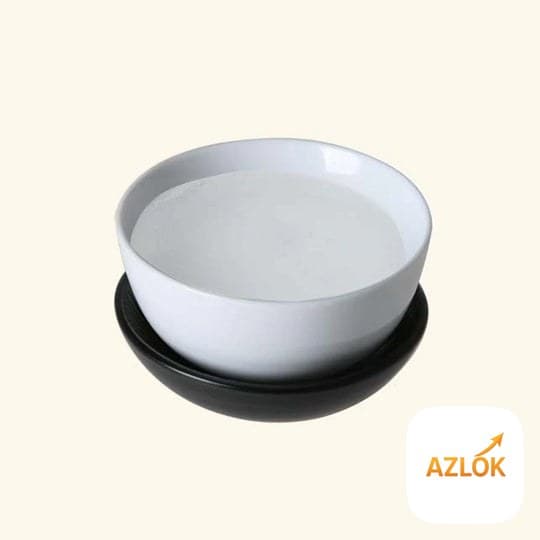

Isopropyl Myristate (IPM) is a light, colourless cosmetic emollient made by combining myristic acid and isopropyl alcohol. In simple terms, it is the ingredient that makes a lotion or cream glide on smoothly and sink in fast without leaving a greasy, heavy film. If you have ever wondered why a good moisturiser feels silky rather than sticky, IPM is often part of the answer.
What Isopropyl Myristate does in a formulation
IPM is what formulators call an emollient and a spreading agent. It reduces the oily, tacky feel of heavier oils and butters, improves how a product spreads across the skin, and helps active ingredients absorb better. It also acts as a mild solvent and can help thicken or fine-tune the texture of a formula.
- Improves skin feel: gives a dry, light, non-greasy finish.
- Boosts spreadability: a product covers more area with less drag.
- Cuts greasiness: blends with richer oils to lighten them.
- Acts as a carrier: helps dissolve and deliver other ingredients.
Common uses
Because it is so versatile, you will find IPM across a wide range of everyday products. Common applications include:
- Lotions, body butters and hand creams
- Face creams and serums
- Foundations, primers and other makeup
- Makeup removers and cleansing oils
- Shampoos, shower gels and bath products
- Perfume and fragrance bases as a diluent
It works especially well in makeup removers, where its solvent action helps lift long-wear foundation and waterproof products.
How to use Isopropyl Myristate
IPM is used at a low percentage of the total formula, typically around 1% to 20% depending on the product. A little goes a long way. As a general starting point:
- Decide your product type. Light lotions may use 1–5%, while richer creams or makeup removers can go higher.
- Add to the oil phase. Since IPM is oil-soluble, blend it with your carrier oils, butters and other oil-phase ingredients.
- Combine and emulsify as usual. Follow your normal method for combining oil and water phases with your chosen emulsifier.
- Test the feel. Make a small batch first and adjust the percentage up or down until the texture feels right.
Always weigh ingredients rather than measuring by volume for consistent, repeatable results.
Safety notes
The IPM sold here is industrial grade and intended for use as a cosmetic raw ingredient in formulations, not for direct application undiluted or for eating. A few honest reminders:
- Do not ingest. This is a formulation ingredient, not a food product.
- Patch test finished products. IPM can be comedogenic for some skin types, so those prone to breakouts should test on a small area first.
- Keep away from children and pets.
- Handle sensibly. Work in a well-ventilated space and avoid contact with eyes.
- Follow the MSDS. Refer to the safety data sheet for handling and disposal guidance.
Buying and storage tips
Azlok offers Isopropyl Myristate in sizes from 100 gm up to bulk 25 kg packs, so both small-batch hobbyists and small businesses can buy what suits them. Pricing starts at ₹149. A few storage pointers:
- Keep the container tightly closed to avoid contamination.
- Store in a cool, dry place away from direct sunlight and heat.
- Being a liquid with a faint odour and a 24-month shelf life, it stays stable well when stored correctly.
- Buy a size that matches how quickly you will use it, so stock stays fresh.
FAQ
Is Isopropyl Myristate an oil?
It is an ester, not a true plant oil, but it behaves like a light oil in formulations. It is oil-soluble, has a slippery emollient feel, and is used to lighten and improve the texture of oil-based products.
What percentage of IPM should I use?
Most formulations use it somewhere between 1% and 20%. Lighter lotions sit at the lower end, while makeup removers and richer products can go higher. Start low, test, and adjust.
Can Isopropyl Myristate cause breakouts?
It can be comedogenic for some people, meaning it may contribute to clogged pores in acne-prone skin. If you are sensitive to breakouts, keep the percentage low and patch test your finished product.
Is IPM natural?
It is derived from myristic acid and isopropanol through an esterification process. So while myristic acid occurs in natural fats, the finished ingredient is a processed cosmetic ester rather than a raw natural oil.
How long does it last?
Isopropyl Myristate has a shelf life of about 24 months when stored in a cool, dry, tightly closed container away from sunlight and heat.