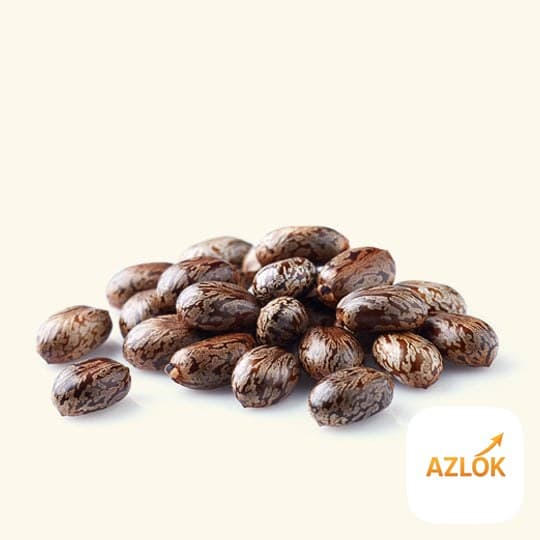
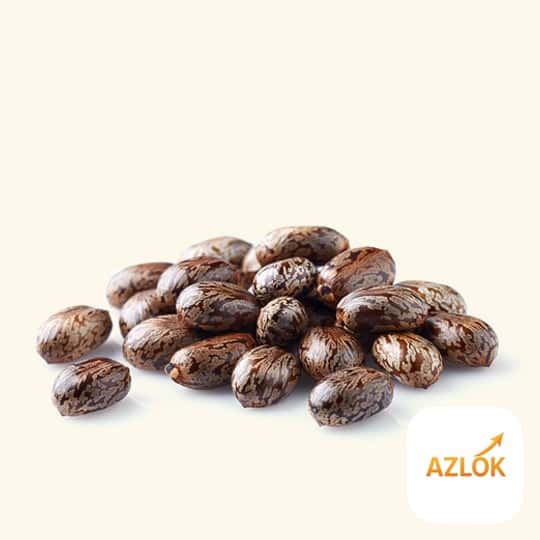
Jamaican Black Castor Oil is a thick, dark, cold-pressed oil from the castor bean (Ricinus communis) that people use mostly on hair and skin. It is prized for its rich texture and its antifungal and antibacterial reputation, and it works as both a standalone treatment and a base for homemade products. It is strictly for external use and should be diluted before applying to skin.
What makes it different from regular castor oil
The name comes from the traditional processing method. The castor beans are roasted before pressing, and the ash from that roasting gives the oil its characteristic darker, yellow-reddish colour and slightly smoky, earthy odour. Regular castor oil is usually paler and milder in smell. The end result is a heavier, richer oil that many people find sits well on coarse or dry hair.
Azlok's Jamaican Black Castor Oil is cold-pressed with a shelf life of around two years, and it blends easily with other carrier oils and fixed essential oils, which makes it handy for DIY work.
Common uses
- Hair and scalp care: Massaged into the scalp and along the strands as a pre-wash treatment or overnight mask to condition dry, brittle hair.
- Edges, brows and lashes: A tiny amount used sparingly to coat and condition thin areas (keep it well away from the eyes).
- Skin care: Added to acne creams and lotions, or used as a nourishing element in body oils.
- Lip care products: Its thickness suits balms and salves.
- Soap and candle making: A useful component in cold-process soap for lather and richness.
- DIY blends: A base for stress-relief massage oils and homemade insect-repellent blends.
How to use it
- Patch test first. Apply a small diluted amount to your inner forearm and wait 24 hours to check for any reaction.
- Dilute it. The oil is heavy. Mix it with a lighter carrier such as coconut, almond or jojoba oil — a common starting ratio is one part black castor oil to two or three parts lighter oil.
- Warm slightly. Rubbing it between your palms or warming the bottle in warm water makes it easier to spread.
- For hair: Section the hair, massage into the scalp for a few minutes, work through the lengths, leave for 30 minutes to overnight, then shampoo out thoroughly.
- For DIY products: Add it as part of your oil phase in balms, soaps and lotions, following your recipe's measurements.
Safety notes
This is a cosmetic-grade carrier oil for external use only. Please keep a few things in mind:
- Do not ingest it.
- Always do a patch test and dilute before topical use.
- Avoid direct exposure to strong sunlight on freshly oiled skin.
- Keep it away from children and out of the eyes.
- Pregnant women should consult a doctor before use.
- It does not treat or cure any medical condition — treat it as a grooming and DIY ingredient, not medicine.
Buying and storage tips
Azlok stocks Jamaican Black Castor Oil in sizes from a small 100 GM bottle right up to 20 KG, so you can pick a trial size or a bulk pack for soap and cosmetic making. Starting at ₹289, the smaller pack is a sensible way to test how your hair and skin respond before committing to more.
- Store in a cool, dry place away from direct sunlight and heat.
- Keep the cap tightly closed to limit air exposure.
- Use clean, dry hands or a spatula to avoid contaminating the oil.
- Expect a natural dark colour and a smoky, earthy smell — this is normal for the roasted-bean processing and not a sign of spoilage.
A little goes a long way. Because it is so thick, most people find a small quantity, well diluted, does the job better than slathering it on.
FAQ
Is Jamaican Black Castor Oil good for hair growth?
Many people use it as a conditioning scalp and hair treatment, and it helps coat and moisturise dry, brittle strands. It is best thought of as a conditioning and grooming oil rather than a guaranteed growth remedy.
Do I need to dilute it before applying?
Yes. It is a heavy oil, so dilute it with a lighter carrier oil such as coconut or jojoba, and always patch test before regular use.
Why is it dark and slightly smoky-smelling?
The traditional method roasts the castor beans before pressing. The ash from roasting gives the oil its darker yellow-reddish colour and characteristic earthy odour.
Can I use it in soap and cosmetics?
Yes. It blends well with other carrier and fixed essential oils and is commonly used in soaps, lip balms, lotions and massage blends.
Can it be taken internally?
No. This product is meant only for external use. Do not ingest it, and keep it away from children.