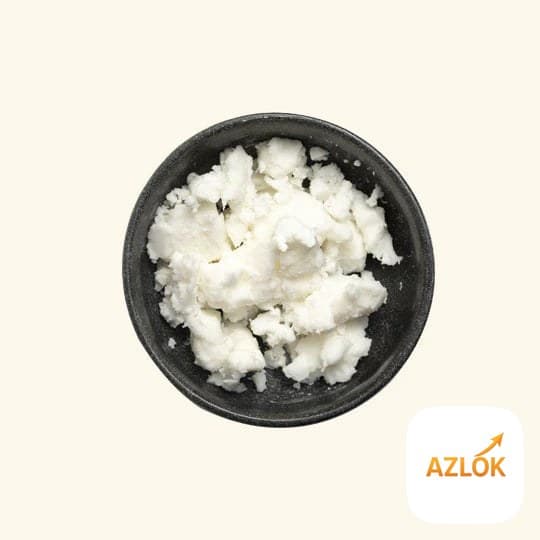

Jojoba butter is a rich, waxy solid made by blending jojoba oil (from Simmondsia chinensis) with plant wax and hydrogenated vegetable oils, giving you a creamy moisturiser that softens and conditions skin and hair. It melts on contact with body warmth, so a small scoop spreads easily and sinks in without feeling greasy.
What is jojoba butter?
Unlike loose oils, jojoba butter has a dense viscosity and a smooth, spoonable texture. The colour ranges from off-white to a very pale yellow, and it carries a mild, characteristic odour. It naturally contains Vitamin E, B-complex vitamins, and trace minerals such as silicon, chromium, copper, iodine and zinc. Azlok's version is free from added chemicals, preservatives, parabens, phthalates, sulfates, SLS and SLES, which makes it a clean base for both direct use and DIY projects.
Everyday uses for skin, hair and body
Because it works for most skin types, jojoba butter fits into a simple daily routine. Here are the most common ways people use it:
- Body moisturiser: Massage a pea-sized amount into dry areas like elbows, knees, heels and shins after a bath.
- Face care: Use a very thin layer at night as a nourishing finish. A little goes a long way on the face.
- Hair and scalp: Warm a small amount between your palms and smooth over dry ends, or use as a pre-wash treatment.
- Lips and cuticles: Dab onto chapped lips or rough cuticles for quick softening.
- DIY base: Melt and blend it into whipped body butters, balms, lotion bars and homemade soaps.
How to use it correctly
Getting good results is mostly about using the right quantity and applying it at the right time.
- Scoop out a small amount with clean, dry fingers or a spatula.
- Rub between your palms for a few seconds so it softens and melts slightly.
- Apply to slightly damp skin after bathing — this helps lock in moisture.
- Massage gently until absorbed. Add more only if a patch still feels dry.
For DIY makers, jojoba butter has a melting point of around 49.5°C, so it liquefies easily over a double boiler. Its saponification value of roughly 170–185 makes it suitable for soap and balm formulations. Keep in mind it is insoluble in water, so pair it with an emulsifier if you want a water-based lotion.
Safety and honest notes
Jojoba butter is generally gentle, but a few sensible precautions still apply:
- Patch-test first. Apply a small amount to your inner arm and wait 24 hours before wider use, especially if you have sensitive skin.
- For external use only. Do not ingest it, and keep it away from the eyes.
- Keep out of reach of children.
- Start small. Because it is rich, overapplying on the face can feel heavy or leave a film.
- This is a cosmetic ingredient, not a medicine. It is not a treatment or cure for any skin condition.
Buying and storage tips
Azlok offers jojoba butter starting at ₹649, with pack sizes from 500 g up to 25 kg — handy whether you are stocking a home shelf or running a small skincare business. The larger packs suit soap makers and hobby brands who go through butter regularly.
To keep it fresh, store the butter in a cool, dry place away from direct sunlight and heat, since warmth can soften or partially melt it. Always use clean, dry tools to scoop it out so no water or contamination gets in. Sealed and stored well, it has a shelf life of about two years. If it softens in summer heat, simply keep it somewhere cooler — it firms up again without losing quality.
FAQ
Is jojoba butter the same as jojoba oil?
Not exactly. Jojoba butter is a blend of jojoba oil with plant wax and hydrogenated vegetable oils, which gives it a solid, creamy texture. Jojoba oil stays liquid, while the butter is easier to whip into balms and body butters.
Can I use jojoba butter on my face?
Yes, most skin types tolerate it well. Use a very thin layer, ideally at night, and always patch-test first if your skin is sensitive or acne-prone.
Does jojoba butter melt in Indian summers?
It can soften as temperatures rise, since its melting point is around 49.5°C. Store it in a cool, dry spot; if it softens, moving it somewhere cooler will let it firm up again.
Is it safe for hair?
Yes. A small amount smoothed over dry ends or used as a pre-wash treatment can help condition and soften hair. Avoid overusing it near the roots to prevent a greasy look.
How long does jojoba butter last?
When kept sealed in a cool, dry place and handled with clean, dry tools, it stays good for roughly two years.