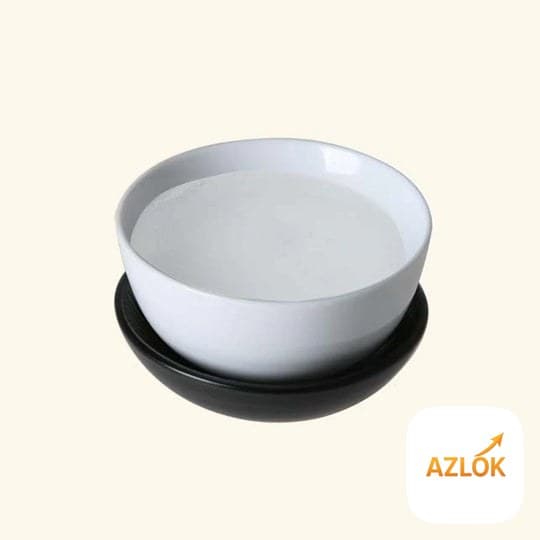

Lactic acid is an alpha-hydroxy acid (AHA) made by fermenting sugars, and it is used in skincare, hair care and some food products for gentle exfoliation, hydration and preservation. In cosmetics it helps loosen dead surface cells so skin looks smoother and more even. Azlok stocks food-grade lactic acid (100% purity) in packs from 100 grams up to 20 kilograms, priced from around ₹199, for home makers and small businesses.
What is lactic acid?
Lactic acid is an organic liquid acid with the chemical formula C3H6O3 and a molecular weight of about 90.08 g/mol. It gets its AHA status because it has a hydroxyl group sitting right next to its carboxyl group. Commercially, it is produced when sugars from sources like corn starch go through fermentation. It is water-soluble, has a characteristic mild odour, and a naturally low pH of around 2.5, which is why it must be diluted and balanced before it touches skin.
Common uses
- Skincare: a key ingredient in exfoliating toners, serums, peels and creams. It supports surface cell turnover, so it is popular in products aimed at dullness, rough texture and uneven tone.
- Hair care: used in some shampoos and conditioners because it offers both a mild exfoliating action on the scalp and a hydrating feel.
- Formulation pH adjuster: makers use small amounts to lower and fine-tune the pH of lotions, gels and cleansers.
- Food grade applications: as a food-grade acid it is used as a preservative and acidity regulator to help extend shelf life in certain foods.
How to use it in DIY cosmetics
Because pure lactic acid is highly acidic, it is always used in small, measured amounts within a full formula rather than applied neat.
- Start low. For leave-on skincare, hobby formulators typically work in the range of about 5% to 10% of the final product, and rinse-off products can use a little more. If you are new, begin at the lower end.
- Check the pH. A finished AHA product usually works best around pH 3.5 to 4. Use pH strips or a meter and adjust before packaging.
- Blend into the water phase. Since it is water-soluble, add it to the water portion of your recipe, not the oils.
- Patch-test the final product on your inner forearm for 24 hours before using it on your face.
Safety notes you should not skip
This is a strong acid, so treat it with respect.
- For external use only. Do not ingest the raw material.
- Wear gloves and eye protection when handling the concentrate, and work in a ventilated space.
- Keep it away from children and pets.
- AHAs can make skin more sensitive to sunlight, so use sunscreen during the day when using lactic acid products.
- If the concentrate touches skin or eyes, rinse immediately with plenty of water.
- Do not layer it aggressively with other strong acids or retinoids unless you know your skin tolerates it.
Buying and storage tips
Choose a pack size that suits how quickly you will use it. A 100 gram pack is sensible for testing a formula, while 1 kg and larger packs make sense for regular batch production. Azlok supplies lactic acid as a food-grade liquid with a stated shelf life of 24 months. Store it in a cool, dry, moisture-free place, tightly closed and out of direct sunlight. Keep it clearly labelled and away from food and children. For any batch, ask for the COA and MSDS so you have the documentation for your own records or product claims.
FAQ
Is lactic acid safe for sensitive skin?
Lactic acid is often considered one of the gentler AHAs, but it is still an acid. Use it at a low percentage, keep the finished product at a balanced pH, and always patch-test first. Stop use if you notice persistent stinging or redness.
What percentage of lactic acid should I use in a face product?
Many hobby formulators use roughly 5% to 10% in leave-on products, adjusted to a pH of about 3.5 to 4. Start low, measure carefully, and increase only if your skin tolerates it well.
Can I apply lactic acid directly to my skin?
No. The pure liquid has a pH around 2.5 and can irritate or burn skin. It should always be diluted within a properly balanced formulation.
Is Azlok lactic acid food grade?
Yes, it is supplied as a food-grade liquid at 100% purity. However, the product is intended for external cosmetic use as sold here, so do not consume the raw material.
How should I store lactic acid to keep it effective?
Keep it in a cool, dry, moisture-free place, tightly sealed and out of sunlight. Stored well, it stays effective for up to about two years.