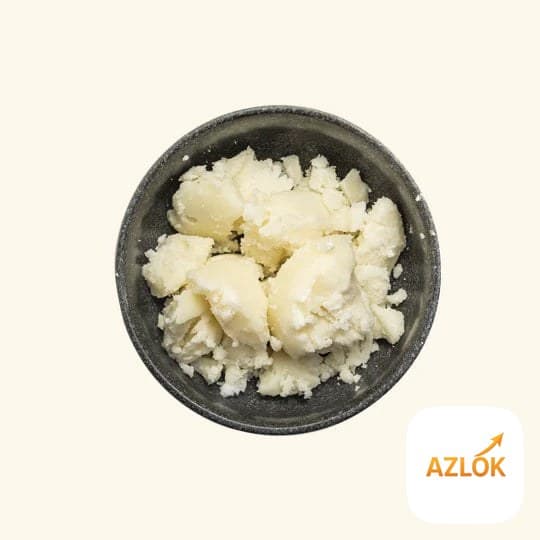
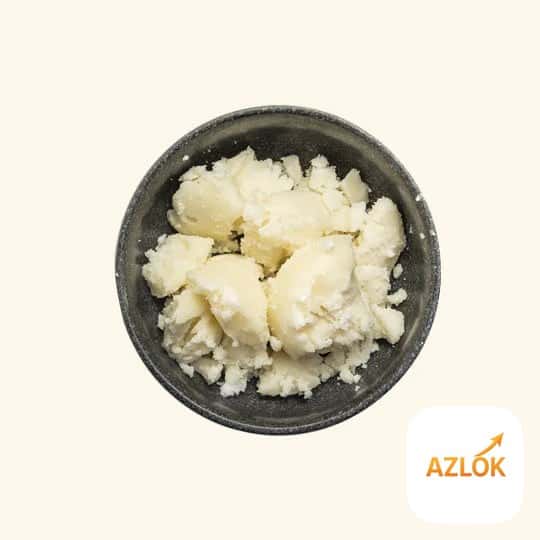
Mango body butter is a rich, plant-based moisturiser made from the fat pressed out of mango seed kernels, often blended with a little shea butter. It melts on contact with warm skin, so it works beautifully as a daily body cream, a lip and heel balm, or a base for homemade skincare. Azlok's Mango Body Butter is made in India through steam-pressing and cold refinement, and it comes free from parabens, sulphates and added fragrance.
What is mango body butter?
Botanically it is Mangifera indica (mango) seed butter. The kernel inside the mango stone is naturally high in fatty acids, and when it is pressed and refined you get a pale yellow, waxy solid with a mild, characteristic scent. It carries useful nutrients such as Vitamins A, C, E and F, along with antioxidants and small amounts of salicylic acid, which gently helps loosen dead surface skin cells.
With a melting point of around 30°C, it stays firm in the jar but softens quickly the moment you scoop it and rub it between your palms. That texture is what makes it easy to spread without feeling greasy.
How to use it on skin and hair
- Everyday body moisturiser: Take a small amount, warm it between your palms, and massage into damp skin after a bath. Elbows, knees and shins soak it up well.
- Dry hands and cracked heels: Apply a thicker layer at night and, if you like, cover feet with cotton socks.
- Lip and cuticle balm: A tiny dab softens chapped lips and rough nail beds.
- Hair ends and frizz: Rub a pea-sized amount between your fingers and smooth over dry, split ends. Keep it away from the roots.
- DIY base: Melt it gently and blend with carrier oils, shea, cocoa butter or a few drops of essential oil to make whipped body butters, balms and soaps.
A little goes a long way. Start with less than you think you need, since applying too much leaves a film that takes time to absorb.
Making your own whipped body butter
- Melt about 200 g of mango butter in a double boiler on low heat until just liquid.
- Stir in 2 to 3 tablespoons of a light carrier oil such as almond or jojoba.
- Cool the mixture in the fridge until it turns cloudy and starts to set at the edges.
- Whip with a hand beater until light and fluffy, adding a few drops of essential oil if you wish.
- Spoon into a clean, dry jar and store away from heat.
Safety and skin tips
- Patch test first: Apply a small amount to your inner forearm and wait 24 hours, especially if you have sensitive skin or a known nut or latex sensitivity.
- External use only: This is a cosmetic butter, not a food product. Do not ingest it.
- Keep away from children and store out of direct sunlight.
- Melting is normal: In Indian summers the butter may soften or melt in the jar. It is still perfectly usable; just let it re-set in a cool spot.
- This is a moisturiser, not a treatment for any medical skin condition. See a doctor for persistent skin problems.
Buying and storage
Azlok offers Mango Body Butter starting at ₹599, with pack sizes from 500 g up to 25 kg, so it suits both home users and small businesses making their own products. Look for a pale yellow, waxy solid with a mild natural odour.
Store it in a cool, dry place with the lid tightly closed. Kept away from heat and moisture, it has a shelf life of about two years. If you scoop it out, use clean, dry hands or a spoon to avoid introducing water, which can shorten its life.
FAQ
Is mango body butter greasy?
Less so than many oils. It melts at skin temperature and absorbs fairly quickly when used in small amounts. Using too much at once can leave a temporary film.
Can I use it on my face?
Yes, many people use it as a night moisturiser on dry areas. If your skin is oily or acne-prone, use it sparingly and patch test first.
Does it have a strong mango smell?
No. The refined butter has only a mild, characteristic natural odour, not a fruity mango fragrance. You can add your own essential oils if you want a scent.
Why has my butter melted in the jar?
Its melting point is around 30°C, so warm weather softens it. This does not spoil the butter. Move it to a cooler spot and let it firm up again.
Is it suitable for making soap and DIY cosmetics?
Yes. Its saponification value and stable texture make it popular for whipped butters, balms, lotion bars and cold-process soap. The larger bulk packs are handy for regular makers.