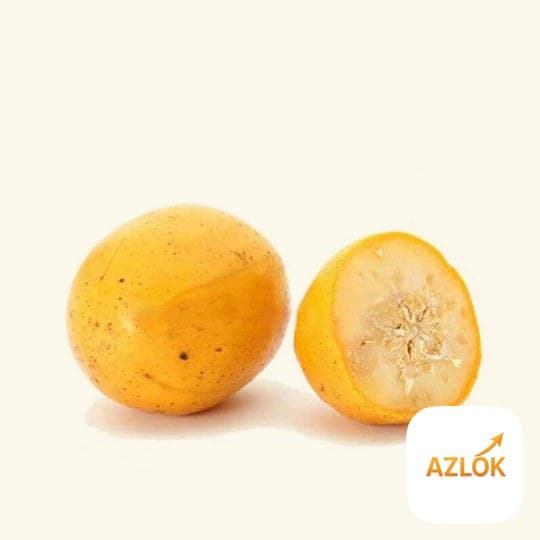

Marula Oil is a light, fast-absorbing carrier oil pressed from the fruit kernels of the Marula tree (Sclerocarya birrea). It works as a natural emollient for face, body and hair, does not tend to clog pores, and carries a mild, sweet-nutty scent that makes it easy to blend with essential oils.
If you are new to plant oils in skincare, think of Marula as a gentle all-rounder: thin in texture, quick to sink in, and versatile enough for daily moisturising or DIY formulations. Azlok's Marula Oil is cold pressed and comes in a light yellow colour, ranging from a small 100 GM bottle up to bulk 20 KG packs.
What Marula Oil is used for
Because it spreads easily and absorbs without a heavy film, Marula Oil suits a wide range of everyday uses:
- Facial moisturiser: A few drops after cleansing to soften and condition skin.
- Hair and scalp care: Smooths dry ends and adds shine without weighing hair down.
- Body oil: Great for dry patches on elbows, knees and hands.
- Massage base: A thin carrier that blends well with essential oils.
- DIY beauty: Serums, balms, whipped body butters, lip products and soaps.
The oil is rich in antioxidants and contains fatty acids such as palmitic, stearic and arachidonic acid, which help it condition and protect the skin's surface.
How to use Marula Oil
Marula is versatile, so start simple and adjust to your skin:
- As a face oil: Warm 3–4 drops between clean palms and press gently onto damp skin. Use morning or night.
- For hair: Rub a couple of drops between your hands and smooth over the mid-lengths and ends. Avoid the roots if your scalp is oily.
- In blends: Use it as the base oil and add a small amount of essential oil. It pairs nicely with Rosemary and Argan.
- In DIY recipes: Add to balms, creams and soaps as the nourishing oil component.
Always do a patch test first: apply a little to your inner forearm and wait 24 hours before using it on your face.
Safety and storage tips
Marula Oil is meant for external use only. Keep these points in mind:
- Do not ingest it, and keep it away from children.
- Avoid direct contact with the eyes; rinse with water if it gets in.
- Patch-test before first use, especially if you have sensitive skin.
- When blending with essential oils, follow proper dilution guidelines — essential oils are potent and must never be applied neat.
To keep the oil fresh, store it in a cool, dark place away from direct sunlight and heat. Keep the cap tightly closed to limit exposure to air. With a shelf life of around two years, a well-stored bottle stays good for a long time. If the oil ever smells sharp or rancid rather than sweet and nutty, it is past its best.
Buying and pack sizes
The right size depends on how you plan to use it. A 100 GM bottle is ideal for personal skincare and trying it out. Larger packs — 500 GM, 1 KG and above, up to 20 KG — suit soap makers, small beauty businesses and anyone formulating in volume. Because Marula is cold pressed, look for a light yellow colour and a mild nutty aroma as signs of a good, minimally processed oil. Azlok supplies it with a thin, easily blendable consistency across all pack sizes.
FAQ
Is Marula Oil good for oily or acne-prone skin?
Marula is a light, non-greasy oil that generally does not clog pores, so many people with oily or combination skin find it comfortable. Still, everyone's skin is different — patch-test and start with a couple of drops.
Can I use Marula Oil directly on my face?
Yes, it can be used on its own as a facial oil since it is a carrier oil, not a concentrated essential oil. Apply a few drops to clean, slightly damp skin.
What does Marula Oil smell like?
It has a mild, sweet and nutty aroma. The scent is gentle and fades quickly, which makes it easy to blend with essential oils like Rosemary or Argan.
How long does Marula Oil last?
Stored in a cool, dark place with the cap closed, Marula Oil keeps for about two years. Discard it if the smell turns sour or rancid.
Can Marula Oil be used in soap and candle projects?
It is popular in DIY skincare like balms, serums and soaps thanks to its conditioning fatty acids. Larger pack sizes make it practical for makers working in bulk.