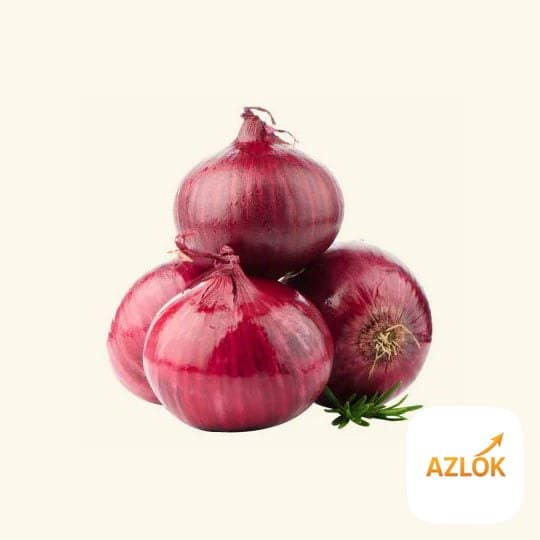
Onion Liquid Extract: What It Is and How to Use It in DIY Skincare and Haircare

Onion Liquid Extract is a concentrated herbal extract made from the bulb of the onion plant (Allium cepa), created for use in cosmetic and personal-care formulations rather than for cooking. In simple terms, it's a ready-to-blend liquid that DIY makers add to shampoos, serums, creams and soaps in small quantities, usually 1–2% of a recipe.
Azlok's version is a 4:1 extract, meaning four kilograms of onion herb are used to yield one kilogram of extract. It is tasteless and practically odourless, and comes in two solubility types so you can match it to your base: a water-soluble grade extracted using vegetable glycerine (alcohol-free) and an oil-soluble grade extracted using soy oil, with BHT as a preservative note.
What Onion Liquid Extract is used for
This extract is a formulation ingredient. Its most popular home for DIY makers is haircare, but it works across a range of leave-on and rinse-off products.
- Hair products: shampoos, conditioners, scalp serums and hair oils, where onion is a long-favoured folk ingredient.
- Skincare: face wash, creams, lotions, serums and gels.
- Soap and cleansers: melt-and-pour or cold-process soap, and body washes.
- General DIY personal care for face, hair, skin and body.
In traditional practice, onion has been valued as a supportive tonic, and some practitioners associate it with immunity, sinus comfort and healthy cholesterol and blood sugar levels. These are general beliefs, not proven cures, so treat this product as a cosmetic ingredient and not a medicine.
How to use it in your formulations
The recommended usage rate is 1–2% of the total recipe. That means roughly 1–2 grams per 100 grams of finished product. Start low and adjust once you're happy with the texture and shelf stability.
- Pick the right grade. Use the water-soluble (glycerine) extract for water-based products like toners, gels, shampoos and face washes. Use the oil-soluble (soy) extract for oils, balms and anhydrous serums.
- Add it at the cool-down phase. Blend it in after heating, once your mixture has cooled below about 40°C, to protect the extract.
- Mix thoroughly so it disperses evenly, then check your final pH and preservative system if you're making a water-containing product.
- Do a small test batch first. Confirm colour, clarity and smell before scaling up.
Tips and safety notes
This is for external, cosmetic use — it is not a food flavouring or a supplement, so do not ingest it.
- Patch-test any finished product on your inner forearm before regular use.
- Observe caution with external applications, especially on sensitive or broken skin. While no herb–drug interactions are known, gentle use in the prescribed dose is the sensible approach.
- Not to be used during pregnancy. If you are nursing or taking medication, consult a physician first.
- Keep away from children and store containers tightly closed.
- Note the soy content of the oil-soluble grade if you or your customers have soy sensitivities.
Buying and storage
Azlok offers Onion Liquid Extract in sizes from 100 grams right up to 25 kilograms, so it suits both hobbyists making a single batch and small businesses running production. Pricing starts at ₹349, and packaging is arranged as per requirement. The product is made in India and is free from gluten, artificial colour, heavy metals and fertilizers, with a COA and MSDS available for both the oil-soluble and water-soluble versions.
Shelf life is 2 years when stored well. Keep it in a cool, dry place away from direct sunlight, and close the cap firmly after each use to limit exposure to air and moisture. Buying a smaller pack first is a good idea if you're testing a new formula.
FAQ
Is Onion Liquid Extract the same as onion juice from the kitchen?
No. This is a standardised 4:1 cosmetic extract that is tasteless and odourless, solvent-extracted and preserved for shelf stability. Fresh onion juice is not preserved and behaves very differently in formulations.
How much should I add to a recipe?
The recommended usage is 1–2% of the total formulation, which is about 1–2 grams per 100 grams of product. Begin at the lower end and adjust.
Which version should I choose — water-soluble or oil-soluble?
Choose the water-soluble (glycerine, alcohol-free) grade for water-based products like shampoos, toners and gels. Choose the oil-soluble (soy) grade for oils, balms and other anhydrous products.
Can I take it internally for immunity?
No. It is intended for external cosmetic use only. Do not ingest it, and consult a qualified physician for any health concerns.
Does it have a strong onion smell?
It is described as tasteless with no odour, which makes it easier to work into fragranced products without an overpowering onion scent.