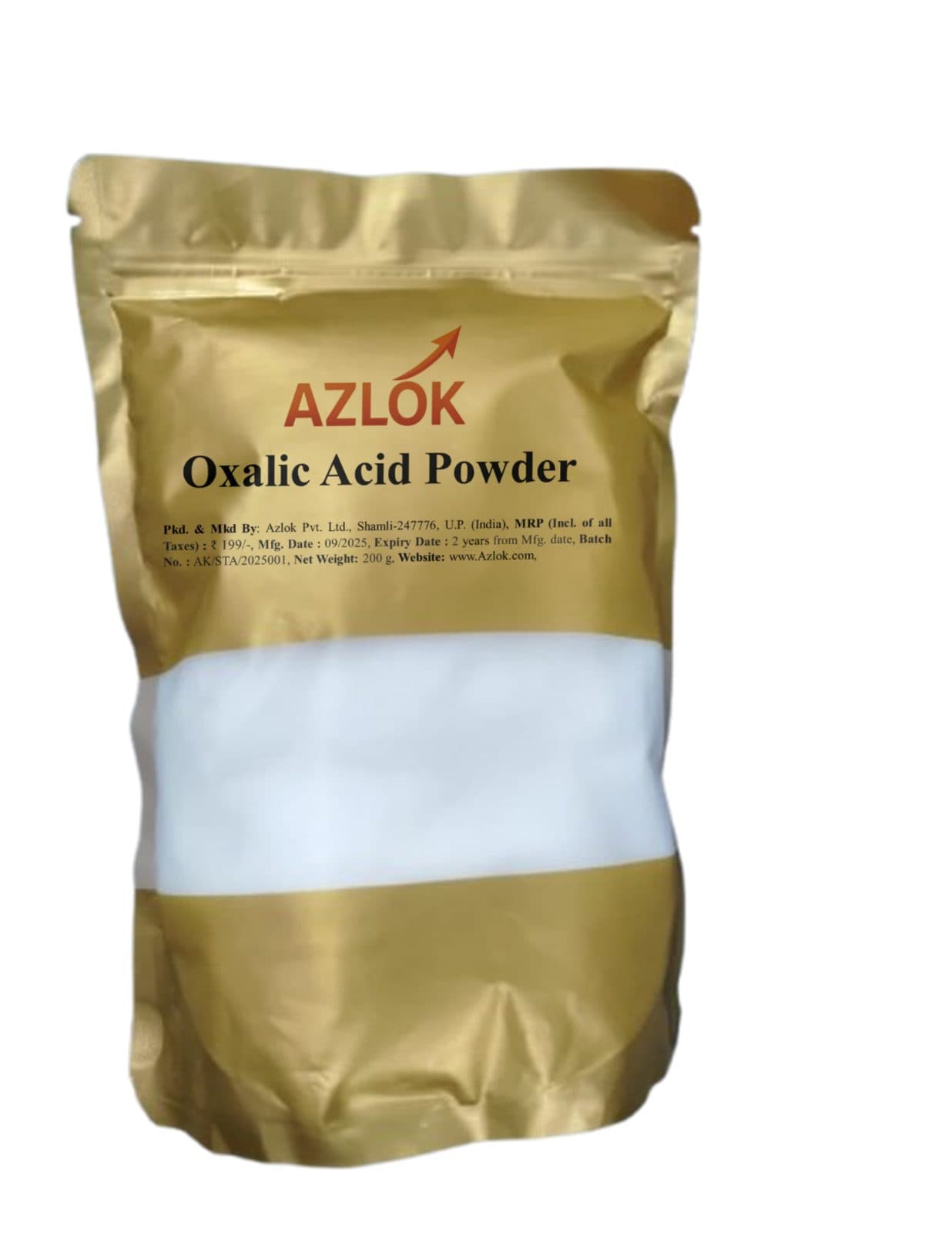
Oxalic Acid Powder: What It Cleans, Why It Works, and How to Handle It Safely
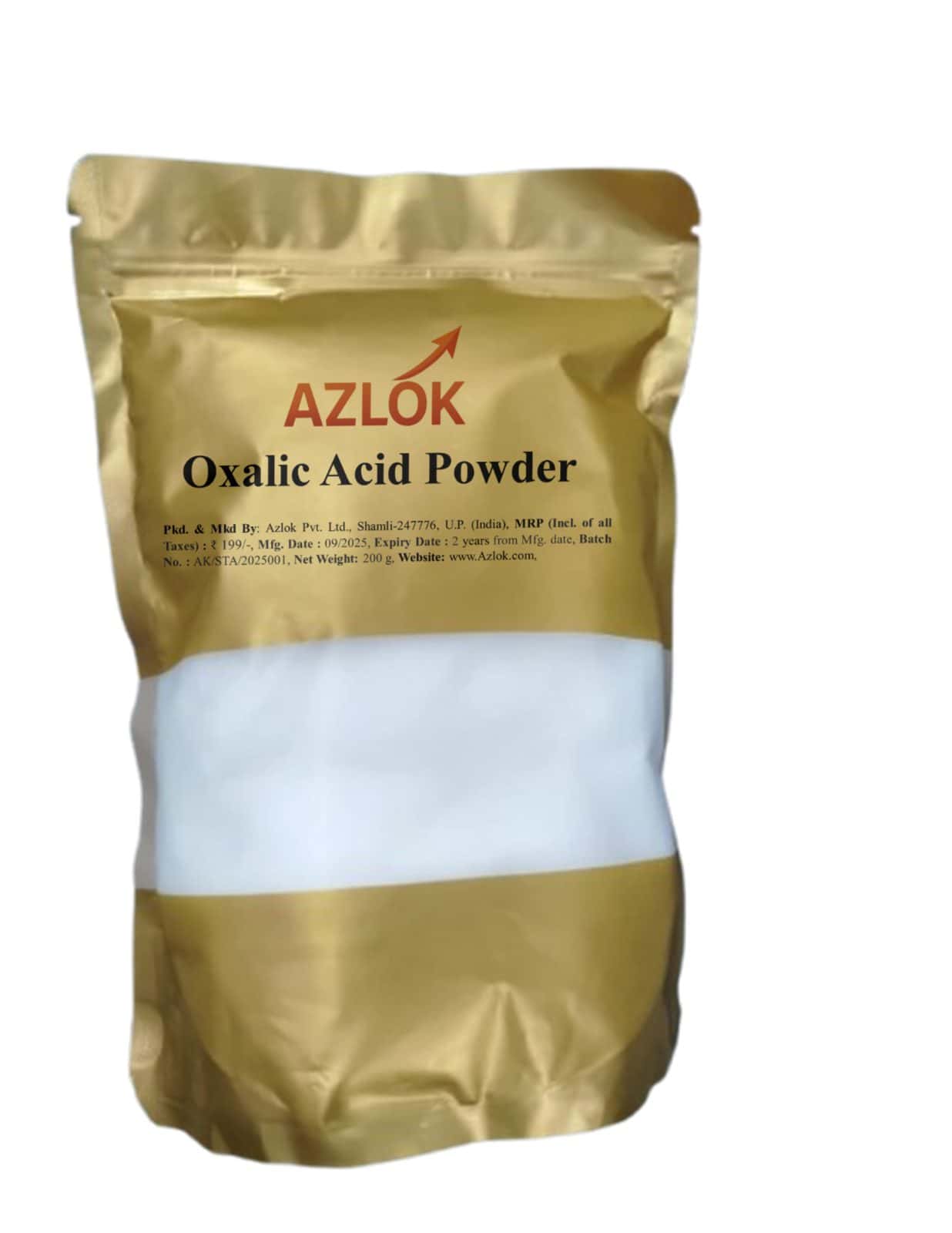
Oxalic acid (C₂H₂O₄) is one of those quiet workhorse chemicals — it sits in workshops, restoration kits and cleaning cupboards because it does a few jobs better than almost anything else. It is a dicarboxylic acid that occurs naturally in plants like rhubarb and spinach, but the bulk powder you buy is purpose-made for cleaning and processing.
It is genuinely effective and genuinely irritant, so this guide is half 'what it does' and half 'how not to hurt yourself'.
Why it removes rust and stains
Oxalic acid is a reducing agent and a strong chelator. With rust (iron oxide) it forms a soluble iron–oxalate complex, so the stain literally dissolves and rinses away instead of needing to be scrubbed off. The same chelating action lifts iron-based and tannin stains out of wood and stone, which is why furniture restorers reach for it.
Common uses
- Rust removal from steel tools, radiators and stained ceramics.
- Wood bleaching — removing black water/iron stains and evening out tone before refinishing.
- Deck and stone cleaning — lifting rust runs and tannin marks.
- Industrial use as a reducing/chelating agent and in some metal-finishing processes.
How to use and dilute
A typical working solution is roughly 1 part oxalic acid to 10 parts warm water by weight, but always follow the strength your task needs — start weaker. Dissolve fully, apply, give it time to act, then rinse thoroughly with plenty of water. On wood, neutralise afterwards (a baking-soda rinse) and let it dry fully before finishing.
Use plastic, glass or stainless containers — not aluminium or galvanised metal, which it attacks.
Safety — read this part
- Wear nitrile gloves and eye protection. It irritates and burns skin and eyes.
- Work in ventilation; avoid breathing the dust. Wear a mask when handling the powder.
- It is toxic if swallowed — keep it labelled and away from food, children and pets.
- Never mix with bleach or strong alkalis.
- Rinse splashes immediately with lots of water; seek medical help for eye contact or ingestion.
Frequently Asked Questions
What is oxalic acid mainly used for?
Rust removal from metal and ceramics, bleaching iron and water stains out of wood, and cleaning stone/decks. Industrially it's used as a reducing and chelating agent.
How do you dilute oxalic acid for rust removal?
A common starting point is about 1 part acid to 10 parts warm water by weight. Dissolve fully, apply, let it work, then rinse thoroughly. Use stronger solutions only if needed.
Is oxalic acid dangerous?
It is effective but an irritant and toxic if swallowed. Always use gloves, eye protection and ventilation, keep it away from food and children, and never mix it with bleach.
Can oxalic acid be used on aluminium?
No — it attacks aluminium and galvanised surfaces. Use it on steel, ceramic, wood and stone, and mix/store it in plastic, glass or stainless containers.
Azlok Oxalic Acid Powder is a high-purity grade for rust removal, wood bleaching and industrial use — handle it with gloves, eye protection and good ventilation.