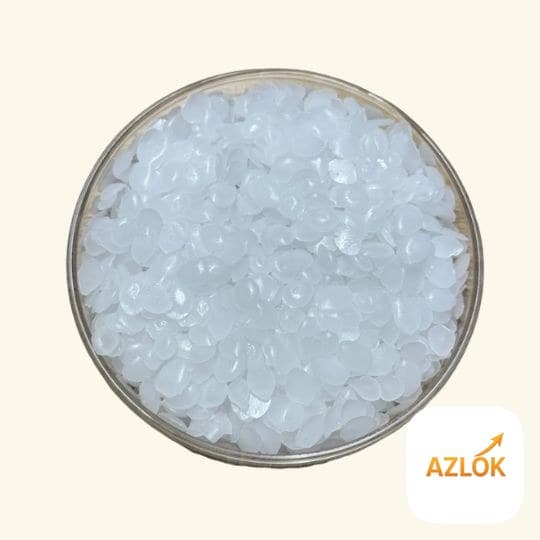

Paraffin wax pellets are small, free-flowing beads of refined petroleum wax that melt cleanly and set with a smooth finish, making them a popular base for candles, wax melts and many craft projects. Because they come as pellets rather than a solid block, they measure and melt quickly, which is exactly why hobbyists and small makers reach for them.
What Paraffin Wax Pellets Are Used For
Paraffin is one of the most versatile crafting waxes. Azlok Paraffin Wax Pellets are chosen for their purity and consistent melting behaviour, so you get repeatable results batch after batch. Common uses include:
- Candle making — pillar, container and votive candles, either on their own or blended with other waxes.
- Wax melts and tarts — scented cubes for warmers.
- Cosmetic and craft formulations — as a thickening or firming component where paraffin is appropriate.
- Sealing, coating and hobby projects — waxing threads, small dips and decorative work.
How to Melt and Use It
The safest way to melt paraffin is gently and gradually. Never heat wax directly on a naked flame or leave it unattended.
- Weigh out the pellets you need. A kitchen scale gives far better results than guessing.
- Use a double boiler (a heatproof jug or bowl set over simmering water) to melt the pellets slowly, stirring now and then.
- Monitor the temperature with a thermometer. Most paraffin melts in the region of 50–65°C; check the specific melt point for your batch.
- Once fully liquid, remove from heat and let it cool slightly before adding fragrance oil and colour, usually at the temperature recommended by your fragrance supplier.
- Pour into wicked containers or moulds and let candles cure undisturbed.
As a starting point, many makers add fragrance at around 6–10% of the wax weight and stir thoroughly for a couple of minutes so it binds evenly. Do a small test candle first to check scent throw and burn quality before making a large batch.
Tips for Better Results
- Match the wick to the container. Too small a wick tunnels; too large smokes. Test a few sizes.
- Cure before burning. Giving candles a few days to set improves scent and finish.
- Warm your moulds and containers slightly to reduce wet spots and cracking.
- Keep notes. Record wax weight, fragrance load, pour temperature and wick size so you can repeat what works.
Safety Notes
Paraffin wax is safe to work with when handled sensibly, but hot wax deserves respect.
- Melt gently over water; never overheat, as wax can smoke or ignite at high temperatures.
- Work in a ventilated space and keep a lid or fire blanket nearby, never water, for wax fires.
- Protect surfaces and wear covered clothing; hot wax can cause burns.
- Keep pellets and molten wax away from children and pets.
- This is a craft-grade wax for candles and DIY use, not for eating. Do not ingest.
Buying and Storage
Azlok Paraffin Wax Pellets are made in India and sold in packs from 100 Gm right up to 20 KG, so you can buy a small quantity to experiment or stock up for regular production. Pricing starts at ₹99, and the larger 5 KG, 10 KG and 20 KG packs suit small businesses running batch orders.
Store the pellets in a cool, dry place in a sealed container, away from direct sunlight and heat. Kept dry and clean, paraffin wax has a long shelf life and will not spoil. Keep it away from strong-smelling items, since wax can pick up odours over time.
FAQ
Is paraffin wax good for beginners?
Yes. It melts predictably, holds fragrance well and is forgiving to work with, which makes it one of the easiest waxes to start candle making with.
What temperature does paraffin wax melt at?
Most paraffin waxes melt in the range of about 50–65°C. Check the melt point for your particular batch and use a thermometer for consistent pouring.
How much fragrance oil can I add?
A common range is 6–10% of the wax weight. Always follow your fragrance supplier's guidance and test a small candle before scaling up.
Can I mix paraffin with other waxes?
Yes, paraffin is often blended with other waxes to adjust firmness, finish and scent throw. Test small blends first to find a ratio you like.
Which pack size should I buy?
For trying it out, the 100 Gm or 500 Gm packs are ideal. For regular candle making or a small business, the 1 KG to 20 KG packs are more economical.