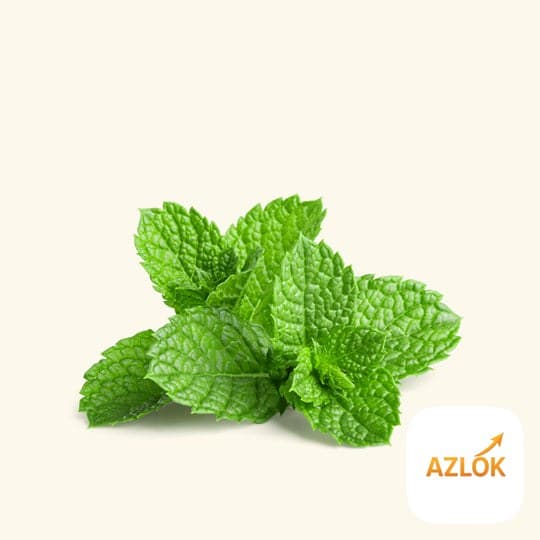
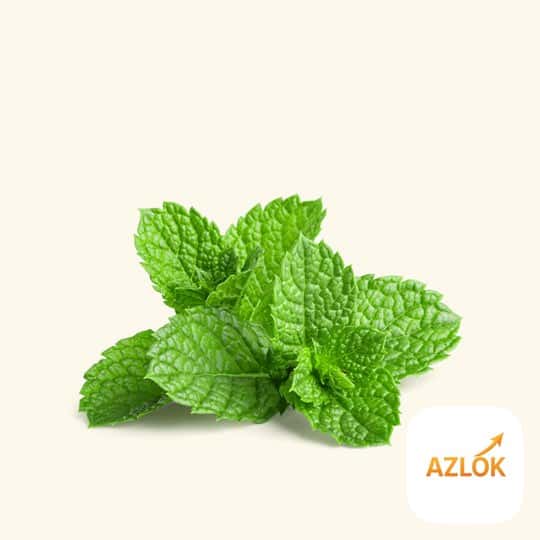
Peppermint essential oil is a steam-distilled oil from the leaves of Mentha piperita, prized for its sharp, cooling aroma and refreshing, minty scent. It is used in aromatherapy diffusers, diluted skincare and massage blends, and homemade soaps and candles — always diluted in a carrier oil for skin, and never swallowed.
What is peppermint essential oil?
Azlok's peppermint oil (botanical name Mentha piperita, CAS 8006-90-4) is a colourless liquid with the characteristic penetrating menthol note peppermint is known for. It is extracted by steam distillation, is soluble in alcohol, and carries a specific gravity of around 0.919. Because it is highly concentrated, a few drops go a long way — this is not a product you use neat.
Common uses
- Aromatherapy: A few drops in a diffuser fills a room with a clean, energising scent that many people find helpful for focus and a sense of freshness.
- Massage blends: Diluted in a carrier oil, it gives a familiar cooling sensation that is popular for tired shoulders, neck and legs after a long day.
- Skincare and haircare: Added sparingly to lotions, foot creams and shampoo bars for its refreshing, toning feel.
- Soap and candle making: A reliable fragrance for cold-process soap, melt-and-pour bases and scented candles.
- Home freshening: A drop or two on cotton balls or in DIY sprays to keep cupboards and rooms smelling crisp.
How to use and dilute
For skin, dilute peppermint oil to a low concentration — generally 1 to 2 percent, which is roughly 6 to 12 drops per 30 ml of carrier oil such as coconut, almond or jojoba. For a diffuser, 3 to 5 drops in water is plenty. When making soap or candles, follow your recipe's recommended fragrance load rather than adding by guesswork.
It blends beautifully with many oils. Popular partners include eucalyptus, lavender, rosemary, lemon, grapefruit, tea tree, spearmint, pine needle, geranium, basil, juniper, myrrh and wintergreen. For a bright, uplifting blend try peppermint with lemon and rosemary; for a calming twist, pair it with lavender.
Safety notes
Peppermint oil is potent, so handle it with care:
- Always dilute before applying to skin and do a patch test on your inner arm first, waiting 24 hours.
- Do not ingest it and keep it well away from the eyes and mucous membranes.
- Avoid use on or near the face of infants and young children.
- Keep out of reach of children and pets, and store the bottle tightly closed.
- Pregnant or breastfeeding women and anyone with a medical condition should consult a doctor before use.
- It is flammable (flash point around 66°C), so keep it away from open flames while working.
This oil is intended for external, aromatic and formulation use, not as a substitute for medical treatment.
Buying and storage tips
Azlok offers peppermint essential oil starting at ₹379, with pack sizes ranging from 100 GM up to bulk 25 KG for makers and small businesses. Choose the smaller size if you are experimenting, and the larger packs if you run a soap, candle or cosmetics line and use oil regularly.
- Store in a cool, dark place away from direct sunlight and heat.
- Keep the cap tightly sealed to slow evaporation and oxidation.
- Use amber or dark glass for any decanted portions.
- With good storage, the shelf life is around two years.
FAQ
Can I apply peppermint essential oil directly to my skin?
No. It is highly concentrated and should be diluted in a carrier oil to about 1 to 2 percent before skin contact. Always patch-test first.
Is peppermint essential oil safe to swallow?
Do not ingest this essential oil. It is meant for aromatic, topical (diluted) and formulation use only.
What oils blend well with peppermint?
It pairs nicely with eucalyptus, lavender, rosemary, lemon, grapefruit, tea tree, spearmint, geranium and pine needle oil, among others.
How many drops should I add to a diffuser?
Around 3 to 5 drops in the water reservoir is usually enough for a normal-sized room.
How long does peppermint essential oil last?
Stored in a cool, dark place with the cap tightly closed, it keeps well for about two years.