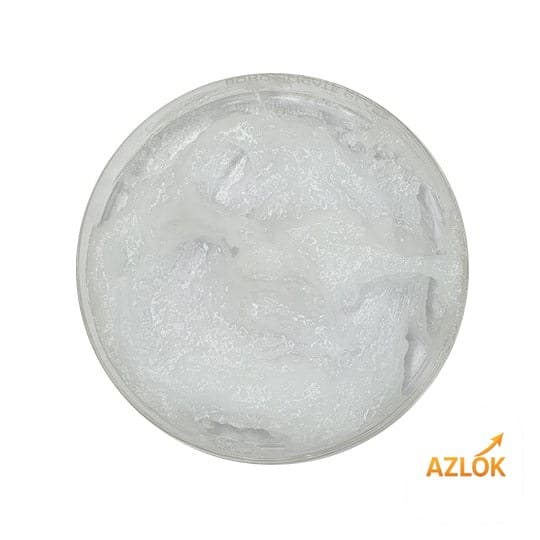
Petroleum Jelly (USP Grade): A Maker's Guide to Uses, Formulating and Safe Storage

Petroleum jelly (USP grade) is a highly refined, odourless, semi-solid petrolatum used mainly as an occlusive and emollient in cosmetics. In simple terms, it forms a protective barrier on the skin that locks in moisture, and it gives lip balms, salves and creams their smooth, spreadable body. Azlok stocks it in packs from 500 g up to 25 kg, so both hobbyists and small brands can buy the right quantity.
What petroleum jelly does in skincare
Also known as soft paraffin, petrolatum (INCI name: Petrolatum) is prized for a few honest, well-established properties:
- Occlusive barrier: it sits on the skin's surface and slows water loss, which helps dry or chapped areas feel comfortable again.
- Emollient feel: it softens texture and adds a glossy, protective finish to balms and ointments.
- Water-resistant: it is soluble in alcohol but not in water, so it suits products meant to stay put on the skin.
- Consistency control: a little petroleum jelly thickens and stabilises a formula, giving it a firmer body.
Because this is a highly refined, 99% pure USP grade material, it is considered suitable for all skin types when used externally.
Common uses for makers
This is a workhorse cosmetic raw material. You will see it turn up in:
- Lip balms and lip masks
- Body butters, ointments and healing salves
- Barrier and nappy-area creams
- Cuticle and heel balms
- Rich night lotions and cold creams
Outside cosmetics, hobbyists also use small amounts to condition leather, prevent squeaks, or protect metal tools from rust. Just keep cosmetic and non-cosmetic batches separate.
How to use it in a formula
Petroleum jelly is a semi-solid, so it needs gentle warming to blend evenly.
- Weigh your ingredients. Formulate by weight, not volume, for repeatable results.
- Melt gently. Warm the petroleum jelly with your waxes, butters and carrier oils over a double boiler until just liquid. It has a high flash point (around 182°C), but there is no reason to overheat it.
- Add heat-sensitive extras last. Stir in essential oils, fragrance oils or vitamin E once the mix has cooled slightly, off the heat.
- Pour and set. Fill your tins or tubes and let them set at room temperature.
For a simple lip balm, many makers start with roughly equal parts petroleum jelly and a carrier oil, plus a small amount of beeswax to firm it up. Adjust ratios until you get the hardness you like, and always test a small batch first.
Safety and honest cautions
This product is for external use only. Please note the following:
- Do not ingest it, and keep it away from the eyes and inner nose.
- Avoid applying it over broken skin, active infections or any skin ailment you are being treated for.
- Because it is occlusive, apply it to clean skin — sealing in dirt or bacteria is not helpful.
- Patch-test any finished product on your inner arm before regular use.
- Keep out of reach of children and pets.
If you are formulating for sale, request the COA and MSDS for your batch and follow standard cosmetic labelling practice.
Buying and storage tips
Azlok's petroleum jelly is USP grade, made in India from petroleum through fractional distillation, and has a shelf life of around 24 months. To get the most out of it:
- Match the pack to your need. A 500 g or 1 kg pack suits home makers; 5 kg to 25 kg suits small brands and repeat production.
- Store cool and dry. Keep the container tightly closed, away from direct heat and sunlight.
- Use clean tools. Scoop with a clean, dry spatula to avoid introducing water or contaminants.
- Label with a date. Note your open date so you can track freshness within the shelf life.
FAQ
Is USP grade petroleum jelly safe for lips and skin?
Yes, when used externally. USP grade means it is a highly refined petrolatum, and Azlok's is around 99% pure, odourless and colourless, which makes it suitable for lip balms and skincare on all skin types. Avoid internal use and broken skin.
Does petroleum jelly dissolve in water?
No. It is insoluble in water but soluble in alcohol, which is exactly why it works well in water-resistant, long-lasting formulas.
How much petroleum jelly should I use in a lip balm?
It varies by recipe, but many makers use it as a large part of the base alongside a carrier oil and a firming wax. Start with a small test batch and adjust the ratios until the texture feels right.
What is the shelf life once opened?
It carries roughly a 24-month shelf life. Keep the container closed, cool, dry and free of water to help it last, and use clean tools each time.
Can I use it for anything other than cosmetics?
Hobbyists use petroleum jelly to condition leather, quiet squeaks and protect metal from rust. Keep those uses separate from your cosmetic supply to avoid cross-contamination.