
Potassium Sorbate Powder 150g (Food-Grade): The Complete Guide for Baking, Beverages & Cosmetics
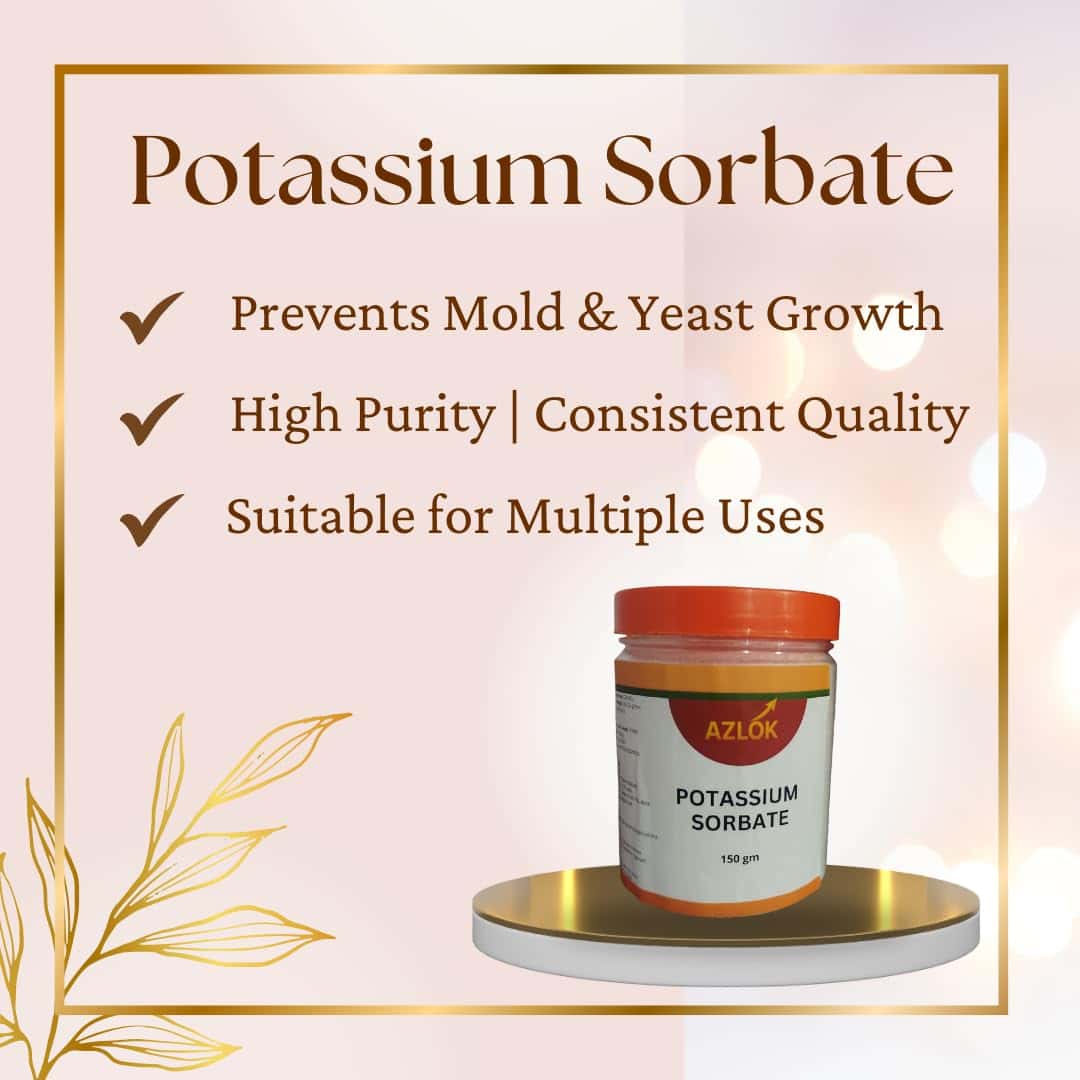
Potassium Sorbate Powder 150g (Food-Grade): The Complete Guide for Baking, Beverages & Cosmetics
If you've ever wondered how a bottle of homemade syrup stays fresh for weeks, or why your favourite face cream doesn't turn cloudy after a month on the shelf, there's a good chance the answer is sitting quietly in the ingredient list: potassium sorbate.
It's one of those workhorse ingredients that does its job without fuss. You don't taste it, you don't smell it, and most of the time you don't even notice it's there — until you skip it and watch something go off far too soon.
This guide walks you through everything you actually need to know about food-grade potassium sorbate powder: what it is, where it shines, how much to use, and how to store it. Whether you're a home baker, a small-batch beverage maker, or someone formulating their own skincare, this is the practical version — no jargon, no filler.
You can pick up the Azlok Potassium Sorbate Powder 150g (Food-Grade) whenever you're ready, but let's start with the basics.
What Is Potassium Sorbate, Really?
Potassium sorbate is the potassium salt of sorbic acid. On an ingredient label it usually shows up as E202. In plain terms, it's a mild, widely-used preservative that stops mould, yeast, and certain fungi from growing in food, drinks, and cosmetic products.
Sorbic acid itself was originally derived from the berries of the rowan tree (mountain ash), which is a nice piece of trivia for the next time someone asks you what's in their wine. Today it's produced to consistent food-grade standards so you get the same reliable result every time.
The "food-grade" part matters more than people realise. It means the powder has been manufactured and tested to a purity level fit for human consumption — which is exactly what you want if it's going into a cake, a cordial, or anything that touches your skin.
A few quick characteristics worth knowing:
It's a fine white-to-cream powder that dissolves easily in water.
It works best in slightly acidic conditions (more on that below).
It's effective at very low concentrations, so a 150g pack goes a long way.
It has no noticeable taste or odour when used correctly.
Why "Food-Grade" Isn't Just a Label
There are industrial-grade preservatives and there are food-grade ones, and the difference comes down to purity and testing. Food-grade potassium sorbate is held to standards set by food safety authorities, which means lower impurity levels and tighter quality control.
If you're putting it into something you'll eat, drink, or apply to your face, food-grade is the only sensible choice. Anything labelled "technical" or "industrial" grade is not meant for these uses, even if the chemical name looks identical. With the Azlok 150g pack, you're getting a food-grade product intended for kitchen and cosmetic applications.
Where Potassium Sorbate Powder Earns Its Keep
This is where it gets genuinely useful. Potassium sorbate isn't a one-trick ingredient — it crosses three worlds: the kitchen, the bar, and the bathroom shelf.
1. Baking and Baked Goods
Bread, cakes, and pastries are basically a five-star resort for mould. They're moist, they're starchy, and they sit around at room temperature. Potassium sorbate slows down mould and yeast spoilage so your baked goods stay fresher for longer without changing the taste or texture.
It's particularly handy for:
Cakes and muffins you want to keep for several days
Fillings, frostings, and fondant
Tortillas, flatbreads, and wraps
Cheesecakes and dairy-based desserts
A small note for bakers using yeast: because potassium sorbate inhibits yeast, you add it after fermentation and proofing are done, not before. You don't want it fighting the very yeast that makes your dough rise.
2. Beverages, Syrups, and Home Brewing
This is one of the most popular uses, especially for anyone making things in small batches at home.
Cordials, squashes, and fruit syrups stay drinkable far longer.
Cold-pressed juices and lemonades resist fermentation and spoilage.
Wine and cider makers use it as a stabiliser to prevent re-fermentation after the wine is finished — it stops residual yeast from waking up and turning a sweet wine fizzy or worse.
Kombucha and flavoured waters benefit from a controlled shelf life.
Because it's so water-soluble, it blends into liquids cleanly without leaving grit or cloudiness.
3. Cosmetics and Personal Care
Anything water-based that you make at home is a candidate for microbial growth — and that includes a lot of DIY skincare. Potassium sorbate is a gentle, widely-accepted preservative in cosmetic formulation.
You'll commonly find it in:
Creams, lotions, and serums
Shampoos and conditioners
Toners and facial mists
Soaps and body washes
It's frequently paired with other preservatives (like sodium benzoate) to give broad-spectrum protection across bacteria, yeast, and mould. For homemade cosmetics, this is the kind of insurance that prevents a lovely batch of cream from quietly growing something nasty.
How Much Potassium Sorbate Should You Use?
This is the question everyone wants answered, so let's be direct.
Potassium sorbate is typically used at a concentration of 0.025% to 0.1% of the total weight of your product. For most home applications, 0.1% (1 gram per 1 kilogram, or roughly 1 gram per litre) is a sensible working level.
Here's a simple reference:
Batch sizeApprox. amount at 0.1%500 g / 500 ml0.5 g1 kg / 1 litre1 g2 kg / 2 litres2 g5 kg / 5 litres5 g
A few practical tips:
Dissolve it in a little water first, then stir it into your batch for even distribution. It dissolves much more readily than sorbic acid.
Acidity is your friend. Potassium sorbate works best when the product's pH is below about 6, and it's most effective below 5. In low-acid products it loses much of its punch, so you may need to adjust the recipe's acidity or choose a different preservative system.
Don't overdo it. More is not better — staying within recommended levels keeps the product safe, neutral-tasting, and compliant with food regulations.
Because the effective dose is so small, that 150g pack can preserve a very large number of batches.
Is Potassium Sorbate Safe?
For the vast majority of people, yes. Potassium sorbate is one of the most studied and widely-used preservatives in the world. It's recognised as safe by major food authorities, including being classed as "Generally Recognized as Safe" (GRAS) in food applications, and it's approved for use as E202 across many regions.
It breaks down in the body much like other fatty acids and doesn't accumulate. When used at the low, recommended concentrations, it's considered a low-risk ingredient.
That said, a few sensible caveats:
A small number of people may experience mild skin or eye irritation from concentrated contact, which is why you use it diluted.
It's not a substitute for good hygiene and clean equipment — it slows spoilage, it doesn't fix a contaminated batch.
If you have a known sensitivity or you're formulating products for sale, follow the relevant food and cosmetic regulations in your region.
If you have specific health concerns, it's always worth a quick chat with a qualified professional rather than relying on a blog.
How to Store Your Potassium Sorbate Powder
Storage is straightforward, and getting it right keeps the powder effective for a long time:
Keep it in a cool, dry place, away from direct sunlight.
Make sure the container is tightly sealed — moisture is the main enemy, since the powder can clump if it absorbs humidity.
Store it away from strong odours and from children's reach.
Kept properly, food-grade potassium sorbate has a long shelf life, so a single pack will serve you across many projects.
Why Choose the Azlok 150g Pack?
The 150g size hits a sweet spot. It's large enough to last through plenty of batches — given how little you use per recipe — but compact enough that it won't sit around for years before you finish it.
With the Azlok Potassium Sorbate Powder 150g you get:
Food-grade purity suitable for baking, beverages, and cosmetics
A versatile, multi-use preservative for your kitchen and DIY shelf
A practical pack size that balances value and freshness
A clean, neutral ingredient that does its job without altering taste or smell
It's the kind of staple you buy once and reach for again and again — the moment you start making your own syrups, preserves, or skincare, you'll wonder how you managed without it.
Frequently Asked Questions
What is potassium sorbate used for? It's a food-grade preservative that prevents mould, yeast, and fungal growth in baked goods, beverages, syrups, wine, sauces, and cosmetics. It extends shelf life without changing the flavour or appearance of the product.
How much potassium sorbate do I use per litre? For most uses, about 1 gram per litre or kilogram (a 0.1% concentration) works well. Dissolve it in a little water first, then mix it evenly into your batch.
Does potassium sorbate need an acidic environment to work? Yes — it's most effective when the product's pH is below 6, and especially below 5. In low-acid products its effectiveness drops significantly.
Is potassium sorbate safe in food and cosmetics? It's widely regarded as safe at recommended concentrations and is approved as E202 for food and cosmetic use in many regions. Use it diluted and within recommended limits.
Can I use potassium sorbate in yeast-leavened bread? You can, but add it after fermentation and proofing are complete, since it inhibits yeast and would otherwise interfere with the dough rising.
Is potassium sorbate the same as sorbic acid? They're closely related — potassium sorbate is the potassium salt of sorbic acid. Potassium sorbate is far more water-soluble, which makes it easier to use in most home recipes.
How long does a 150g pack last? Because you only use around 1 gram per litre or kilogram, a 150g pack can preserve roughly 150 standard batches, making it excellent value for home use.
The Bottom Line
Potassium sorbate powder is one of the simplest upgrades you can make to your homemade food, drinks, and cosmetics. It's safe at the right doses, effective at tiny concentrations, and quietly reliable across a huge range of recipes. Once you understand the basics — keep it acidic, keep the dose low, and store it dry — it becomes second nature.
If you're ready to stop watching your hard work spoil too soon, grab the Azlok Potassium Sorbate Powder 150g (Food-Grade) and give your creations the shelf life they deserve.
This article is for general informational purposes and isn't a substitute for professional or regulatory advice. Always follow the food and cosmetic safety guidelines that apply in your region.
Related Tags
Trending Products
Isopropyl Alcohol for cleaning (IPA) I 1000mL I 99.9% Pure
₹399
Ethanol 99.9% (Denatured) 500 mL,Analytical Grade, Laboratory Grade., generic
₹201
Sodium Citrate Food grade-700 grams|Cheese Stabilizer, Acid Regulator & Texture Enhancer|Emulsifier
₹211
Washing Soda Powder 450 GM (Super Trial Pack) 100% Pure Laundry Booster Sodium Carbonate
₹130
Ethanol 99.9% (Denatured) 1000 mL,Analytical Grade, Laboratory Grade., generic
₹399