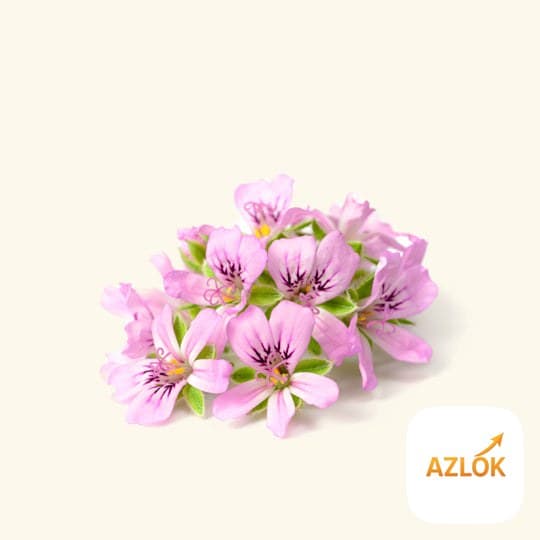

Rose Geranium Essential Oil is a steam-distilled oil from the flowering tops and leaves of the Pelargonium (rosat group) plant, prized for its sweetly floral, herbaceous aroma and its balancing, nourishing effect on skin. It is used mainly in skincare, natural perfumery and aromatherapy, always diluted in a carrier oil before it touches the skin.
The oil owes much of its character to naturally occurring constituents like citronellol and geraniol, which give it a rose-like softness with a green, minty edge. Azlok stocks it in sizes ranging from 100 GM for home makers up to 25 KG for small businesses, so you can buy what suits your project.
What Rose Geranium Essential Oil is used for
This is a versatile oil that fits neatly into everyday DIY routines. Common uses include:
- Facial skincare: A drop or two blended into a carrier oil or unscented cream to help maintain a balanced, refreshed complexion.
- Natural perfumery: Its rosy-green note works as a heart accord in roll-on perfumes and body oils.
- Soap and candle making: Adds a floral, herbaceous fragrance to cold-process soaps, melt-and-pour bars and candles.
- Aromatherapy: A few drops in a diffuser for a calming, uplifting atmosphere.
- Body and massage oils: Diluted into jojoba or almond oil for a fragrant massage blend.
How to use it safely
Essential oils are concentrated, so a little goes a long way. Keep these basics in mind:
- Always dilute. For skin use, keep essential oil at roughly 1–2% of your blend, which is about 1–2 drops per teaspoon of carrier oil.
- Patch test first. Apply a small diluted amount to the inner forearm and wait 24 hours before wider use.
- Do not ingest. This oil is for external and aromatic use only.
- Keep away from eyes, children and pets. Store out of reach and avoid sensitive areas.
- Pregnancy and medical conditions: Consult a qualified practitioner before use.
Because rose geranium contains natural fragrance components that some people are sensitive to, the patch test really matters, especially for those with reactive skin.
Blends that work well
Rose Geranium plays nicely with a wide range of oils. It blends beautifully with jojoba, neroli, patchouli, bergamot and rose, and it disperses easily in all types of carrier oils.
- Floral face oil: Jojoba as the base, with a whisper of rose geranium and neroli.
- Grounding perfume: Patchouli and bergamot rounded off with rose geranium.
- Relaxing bath oil: A carrier oil with rose geranium and a touch of rose.
Buying and storage tips
Good essential oil should smell true to its source and come with clear specifications. This oil is a colourless to slightly yellow liquid, soluble in alcohol, with a specific gravity of about 0.919 and a shelf life of around two years when stored well.
- Store in a cool, dark place, tightly closed, away from direct sunlight and heat.
- Keep the bottle capped between uses to slow oxidation and preserve the aroma.
- Buy a size you will realistically finish within the shelf life; the 100 GM pack suits hobbyists, while larger packs suit regular makers and businesses.
- Check the batch documentation such as COA and MSDS when buying in bulk for commercial formulations.
At ₹699, Azlok's Rose Geranium Essential Oil is an accessible option for anyone wanting to experiment with floral skincare and fragrance blends at home.
FAQ
Is Rose Geranium Essential Oil the same as rose oil?
No. Rose geranium comes from the Pelargonium plant, while rose oil comes from rose petals. Rose geranium has a rose-like note but is a distinct oil, generally more affordable and greener in character.
Can I apply it directly to my skin?
Not undiluted. Always mix it into a carrier oil or cream at about 1–2% and patch test before regular use to avoid irritation.
How should I store it?
Keep it in a cool, dark spot with the cap tightly closed. Stored well, it stays good for about two years. Heat, light and air speed up oxidation.
Which oils does it blend with?
It blends well with jojoba, neroli, patchouli, bergamot and rose, and it mixes with all common carrier oils, making it easy to build face oils, perfumes and massage blends.
Can it be used in soap and candle making?
Yes. Its floral, herbaceous fragrance works nicely in cold-process and melt-and-pour soaps as well as candles, though usage rates vary by recipe.