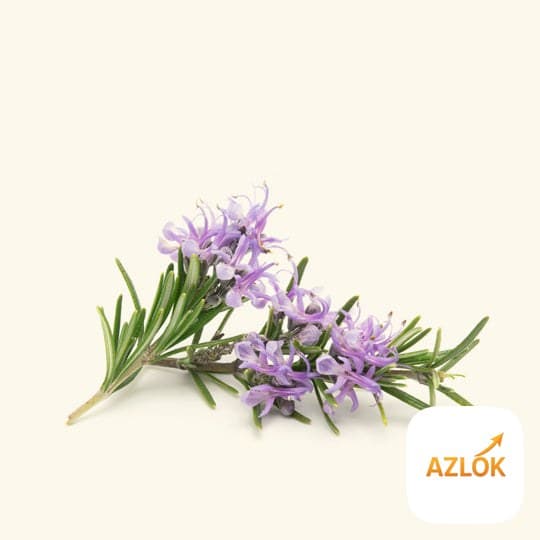

Rosemary Oleoresin (often labelled ROE or Rosemary Oil Extract) is a concentrated, oil-soluble extract from rosemary leaves used to slow down rancidity in natural oils. Its antioxidant power comes largely from carnosic acid, and because Azlok's version is standardised to 7% carnosic acid, you only need a very small amount to protect a batch of oil.
What Rosemary Oleoresin actually does
Natural oils and butters go rancid over time as oxygen attacks their fatty acids. That leads to off smells, a sour or painty odour, and a shorter shelf life. Rosemary Oleoresin acts as an antioxidant: it does not stop oxidation forever, but it slows the process considerably, helping oils stay fresh and stable for longer.
It is important to understand what ROE is and is not. It is a preservative for oils that fights oxidation. It is not an anti-microbial preservative, so it will not protect water-based products from bacteria, yeast or mould. For anything containing water you still need a proper broad-spectrum preservative.
Common uses
- Carrier and cosmetic oils: added to almond, olive, sunflower, jojoba, rice bran and similar oils that oxidise quickly.
- Balms, salves and lip products: extends the life of oil-and-butter blends.
- Soap making: helps protect the oils in cold-process soap from developing rancid orange spots (DOS).
- Massage and body oil blends: keeps blends smelling clean for longer.
Because our ROE is highly concentrated, it works economically even in small production batches.
How to use it
A little goes a long way. As a general starting guide, ROE is used at very low percentages — commonly around 0.02% to 0.1% of the total oil weight, depending on the oil and its natural stability. For most makers this means a few drops per kilogram of oil.
- Weigh your oils or butters.
- Add the small measured amount of Rosemary Oleoresin.
- Stir thoroughly so it disperses evenly. Since it is a viscous liquid, gentle warmth helps it mix in.
- Add it as early as possible in your process — ideally before the oil has begun to oxidise, since it slows further oxidation rather than reversing damage already done.
ROE is oil-soluble and soluble in alcohols, so it blends easily into oil-based formulas. Its colour ranges from greenish to brown and its aroma is strong and herbal, which is why keeping the dose low also avoids affecting the scent of your final product.
Safety and handling
- ROE is used as a processing aid, not a stand-alone product. Do not apply it neat to skin, and always dilute it into a carrier.
- Because the aroma is strong, overdosing can leave a noticeable rosemary smell — stick to the recommended low percentages.
- Keep away from children and pets, and store away from food unless you are using a food-grade grade for that specific purpose.
- Always refer to the product's COA and MSDS for the batch you receive, and patch-test any finished skincare formula before wider use.
Buying and storage tips
Azlok's Rosemary Oleoresin is produced in India by solvent extraction and standardised to 7% carnosic acid, with a shelf life of around two years. It is available in sizes from 100 gm up to 25 kg, so both hobbyists and small businesses can buy what suits their scale, starting at ₹549.
- Store in a cool, dark place, tightly closed, away from direct sunlight and heat.
- Keep the container sealed to limit air exposure, since the antioxidant itself works best when kept fresh.
- Buy a size you will realistically use within its shelf life rather than over-stocking.
FAQ
Does Rosemary Oleoresin preserve creams and lotions?
No. It only slows oxidation (rancidity) in oils and fats. Water-containing products like creams and lotions still need a proper broad-spectrum preservative to prevent microbial growth.
How much ROE should I add to my oil?
Very little — typically about 0.02% to 0.1% of the oil weight. Start low, mix well, and adjust within that range depending on the oil's natural stability.
Will it change the smell of my product?
The aroma is strong and herbal, so overdosing can leave a rosemary scent. Used at the correct low percentage, it usually has little effect on the final fragrance.
What makes carnosic acid important?
Carnosic acid is the main antioxidant compound in rosemary extract. A higher, standardised level (7% here) means stronger activity, so you can use less to get the same protection.
Is it oil-soluble or water-soluble?
Rosemary Oleoresin is oil-soluble and also soluble in alcohols. It disperses into oils and butters but will not mix into water.