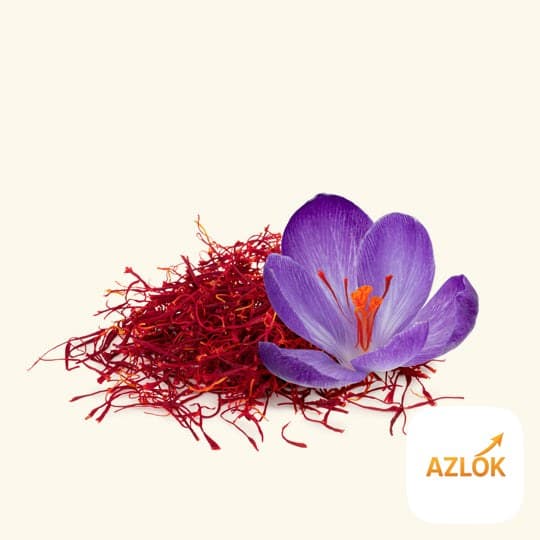

Saffron Essential Oil, also called Kesar oil, is a botanical extract from the stigmas of Crocus sativus, used mainly in skincare and fragrance blends for its warm, characteristic aroma and its long history in traditional beauty rituals. Azlok's version is steam distilled, thin in consistency, yellow to dark yellow in colour, and best used diluted in a carrier oil rather than neat on the skin.
What is Saffron Essential Oil?
Saffron comes from the delicate crimson stigmas of the saffron crocus flower. It takes a huge quantity of flowers to yield even a small amount of the raw material, which is why saffron itself is one of the most expensive spices in the world. The essential oil captures the aromatic compounds of the flower through steam distillation.
A few quick specifications worth knowing:
- Botanical name: Crocus sativus
- Extraction: Steam distillation
- Form: Thin liquid, yellow to dark yellow
- Odour: Characteristic, warm and floral
- Solubility: Soluble in alcohol
- Shelf life: Around 2 years when stored well
- Country of origin: India
Common uses
Saffron oil is prized more for aroma and skincare than for cooking. Here are the ways home users and small makers typically reach for it:
- Facial oil blends: A drop or two diluted in a carrier such as almond, jojoba or rosehip oil for a glow-focused night blend.
- Perfumery: As a warm top-and-heart note. It sits beautifully with lavender, amber, vanilla and lime.
- Soap and candle making: A small addition to add a luxurious, distinctive scent profile.
- Massage blends: Diluted into a base oil for a fragrant, relaxing massage.
- DIY balms and creams: A touch to scent and enrich homemade skincare formulations.
How to use it safely
Essential oils are highly concentrated, so a little goes a long way. Follow these basics:
- Always dilute. Add 1–2 drops per teaspoon of carrier oil for skin use. Do not apply the oil neat.
- Patch test first. Apply the diluted blend to the inside of your forearm and wait 24 hours before wider use.
- Keep away from eyes and mucous membranes. If it gets in the eyes, flush with plenty of water.
- Do not ingest. Despite saffron's culinary fame, essential oils are not the same as the food-grade spice and are not meant to be eaten.
- Pregnancy and health conditions: Consult a qualified doctor before use if you are pregnant, breastfeeding or under treatment.
- Store out of reach of children.
Because this oil has a very high flash point and blends well with alcohol, it is convenient for perfumery work, but always work in a ventilated space and keep it away from open flame during any heating step.
Blending tips
If you are new to perfume or skincare blending, start small and record what you do. Saffron pairs naturally with:
- Lavender — for a calming, floral balance
- Amber — for depth and warmth
- Vanilla — for a soft, sweet base
- Lime — for a bright, fresh lift
Begin with saffron as a minor accent — even a single drop can dominate a blend. Adjust from there rather than starting heavy.
Buying and storage
Azlok offers Saffron Essential Oil starting at ₹649, with pack sizes ranging from 100 GM up to bulk 25 KG options, which suits both hobbyists and small businesses. To keep the oil fresh across its roughly two-year shelf life:
- Store in a cool, dark place away from direct sunlight.
- Keep the cap tightly closed to limit oxidation.
- Use clean, dry droppers to avoid contamination.
- Amber or dark glass bottles are ideal for decanting.
When buying any essential oil, ask for the COA and MSDS so you know what you are working with, especially if you are formulating products to sell.
FAQ
Is Saffron Essential Oil the same as saffron spice for cooking?
No. The essential oil is a concentrated aromatic extract meant for skincare, perfumery and DIY crafts, not for eating. Use food-grade saffron threads for cooking.
Can I apply Saffron Essential Oil directly to my face?
Not undiluted. Mix 1–2 drops into a teaspoon of a carrier oil such as jojoba or almond, do a patch test, and then apply. This lowers the risk of irritation.
What scents blend well with saffron oil?
Lavender, amber, vanilla and lime are natural companions. Saffron works best as a small, warm accent rather than the main note.
How long does it last once opened?
Roughly two years if stored in a cool, dark place with the cap kept tight. Oxidation and heat shorten its life, so keep it sealed and away from sunlight.
Which pack size should I choose?
For home use, the 100 GM pack is a sensible start. Larger sizes up to 25 KG are meant for makers and small businesses who go through oil regularly.