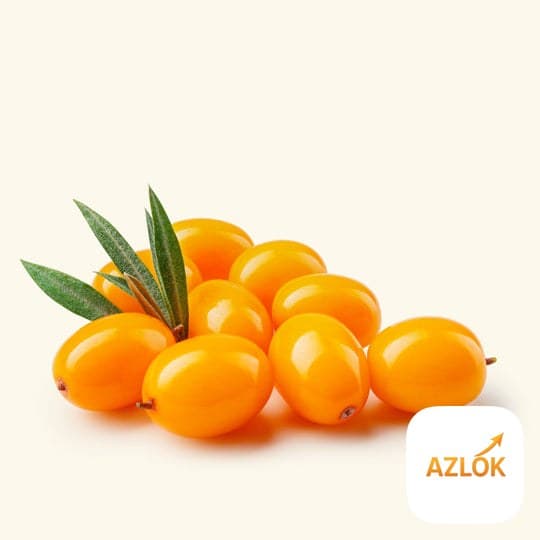

Sea Buckthorn Oil is a cold-pressed carrier oil made from the fresh berries of the Himalayan sea buckthorn plant (Hippophae rhamnoides). It is used externally in skincare, massage blends, natural soaps and scented candles, and is known for its anti-inflammatory properties that soothe sunburn, minor cuts, insect bites and irritated skin. It is meant for external use only.
The oil has a striking yellow-to-orange colour, a thin consistency and a characteristic fruity-earthy odour. Because it is rich in fatty acids like linoleic, alpha-linolenic and palmitoleic acid, a little goes a long way, which is why makers usually blend it into other oils rather than using it neat.
What Sea Buckthorn Oil is used for
This is a versatile oil for both personal care and small-batch DIY projects. Common uses include:
- Facial and body oils: A few drops added to a base carrier for dry, mature or sun-stressed skin.
- After-sun and soothing balms: Its anti-inflammatory nature makes it a popular addition to salves for sunburn, chapped skin and minor scrapes.
- Soap making: Adds colour and a nourishing feel to cold-process and melt-and-pour soaps.
- Candles: Used in scented candle formulations where a natural oil base is desired.
- Massage blends: Diluted into thin carriers for a smooth, easily absorbed feel.
How to use it
Because sea buckthorn oil is deeply pigmented, it can temporarily tint skin and fabric orange when used undiluted. The practical approach is to dilute it.
- For skincare: Mix about 5–10% sea buckthorn oil into a lighter base such as coconut, castor or your usual face oil. It blends particularly well with coconut and castor oil.
- Patch test first: Apply a small amount to the inner forearm and wait 24 hours before wider use.
- For soap: Add at trace in cold-process recipes for a natural orange hue and a conditioning finish. Start with a small percentage and adjust.
- For candles: Incorporate into your wax or oil blend as the recipe requires; keep proportions modest so the colour and scent stay balanced.
Safety and honest notes
This product is for external purposes only. Please keep these points in mind:
- Do not ingest the oil.
- Avoid direct contact with the eyes; rinse with water if it happens.
- Avoid direct exposure to sunlight after application, and store the bottle away from sunlight.
- Always dilute before applying to skin, and patch-test to rule out sensitivity.
- Keep out of the reach of children.
- If you have a medical concern or persistent skin problem, consult a qualified professional rather than relying on any oil.
We do not make medical claims. Sea buckthorn oil is traditionally valued for its soothing, conditioning feel, but it is a cosmetic ingredient, not a medicine.
Buying and storage tips
Look for oil that is cold-pressed, which helps retain the natural fatty acids, and check the colour — a genuine yellow-to-orange shade is typical. Azlok's Sea Buckthorn Oil is cold-pressed, sourced from Indian Himalayan berries, and available from a 100 gm pack up to bulk 25 kg sizes, so both hobbyists and small businesses can buy what suits them. It is priced from ₹549.
To keep it fresh over its roughly two-year shelf life:
- Store in a cool, dark place, tightly closed.
- Keep away from heat and direct sunlight.
- Use clean, dry droppers or spoons to avoid contamination.
- For large packs, decant a small working bottle so the bulk container stays sealed.
FAQ
Is Sea Buckthorn Oil safe to eat?
No. This product is meant for external use only. Do not ingest it, and keep it away from the eyes and out of children's reach.
Why does it stain skin orange?
The oil is naturally rich in orange pigments. Diluting it to around 5–10% in a carrier oil greatly reduces any tint while still giving you its benefits.
Which oils does it blend well with?
It blends nicely with coconut, castor and chamomile oil, and is soluble in alcohol and most fixed oils, making it easy to mix into skincare, soap and candle recipes.
Can I use it directly in soap and candles?
Yes. Add it in modest amounts at trace in cold-process soap for colour and conditioning, or blend it into candle formulations. Start small and adjust to your recipe.
How long does it last?
Sea buckthorn oil has a shelf life of about two years when stored in a cool, dark place with the cap tightly closed and away from sunlight.