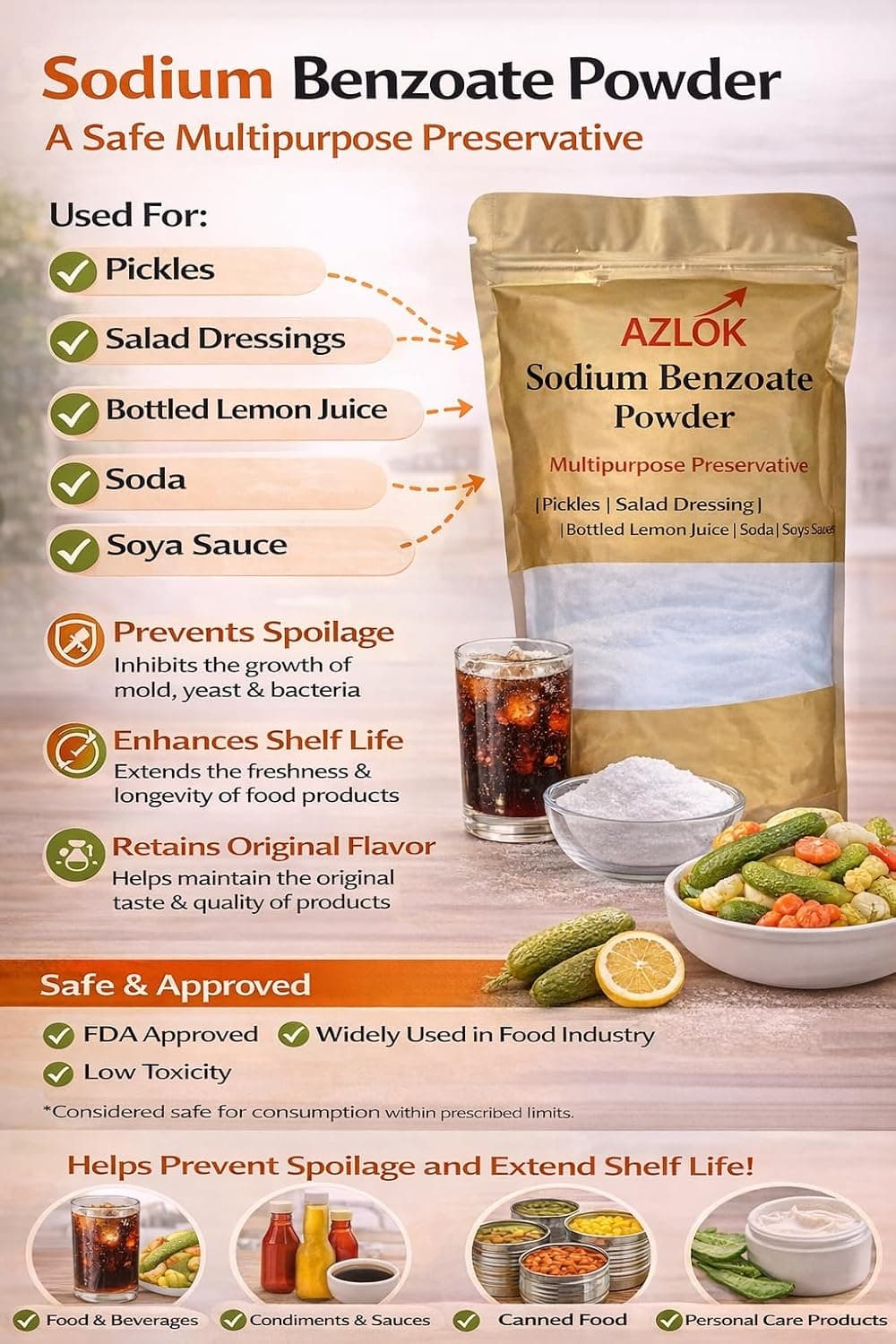
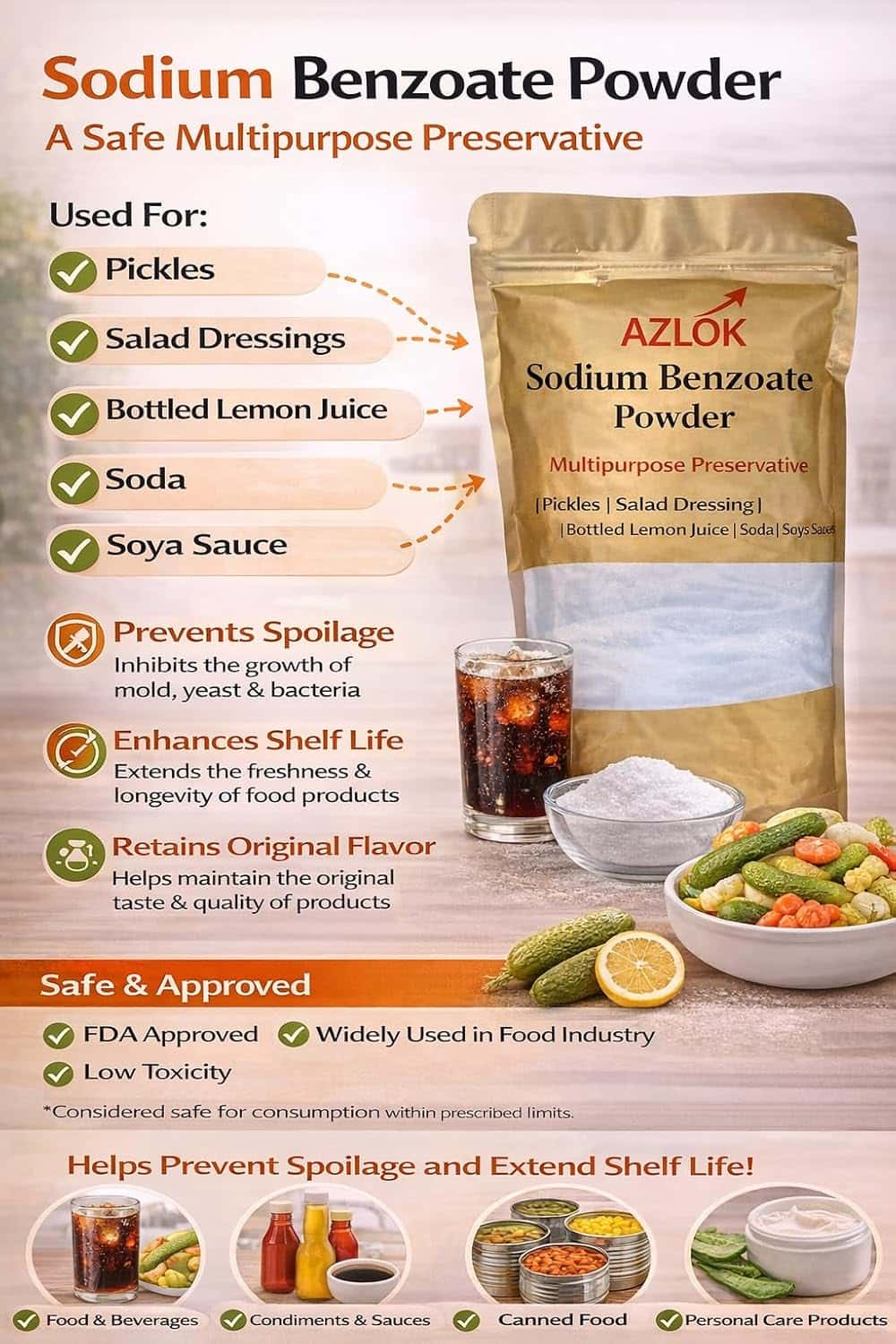
Sodium benzoate is a food-grade preservative used in small, measured amounts to slow the growth of yeasts, moulds and some bacteria in acidic foods and drinks. It works best in products with a pH below about 4.5 — think fruit juices, squashes, sauces, pickles and soft drinks — where it helps extend shelf life when used within recommended limits.
Azlok Sodium Benzoate Powder 400 g comes as a fine, easy-to-disperse powder, which makes it convenient for small-scale food processing and formulation. It is intended for proper food and technical use only, not for eating in raw form.
What sodium benzoate is used for
Sodium benzoate is one of the most common preservatives in the food and beverage trade. Its effectiveness depends on an acidic environment, so it is chosen for products that are naturally or deliberately tart. Typical uses include:
- Beverages: fruit squashes, cordials, sherbets, carbonated soft drinks and some flavoured waters.
- Sauces and condiments: tomato ketchup, chilli sauce, chutneys and salad dressings.
- Pickles and preserves: acidic pickles, jams, jellies and fruit preparations.
- Technical and formulation work: as a preservative component in certain non-food water-based products.
Because it dissolves and disperses well, the powder blends evenly when added to liquids or wet mixes at the right stage of preparation.
How to use it correctly
Sodium benzoate is potent, so a little goes a long way. Follow the dosage limits set by food safety regulations for your specific product category rather than guessing. As a general guide:
- Check the pH. Sodium benzoate performs poorly in low-acid foods. Make sure your product is acidic (below roughly pH 4.5) for it to work.
- Weigh accurately. Use a precise scale. Typical permitted levels in foods are a fraction of a percent of the total weight — always work to the regulated maximum for your product.
- Dissolve first. Stir the measured powder into a small quantity of water or the liquid base until fully dissolved, then mix it evenly into the whole batch.
- Add late in the process. Where possible, incorporate it after heating and near the end of preparation so it disperses uniformly.
Never exceed the recommended dosage in the belief that more will preserve better. Overuse can affect taste and is not permitted under food standards.
Safety notes worth taking seriously
This is a processing ingredient, not a snack. Handle it with the same care you would give any concentrated additive.
- Do not consume the raw powder. It is meant to be used at tiny, diluted levels within finished products only.
- Measure to regulation. Stay within the legal maximum for your food category. If you are selling products, confirm the current permitted limits for India.
- Avoid dust inhalation. Work in a ventilated space and avoid breathing in fine powder while weighing.
- Keep away from children and store separately from everyday kitchen ingredients to prevent mix-ups.
- Combine with acid, not alone. If your product is not acidic enough, the preservative simply will not do its job — reformulate rather than adding more.
Buying and storage tips
The 400 g pack from Azlok suits home makers, hobbyists and small businesses who need a manageable quantity without waste. When buying, choose clearly labelled food-grade material and note the packaging date.
- Store in a cool, dry place away from direct sunlight and moisture.
- Keep the pack tightly closed between uses — the powder can cake if it absorbs humidity.
- Use a clean, dry spoon each time to avoid contamination.
- Label your container clearly with the contents and purpose.
Sodium benzoate has a long shelf life when kept dry, but replace it if it becomes lumpy, discoloured or develops any off odour.
FAQ
Is sodium benzoate safe to use in food?
Yes, it is an approved food preservative when used within regulated dosage limits in suitable acidic products. It is not safe to eat in raw, concentrated form — it must be diluted into a finished product at permitted levels.
How much sodium benzoate should I add?
Only very small amounts, well under one percent of the product weight, and always within the legal maximum for your specific food or beverage. Weigh it precisely and never exceed the recommended limit.
Why does it only work in acidic foods?
Sodium benzoate becomes effective as a preservative in an acidic environment, generally below about pH 4.5. In low-acid foods it offers little protection, so it is paired with tart products like juices, sauces and pickles.
Can I use it to make homemade squash last longer?
Yes, homemade fruit squashes and cordials are a classic use, provided the mixture is acidic and you dissolve the powder fully at the correct, measured dose.
How should I store the powder?
Keep it sealed in a cool, dry, moisture-free place away from children. A dry spoon and a tightly closed pack will keep the powder free-flowing and clean.