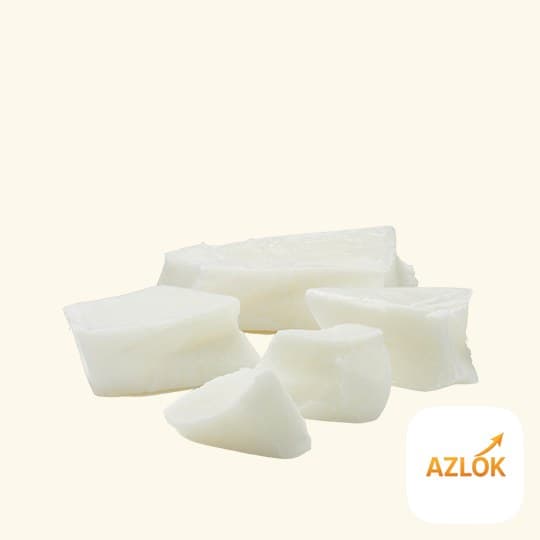

Soy wax slab is a plant-based wax made from soybean oil, and it is one of the easiest waxes to work with for homemade candles and simple DIY projects. It melts at a low temperature, holds fragrance well, and burns slower and cleaner than many paraffin blends—which is why so many first-time candle makers reach for it.
What is soy wax slab used for?
The Azlok Soy Wax Slab comes in a solid block that you cut and melt as needed. It is a favourite among home crafters and small candle businesses because it is forgiving and versatile.
- Container candles — jar candles, teacups, tins and votives.
- Wax melts and tarts — for use in a warmer without a flame.
- Massage candles — when blended with skin-safe carrier oils and mild fragrance.
- DIY formulations — as a base to combine with beeswax or coconut wax for a firmer, longer burn.
Because it is a natural wax, it also washes off easily with warm soapy water, which makes cleaning up your tools far less painful than with harder waxes.
How to make a soy candle step by step
You do not need special equipment to start. A double boiler, a thermometer, wicks, a jar and a fragrance are enough.
- Weigh and chop the wax. Cut the slab into small, even pieces so it melts uniformly.
- Melt gently in a double boiler until fully liquid. Avoid direct high heat.
- Check the temperature with a thermometer. Soy wax generally melts around 45–55°C.
- Add fragrance oil once the wax cools slightly—usually around 60–65°C—so the scent binds well without burning off. A common ratio is 6–10% fragrance by weight.
- Secure the wick in the centre of your clean, dry jar.
- Pour slowly and let it set at room temperature. Trim the wick to about 5 mm before the first burn.
Allow candles to cure for a few days to a week before lighting. Curing lets the scent develop and gives you a stronger, more even throw.
Tips for a better burn
- Cure before you judge. Freshly poured soy candles rarely smell their best straight away.
- Manage frosting. Soy wax can develop a white, crystalline look on the surface. It is natural and harmless, and a slightly warmer jar or slower cooling helps reduce it.
- Match the wick to the jar. A wick that is too small tunnels; too large and it smokes. Test in small batches.
- Keep the first burn long. Let the melt pool reach the jar's edge on the first light to avoid tunnelling later.
Safety notes worth remembering
Candle making is safe when you stay attentive, but hot wax and open flames still deserve respect.
- Melt wax over gentle, indirect heat—never leave it unattended on the stove.
- Work in a ventilated space, especially when adding fragrance oils.
- Keep melted wax, wicks and finished candles away from children and pets.
- Do not pour water on a wax fire; smother it or use a suitable extinguisher.
- This wax is intended for candles and craft use, not for eating.
Buying and storing soy wax slab
Azlok Soy Wax Slab starts at ₹249 and is available in 500 g, 1 kg, 5 kg, 10 kg, 20 kg and 25 kg packs, so you can pick a small block to experiment with or buy in bulk once you are confident. It is made in India and packed to keep its natural quality.
Store the wax in a cool, dry place away from direct sunlight and strong heat. Keep it sealed to protect it from dust and moisture. Stored well, soy wax has a long shelf life, so buying a larger pack for regular projects usually works out more economical.
FAQ
Is soy wax better than paraffin?
Soy wax is plant-based, tends to burn slower and cleaner, and releases less soot than many paraffin waxes. Paraffin can give a stronger scent throw, but many makers prefer soy for its natural origin and easy cleanup.
How much fragrance oil should I add to soy wax?
A common starting point is 6–10% fragrance oil by weight of wax. Add it when the melted wax has cooled to around 60–65°C, then stir gently for a minute or two.
Why does my soy candle look bumpy or white on top?
That is frosting, a natural feature of soy wax as it crystallises. It does not affect the burn. Pouring at a slightly higher temperature and letting the candle cool slowly can reduce it.
Can I mix soy wax with beeswax?
Yes. Adding a portion of beeswax gives a firmer candle and a longer burn. Test small batches to find a ratio you like, as it can slightly reduce scent throw.
How long should soy candles cure before use?
Give them at least a few days, and ideally up to a week or two. Curing lets the fragrance settle into the wax for a fuller, more consistent scent.