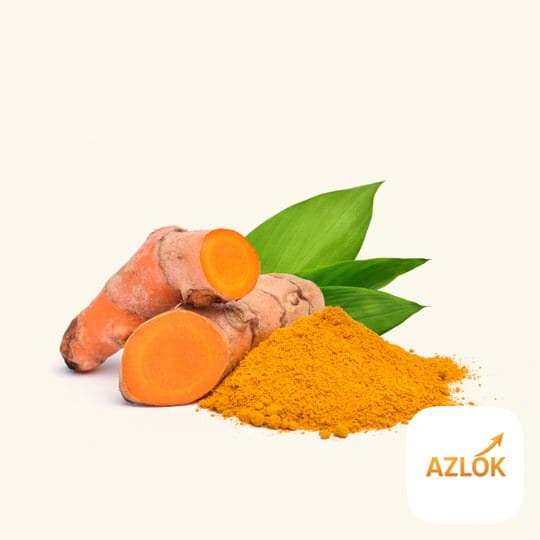
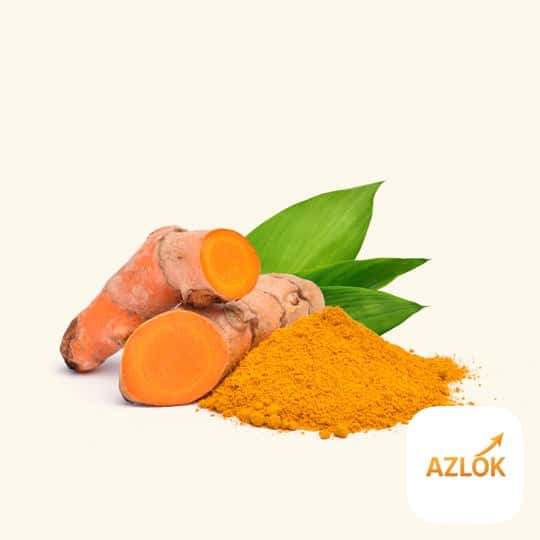
Turmeric essential oil is a steam-distilled extract from the roots of the turmeric plant (Curcuma longa), used mainly in skincare for its warm, earthy aroma and skin-purifying reputation. It is a concentrated oil, so it should always be diluted in a carrier before it touches your skin, never applied neat and never taken internally.
Unlike the bright yellow kitchen powder, this is a golden-to-reddish-brown liquid with a strong, spicy scent. Azlok offers it in sizes from 100 GM upwards, which makes it practical for both home hobbyists and small skincare or soap businesses.
What turmeric essential oil is used for
Because of its cleansing, balancing character, turmeric essential oil is a popular addition to natural cosmetic formulations. Common uses include:
- Facial oils and serums — a drop or two added to a carrier oil blend for a warming, radiance-supporting feel.
- Creams and lotions — folded into an unscented base to add its characteristic spice note and skin-conditioning properties.
- Face masks — blended into clay or cream masks meant to purify and refresh dull skin.
- Soap and candle making — used as a natural fragrance and colour-influencing ingredient in cold-process soaps and botanical candles.
- Aromatherapy blends — diffused in small amounts for its grounding, earthy scent.
How to use it correctly
Turmeric essential oil is potent and can stain skin, cloth and surfaces, so a little goes a long way. Follow these basics:
- Always dilute. A general guideline for adult skin is 1–2% dilution — roughly 1 to 2 drops of essential oil per teaspoon (about 5 ml) of a carrier such as jojoba, sweet almond or fractionated coconut oil.
- Patch test first. Apply the diluted blend to a small area on your inner forearm and wait 24 hours before using it on your face.
- Mind the colour. Its yellow-to-red-brown tint can leave a temporary stain on skin and permanently mark towels or clothing. Keep dilutions low and wipe up spills quickly.
- Blend thoughtfully. It pairs beautifully with clary sage, bergamot, ginger and ylang-ylang. Start with one drop of turmeric to several drops of the companion oil.
Safety notes worth reading
Essential oils are concentrated botanical extracts and deserve respect. Please keep these points in mind:
- For external use only. Do not ingest this oil.
- Keep out of reach of children and pets.
- Avoid contact with eyes and mucous membranes.
- Pregnant or breastfeeding women, and anyone with a medical condition, should consult a qualified practitioner before use.
- Discontinue use if irritation, redness or discomfort occurs.
- This is a cosmetic and fragrance ingredient, not a medicine — it does not cure or treat any disease.
Buying and storage tips
Look for pure, steam-distilled oil with clear specifications. This one carries the botanical name Curcuma longa, CAS No. 8024-37-1 and FEMA 3086, with a thin consistency and a specific gravity of roughly 0.930–0.945. It is soluble in alcohol and fixed oils, which is why it blends smoothly into oil-based serums but not into plain water.
- Store cool and dark. Keep the bottle tightly closed, away from direct sunlight and heat, ideally in a cupboard.
- Use within the shelf life. This oil keeps for about two years when stored well; label your bottle with the opening date.
- Choose the right size. A 100 GM bottle suits home DIY, while larger packs up to 25 KG are handy for small-batch soap, candle and cosmetics makers.
Azlok lists the oil with an MSDS and COA on request, which is useful if you are formulating products to sell and need documentation for your records.
FAQ
Is turmeric essential oil the same as turmeric powder?
No. The powder is dried, ground root used in cooking. The essential oil is a concentrated aromatic liquid steam-distilled from the root, meant for cosmetic and aromatherapy use, not for the kitchen.
Can I apply turmeric essential oil directly to my face?
Never use it neat. Dilute it to about 1–2% in a carrier oil, patch test on your arm, and only then apply a small amount to your face.
Will it stain my skin?
It can leave a temporary yellow tint on skin and can permanently stain fabric. Keeping dilutions low and blends light usually prevents visible staining on skin.
Which essential oils blend well with it?
Clary sage, bergamot, ginger and ylang-ylang all complement its warm, spicy profile and are good starting points for a balanced blend.
How long does it last once opened?
Roughly two years when stored in a cool, dark place with the cap tightly sealed. Heat, light and air shorten its life, so store it carefully.