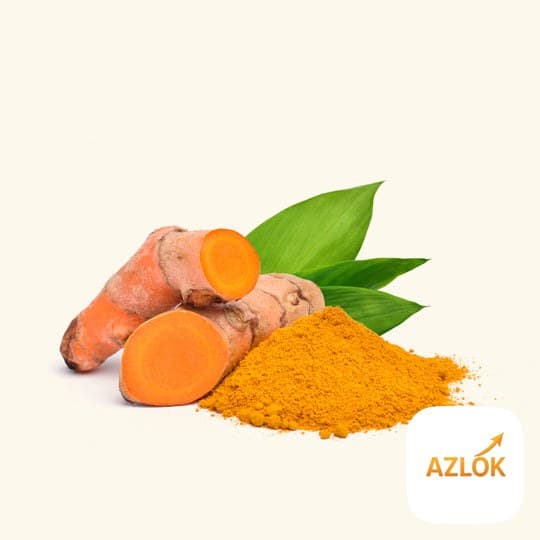
Turmeric Liquid Extract: A Maker's Guide to Using Curcuma Longa in DIY Skincare
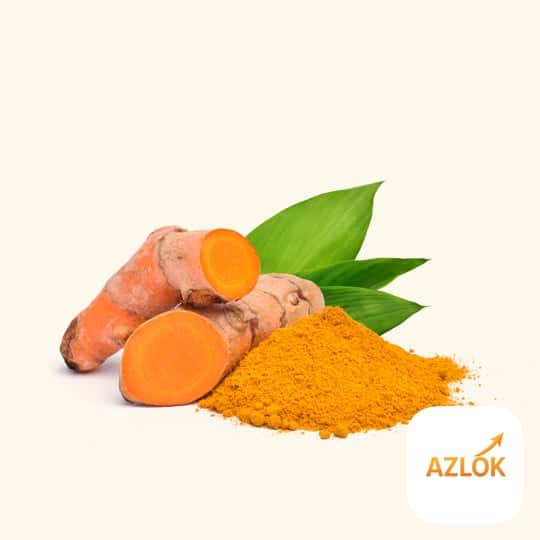
Turmeric Liquid Extract is a concentrated, ready-to-use form of turmeric (Curcuma longa) made for skincare and personal-care formulations. Azlok's version is a 4:1 herb-to-extract concentrate, available in both water-soluble (glycerin-based, alcohol-free) and oil-soluble (soy oil) types, so you can blend it into almost any recipe. It is tasteless and odourless, which makes it easy to work with.
What is Turmeric Liquid Extract?
Turmeric has been part of Indian households for generations, known as haldi, haldar or haludm. This extract is drawn from the rhizome (root) of the turmeric plant and carries curcumin, the compound responsible for turmeric's colour and much of its reputation. The store formulation also uses cardamom and pepper extracts, traditionally added to help the body take up curcumin more readily.
A few quick specifications worth noting:
- INCI name: Curcuma Longa; CAS No: 84012-30-6
- Strength: 4:1 ratio — 4 kg of herb yields 1 kg of extract
- Water-soluble: extracted using vegetable palm glycerin / glycerol, alcohol-free
- Oil-soluble: extracted using soy oil
- Preservative note: BHT (butylated hydroxytoluene)
- Appearance: liquid, tasteless, no odour
Where you can use it
This extract is meant for topical, cosmetic formulations rather than the kitchen. Makers reach for it in a wide range of DIY products:
- Soap making (melt-and-pour and cold process)
- Shampoos and hair rinses
- Face washes and cleansers
- Lotions, creams and body butters
- Serums and facial oils
- General personal care for face, hair, skin and body
Choose the water-soluble type for water-based products like toners, gels and shampoos. Pick the oil-soluble type for balms, facial oils, anhydrous serums and oil phases in creams.
How to use it in your formulations
The recommended dosage is 1–2% of your total formula. That means for a 100 gm batch, you would add roughly 1 to 2 gm of extract. Start at the lower end and adjust after testing.
- Decide whether your product is water-based or oil-based, then pick the matching extract.
- Weigh your ingredients rather than measuring by volume for consistency.
- Add the extract to the correct phase — water-soluble into the water phase, oil-soluble into the oil phase.
- Blend thoroughly at the temperature your recipe specifies.
- Because turmeric can tint a formula, test a small batch first to check the final colour.
Safety and honest notes
Although no herb-drug interactions are known for this ingredient, sensible caution is worth observing with any external application.
- Patch test a finished product on your inner arm before regular use.
- This is a cosmetic raw material meant for topical use — do not ingest it.
- Keep away from children and pets, and out of the eyes.
- Turmeric is naturally staining; wipe up spills promptly and protect work surfaces and clothes.
- If you have sensitive or reactive skin, keep to the lower 1% dosage.
Used at the prescribed doses, the extract may be considered safe for topical formulations.
Buying and storage tips
Azlok offers the Turmeric Liquid Extract from a 100 gm bottle for home hobbyists right up to 25 kg for small businesses, with 500 gm, 1 kg, 5 kg, 10 kg and 20 kg options in between. Pricing starts at ₹349. If you are new to it, a smaller pack lets you trial recipes before committing to bulk.
For storage, keep the bottle in a cool, dry place, tightly closed and away from direct sunlight. The shelf life is around 2 years when stored well. Documentation such as COA and MSDS is available for both the water-soluble and oil-soluble versions, which is helpful if you sell your finished products.
FAQ
What is the difference between the water-soluble and oil-soluble versions?
The water-soluble extract is made with vegetable glycerin and is alcohol-free, so it blends into water-based products like toners and shampoos. The oil-soluble version uses soy oil and suits balms, facial oils and the oil phase of creams.
How much Turmeric Liquid Extract should I add?
The recommended usage is 1–2% of the total formula. For a 100 gm batch, that is about 1 to 2 gm. Begin low and adjust after testing.
Does it have a strong turmeric smell or taste?
No. This extract is described as tasteless and odourless, which makes it convenient to add without changing the fragrance profile of your product.
Can I take it internally or add it to food?
No. It is formulated as a cosmetic raw material for topical DIY personal care. Do not ingest it.
What does the 4:1 strength mean?
A 4:1 ratio means 4 kg of turmeric herb is concentrated down to produce 1 kg of extract, so a little goes a long way in your formulations.