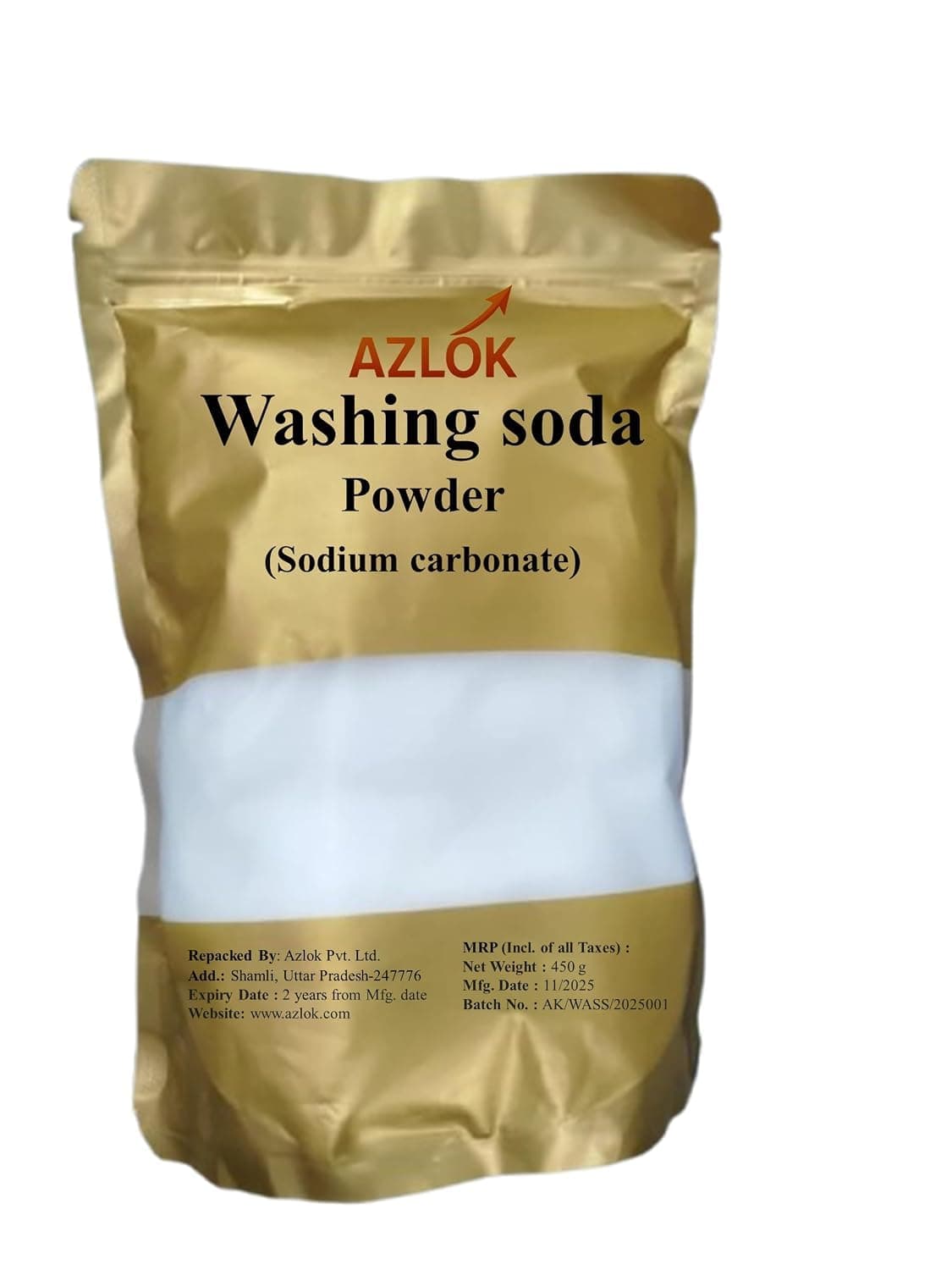
Washing Soda Powder: A Practical Guide to Sodium Carbonate as a Laundry Booster
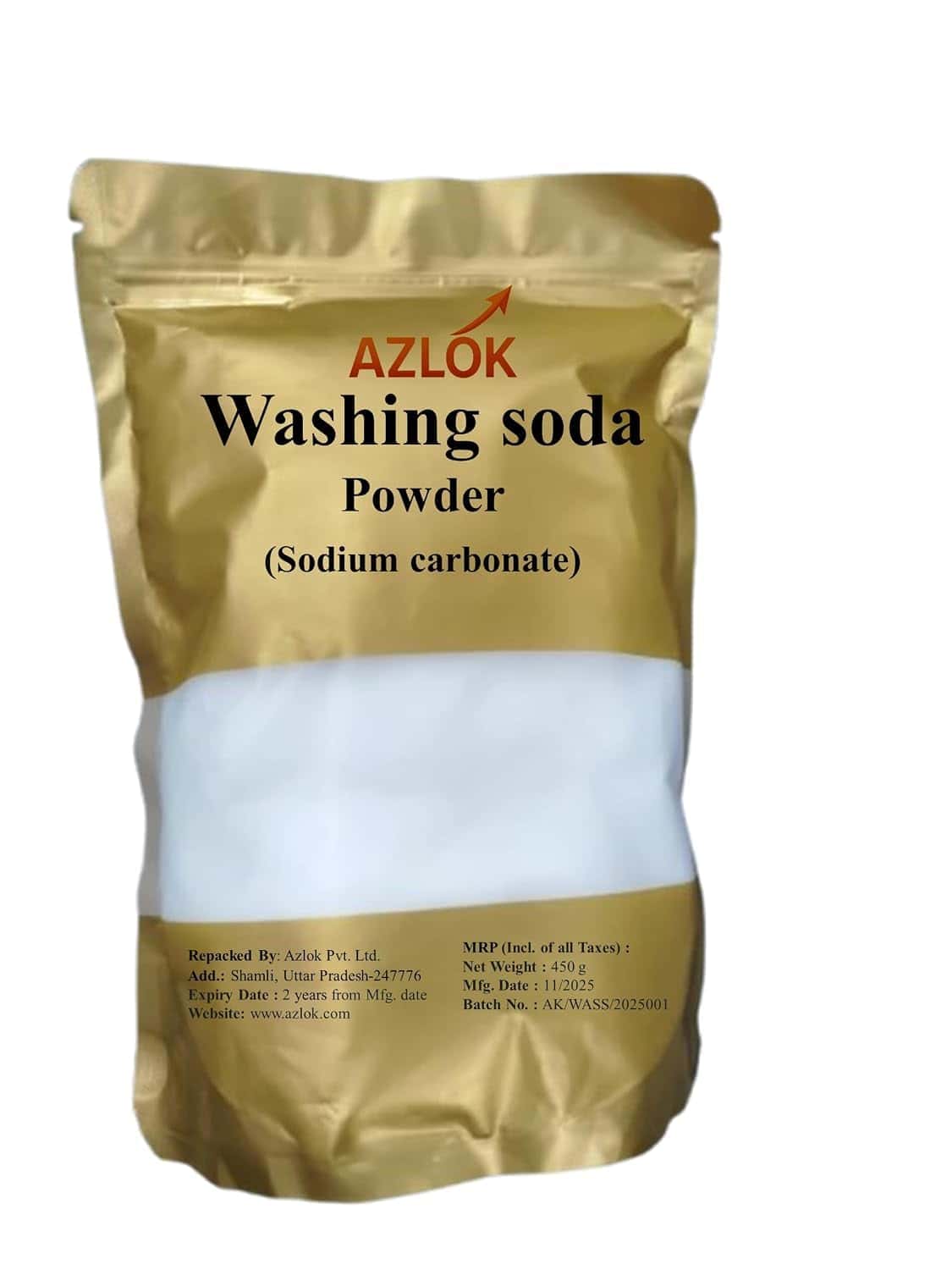
Washing soda powder is sodium carbonate (soda ash light), an alkaline compound used mainly as a laundry booster, water softener and stain remover. Add about a tablespoon to a bucket of water along with your usual detergent and it lifts grime, softens hard water and brightens whites. It is a cleaning and industrial chemical, so remember one thing up front: it is strictly not for cooking or eating.
Azlok's 250 gm Super Trial Pack is a handy size to test how washing soda fits into your washing routine before you commit to a larger quantity. Below is a straightforward look at what it does and how to use it correctly.
What Washing Soda Powder Is Used For
Sodium carbonate is a workhorse compound with uses that stretch from the laundry room to large industry. The common ones you may come across:
- Laundry booster: improves the cleaning power of ordinary detergent, especially on greasy or heavily soiled clothes.
- Water softener: binds the minerals in hard water so soap lathers better and leaves fewer deposits on fabric.
- Stain remover: tackles oil, food and general dirt marks more effectively than detergent alone.
- Soap and detergent making: used as a builder or filler to give a smoother finish.
- Dyeing: a well-known dye fixer that helps reactive, procion and cold-brand dyes adhere to cotton fabrics.
- Swimming pools: raises the pH and alkalinity of pool water.
- Industry: glass manufacture, pulp and paper, water and effluent treatment and metallurgy.
How to Use It as a Laundry Booster
Keep the dose modest and let your detergent do the main work.
- Fill a bucket with water and add your regular detergent.
- Add roughly one tablespoon of washing soda powder per bucket load and stir until dissolved.
- Soak the clothes for a few minutes, then wash and rinse as usual.
This works beautifully for white clothes. For coloured or printed garments, be careful. Its alkaline nature can affect dyes, so always test colour-fastness first: dab a diluted solution on a hidden corner of the fabric, wait, and check that the colour does not run or fade before washing the whole garment.
For hard water and stains
If your tap water is hard and leaves clothes stiff or dull, a small amount of washing soda in the wash helps soap perform better. For stubborn oil or food stains, make a paste with a little water, apply to the mark, leave briefly and then wash.
Safety and Handling
Washing soda is alkaline and needs sensible handling. It is not harmful when used correctly, but a few precautions matter:
- Never use it for cooking or consume it. This is a cleaning-grade chemical.
- Avoid breathing in the fine powder. Wear a face mask and gloves when handling larger amounts.
- If it contacts skin, eyes or nose, rinse with plenty of water for about five minutes.
- Keep it well away from children and pets.
- Do not mix it randomly with other household chemicals.
Buying and Storage Tips
The 250 gm trial pack is ideal if you are new to washing soda and want to see how much you actually need before buying bulk. A little goes a long way, so this size lasts a surprisingly long time for regular laundry use.
Store it in a cool, dry place away from direct sunlight. Sodium carbonate readily absorbs moisture from the air, which makes it clump. Transfer any excess into an airtight bottle or a zip-lock pouch to keep it loose and easy to measure. Azlok supplies washing soda in a resealable pouch, which helps keep it dry between uses.
FAQ
Is washing soda the same as baking soda?
No. Washing soda is sodium carbonate, which is far more alkaline. Baking soda is sodium bicarbonate and is milder. They are not interchangeable, and washing soda must never be used in food.
Can I use washing soda on coloured clothes?
Use it mainly on whites. For coloured or printed fabrics, test a small hidden area first to check the colour does not run or fade, because its alkalinity can affect some dyes.
How much washing soda should I add to a bucket wash?
About one tablespoon per bucket load, mixed with your usual detergent. There is no need to overdose it; a small quantity is enough to soften water and boost cleaning.
Does washing soda soften hard water?
Yes. It binds the minerals that make water hard, so detergent lathers better and clothes come out softer with fewer mineral deposits.
Is washing soda safe to touch?
It is safe with basic care, but it is alkaline. Wear gloves for larger amounts, avoid inhaling the powder, and rinse skin or eyes with water for a few minutes if any contact occurs.