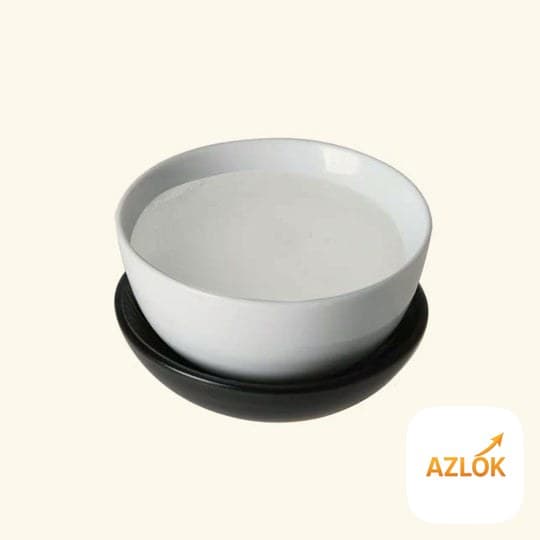

White vinegar, also called distilled or spirit vinegar, is a clear water-and-acetic-acid solution used in cosmetics as a mild astringent and pH-balancing ingredient. In DIY skincare and haircare it can help control oil, soften rough skin and rinse away product build-up from hair — but it must always be diluted well before it touches your skin.
Azlok stocks cosmetic-grade white vinegar (INCI name: Acetic Acid; CAS 8028-52-2) in sizes from 500 g up to 20 kg, so both hobbyists and small makers can find a pack that suits them. The typical solution is around 95–96% water with only 4–5% acetic acid, which is why it is gentle enough for formulation work when handled correctly.
What white vinegar does in cosmetics
The usefulness of white vinegar in beauty comes down to its acidity (pH around 2.5) and its astringent nature. Our skin and scalp naturally sit on the acidic side, so a well-diluted vinegar rinse can help restore that balance after alkaline soaps or shampoos.
- Astringent for oily, acne-prone skin — helps tighten the look of pores and reduce excess surface oil.
- Mild exfoliation — loosens dead surface cells, which can improve skin tone and smoothness over time.
- Scalp and hair rinse — a common base in anti-dandruff and clarifying rinses; it removes residue and adds shine.
- pH adjuster in formulations — makers use small amounts to bring a product into a skin-friendly range.
Common applications include face cleansers, toners, clarifying shampoos, soaps, exfoliators and skin-detox formulations.
How to use it safely
The single most important rule is dilution. Undiluted vinegar is far too acidic for direct skin contact and can cause stinging, redness or burns.
- Facial toner: mix roughly 1 part white vinegar to 4–5 parts water. Start weaker, apply with cotton, and rinse if it stings.
- Hair rinse: add 1–2 tablespoons to a mug of water and pour over hair after shampooing. Leave a minute, then rinse.
- Foot soak: add a splash to a basin of warm water for a refreshing soak.
Always do a patch test on your inner forearm and wait 24 hours before using any new blend on your face. Keep vinegar away from the eyes, broken skin and freshly shaved areas. If irritation appears, stop and rinse with plenty of water.
Handling and storage tips
White vinegar is a liquid with a characteristic sharp odour and is fully soluble in water. It has a specific gravity of about 1.043 g/ml and a boiling point near 106°C, so store and use it at room temperature.
- Keep the container tightly closed to prevent evaporation and off-smells.
- Store in a cool, dry place away from direct sunlight and out of reach of children and pets.
- Do not store it in reactive metal containers; glass or food-grade plastic is best.
- With correct storage the cosmetic grade has a shelf life of around 24 months.
Buying the right pack
For occasional home use, the 500 g or 1 kg pack is plenty. Soap and cosmetic makers running small batches often prefer the 5 kg or larger sizes for better value per kilo. Because this is a cosmetic raw ingredient, check the grade before buying — Azlok lists this product as cosmetic grade with around 95% purity, and can provide COA and MSDS documentation for formulation work.
One honest note: white vinegar is a supportive cosmetic ingredient, not a medicine. It can help with the appearance of blemishes and oily skin, but it does not cure skin conditions. For persistent acne, dandruff or dark spots, see a dermatologist.
FAQ
Can I put white vinegar directly on my face?
No. Always dilute it — a common starting ratio is 1 part vinegar to 4–5 parts water. Neat vinegar is too acidic and can irritate or burn the skin.
Is white vinegar good for dandruff?
A diluted white vinegar rinse can help clear product build-up and restore scalp pH, which many people find soothing. It is a common base in DIY anti-dandruff rinses, but severe or persistent dandruff should be checked by a doctor.
Is cosmetic-grade white vinegar the same as kitchen vinegar?
They are chemically similar (acetic acid in water), but cosmetic-grade product is sold with COA and MSDS documentation for formulation use. Azlok's white vinegar is listed as cosmetic grade.
How long does it last?
Stored tightly closed in a cool, dark place, cosmetic-grade white vinegar keeps for around 24 months.
Can I drink or cook with it?
This product is sold for cosmetic and industrial applications, not as a food item. Do not ingest it; use a food-grade vinegar for cooking.