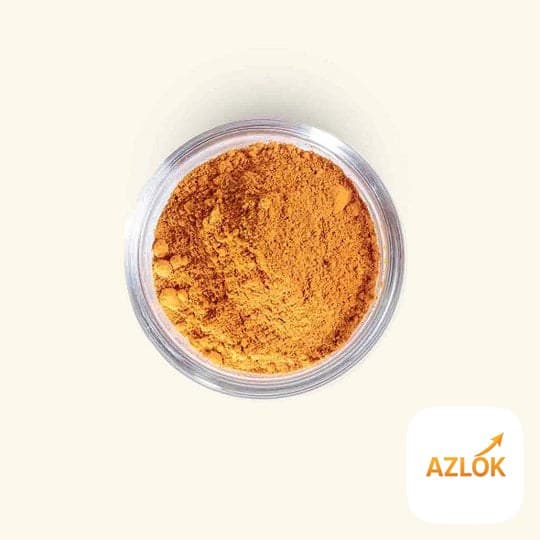

Yellow Oxide Pigment Powder is a water-insoluble yellow colourant used to add a bright, stable yellow shade to soaps, candles, cosmetics and craft projects. You simply disperse a small amount into your base "oil, wax, melt-and-pour soap or a carrier " to get an even colour without changing the recipe. Azlok stocks it in 15 g, 100 g, 500 g and 1 kg packs, starting at just \u20b999.
What is Yellow Oxide Pigment Powder?
It is a fine, dry powder that carries a warm yellow tone. Because it is a pigment rather than a dye, it sits within your product and gives a consistent, opaque colour instead of dissolving into the mix. That makes it a reliable choice when you want the shade to stay put and not bleed or migrate over time.
The powder is water insoluble, so it will not simply melt away in water-based recipes. Instead, it needs to be dispersed properly "more on that below.
Common uses
- Soap making: Colour cold process soap, hot process soap and melt-and-pour bases a cheerful yellow.
- Candle making: Tint wax for pillar, container and moulded candles.
- Cosmetics: Used in nail paints, eye shadows and other bath and body products.
- Art and craft: Resin work, DIY paints, plaster and general craft projects.
How to use it
A little goes a long way, so start small and build up the colour gradually.
In soap
- Take roughly a quarter to half a teaspoon per 500 g of soap base as a starting point.
- Pre-mix the pigment with a small amount of a light carrier oil (such as olive or sweet almond) or glycerine to form a smooth slurry. This prevents speckles and clumps.
- Stir the slurry into your soap batter or melted base and blend until the colour is even.
In candles
- Add the powder to your melted wax while it is warm.
- Stir thoroughly, ideally after pre-dispersing in a little of the same wax or a compatible oil.
- Test a small sample and let it set to judge the final shade before pouring the full batch.
In cosmetics and craft
For eye shadows, nail paints and craft mixes, blend the pigment into your chosen base and mill or stir until uniform. Always make a small test batch first, since the depth of colour depends on how much you add and what you are colouring.
Tips and safety notes
- Disperse, don\u2019t dump: Pre-mixing the powder into oil or glycerine gives a far smoother result than adding it dry.
- Wear a mask: Fine powders can become airborne. Work in a ventilated area and avoid breathing in the dust while measuring.
- Patch test cosmetics: Before using any homemade cosmetic on a large area, do a small patch test on your skin.
- Follow safe usage levels: For products meant to touch skin, keep pigment within recommended levels and check its suitability for the specific application (for example, lip or eye use).
- Keep it clean: Use dedicated spoons and containers, and wipe up spills promptly "pigment can stain surfaces and clothing.
- Keep away from children and do not ingest.
Buying and storage
Choose your pack size to match how often you make and sell. The 15 g pack is ideal for testing shades and small hobby batches, while the 500 g and 1 kg packs suit regular makers and small businesses. With a shelf life of around two years, the larger packs stay usable if stored well.
Store the powder in a cool, dry place with the lid tightly closed. Keep it away from moisture and direct sunlight, and reseal after each use to prevent clumping. Azlok supplies this pigment in packaging as per requirement, so you can order the quantity that fits your project.
FAQ
Is Yellow Oxide Pigment Powder safe for soap and skin products?
Oxide pigments are widely used in soaps and cosmetics. Use it at sensible levels, do a patch test for skin products, and confirm it suits the specific use, such as eyes or lips, before scaling up.
Does the pigment dissolve in water?
No. It is water insoluble, which is why you disperse it in oil, glycerine or wax rather than water for an even, streak-free colour.
How much should I use?
Start with about a quarter teaspoon per 500 g of base and adjust from there. The right amount depends on the base and how deep a yellow you want, so always test a small batch first.
Will the colour fade or bleed?
Pigments are more stable than dyes and generally hold their colour well without bleeding, though final results depend on your recipe and how it is stored.
Which pack size should I buy?
Pick 15 g for trials and small batches, 100 g for regular hobby use, and 500 g or 1 kg if you make products frequently or sell them.