


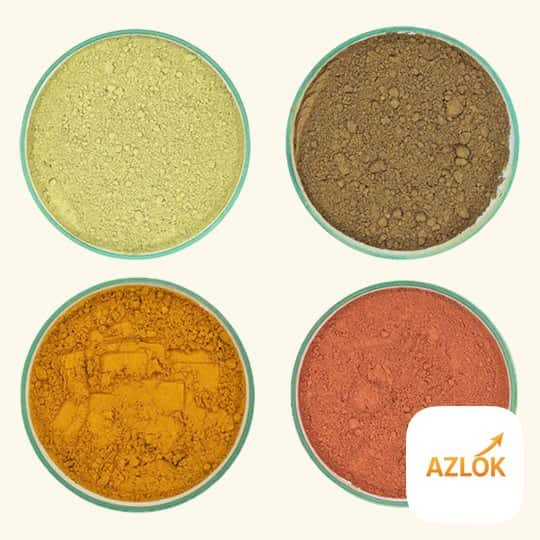
Anti-Acne & Pore Cleansing Combo - Herbal Pack
Minimum Order: 1 units
Description
Azlok's Anti-Acne & Pore Cleansing Combo is a set of four cosmetic-grade herbal powders — Neem, Tulsi, Wild Turmeric (Kasturi Haldi), and Manjistha — each 100 g. Together they target acne-causing bacteria, unclog pores, reduce inflammation, and help fade blemishes and dark spots through traditional Ayurvedic ingredients.
History & Discovery
Neem (Azadirachta indica), Tulsi (Ocimum sanctum), Wild Turmeric (Curcuma aromatica), and Manjistha (Rubia cordifolia) have each been used in Indian skin care for centuries. Classical Ayurvedic texts such as Charaka Samhita and Sushruta Samhita describe neem and tulsi as primary herbs for treating skin disorders (kushtha), while manjistha is listed as a key blood-purifier (rakta-shodhak) used to clear complexion. Wild turmeric, locally called Kasturi Haldi, has been a traditional face-pack ingredient across India precisely because, unlike common turmeric, it does not leave a lasting yellow stain on skin. The combination of these four herbs in one daily-use format reflects a well-established folk-cosmetic practice of blending complementary herbs to address multiple causes of acne simultaneously.
Scientific & Medicinal Importance
This combo contains four separately packed herbal powders, 100 g each. Neem powder is made from dried leaves of Azadirachta indica. It is green, finely milled and has a sharp, bitter smell. Its leaves contain bitter compounds called limonoids, such as nimbin. Tulsi powder comes from dried leaves of Ocimum sanctum. It is a darker green and has a clove-like aroma from eugenol, one of its main aromatic compounds. Wild Turmeric (Kasturi Haldi) is the ground rhizome of Curcuma aromatica. It is a pale yellow to cream powder with a warm, earthy fragrance and is less intensely coloured than kitchen turmeric. Manjistha is the dried root of Rubia cordifolia, milled into a reddish-brown powder. Its natural red pigments, including purpurin, give it its colour. All four powders are for external cosmetic use. Mix them with water, rose water or curd to make a paste for face packs, and patch test first.
Ayurvedic and Traditional Uses
Neem, Tulsi, Wild Turmeric (Kasturi Haldi) and Manjistha have been part of Ayurvedic practice and Indian household routines for centuries. Neem, called nimba in Sanskrit, and Tulsi, the holy basil grown in many Indian courtyards, often appear in classical texts and in everyday herbal preparations. Manjistha root was valued both in Ayurveda and as a traditional red dye for cloth. Kasturi Haldi has a long place in ubtan, the herbal paste traditionally applied before bathing and in pre-wedding rituals, especially in South India. Combining several herbs in one paste was common practice, and families often passed down their own blends from one generation to the next.
Modern-Day Applications & Benefits
Today these powders are mostly used in homemade face packs and masks. Many people mix a spoonful of one or more powders with rose water, curd, aloe vera gel or multani mitti to make a smooth paste, then rinse it off after a few minutes. Keeping each powder separate lets you adjust the blend to your own skin. Small brands and DIY formulators also use them in handmade soaps, clay masks and scrubs for texture and natural colour, such as green tones from neem and reddish shades from manjistha. These are for external use only. Patch test first, keep away from eyes, and consult a doctor before use if pregnant or on medication.
Why Azlok's Version is Trusted Today
Azlok
Frequently asked questions
Can I use this combo every day?
Daily use is generally not recommended. Using the face pack 2–3 times a week is sufficient. Daily application of drying herbal powders like neem can strip natural oils and cause dryness or irritation, especially for normal or dry skin types.
Will Wild Turmeric stain my skin yellow?
Wild Turmeric (Kasturi Haldi / Curcuma aromatica) is specifically chosen for face packs because it causes significantly less staining than common kitchen turmeric (Curcuma longa). A faint yellow tint may appear immediately after rinsing but generally fades within minutes.
Is this combo suitable for sensitive skin?
People with sensitive skin should do a patch test on the inner wrist 24 hours before applying to the face. The curd and honey variant described in the usage instructions is gentler. If you have active eczema, rosacea, or broken skin, consult a dermatologist before use.
How long before I see results on acne and dark spots?
Results vary by skin type and severity of acne. Most users report a visible reduction in active breakouts within 3–4 weeks of consistent use (2–3 times per week). Fading of dark spots and acne scars typically takes longer — 6–8 weeks or more.
Can I mix all four powders together and store the blend?
You can pre-mix the four powders in equal parts and store the dry blend in an airtight container in a cool, dry place. Do not store pre-made wet paste — always prepare a fresh paste just before use to prevent bacterial contamination and maintain efficacy.
Specifications
How to use Anti-Acne & Pore Cleansing Combo - Herbal Pack
Guides covering uses, dilution, safety and storage.