


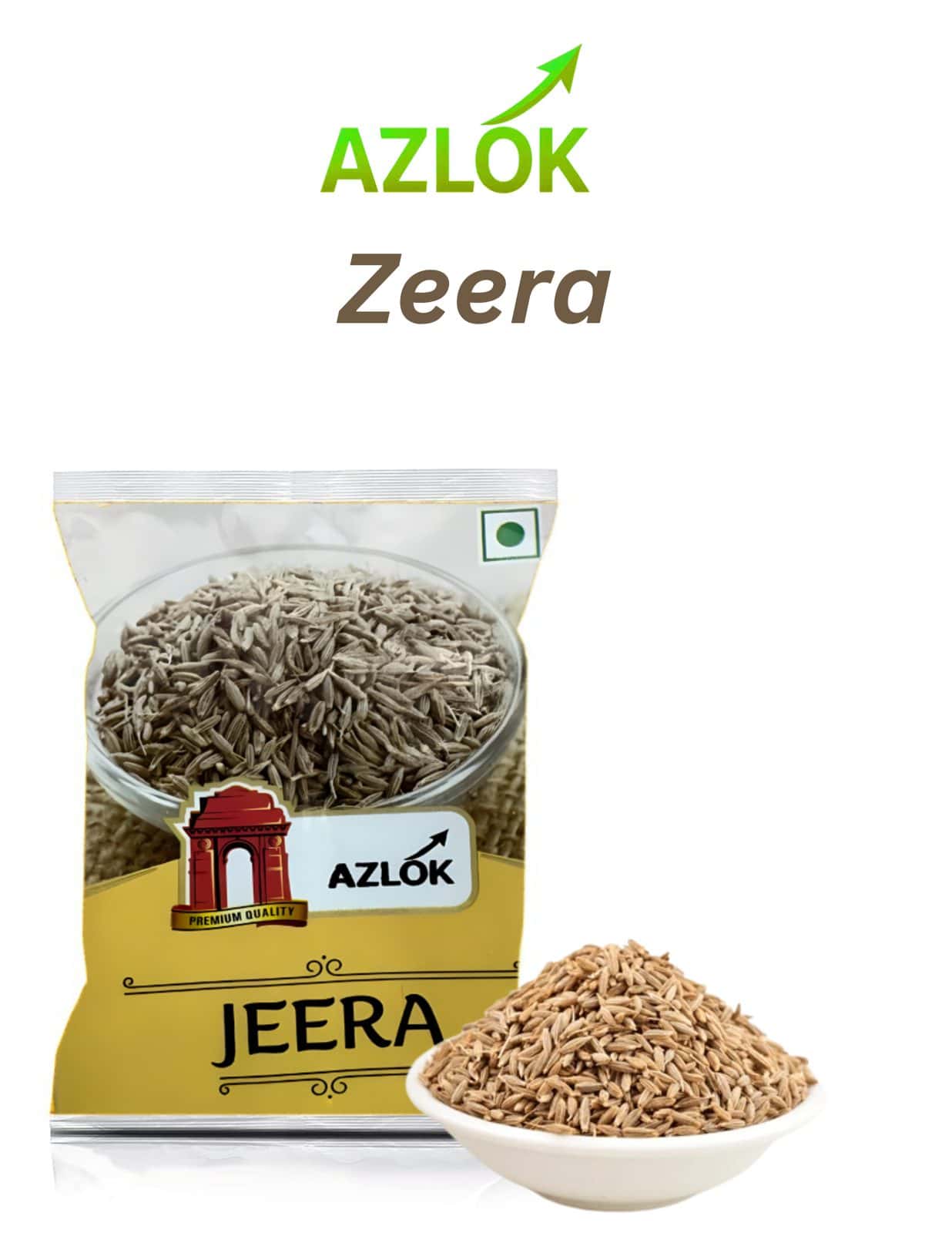
Jeera
Minimum Order: 1 units
Description
Azlok Jeera (whole cumin seeds) is a staple Indian kitchen spice with a warm, earthy aroma and slightly bitter flavour. Sourced and packed by Azlok, these seeds are ideal for tadka, curries, rice dishes, spice blends, and digestive home remedies. Each 99 ₹ pack delivers clean, bold cumin at everyday value.
History & Discovery
Cumin (Cuminum cyminum) has been a prized spice since ancient Egypt, found in the tombs of Pharaohs as a symbol of preservation and purity. It traveled through the Mediterranean and was recorded in Sanskrit as 'Jiraka,' meaning 'that which helps digestion.' The Romans used cumin as a substitute for black pepper, and its trade flourished during the Silk Road era.
Scientific & Medicinal Importance
Jeera is the dried fruit of Cuminum cyminum, a small annual herb of the Apiaceae family, the same family as coriander, fennel and ajwain. What we call a seed is botanically a split fruit (mericarp). It is elongated, about 4–6 mm long, greyish-brown, with fine lengthwise ridges. Its warm, earthy and slightly bitter character comes mainly from a volatile essential oil. The main aroma compound is cuminaldehyde, along with terpenes such as gamma-terpinene, p-cymene and beta-pinene. The seeds also contain fixed (fatty) oil, protein and dietary fibre. These aroma compounds dissolve readily in hot fat. That is why jeera crackles and turns fragrant within seconds in a tadka. Dry roasting gives a deeper, nuttier note. Whole seeds hold their volatile oil far longer than ground cumin, which loses aroma quickly once exposed to air, light and heat.
Ayurvedic and Traditional Uses
Jeera has been part of Ayurvedic practice for centuries. Classical texts list it under the Sanskrit names Jiraka and Ajaji, and they describe more than one type, including white cumin (shukla jiraka) and black cumin (krishna jiraka). In Ayurvedic terms it is traditionally classed as a warming spice with a pungent taste. In many Indian households, jeera has long been part of everyday food traditions more than any formal remedy. Roasted jeera stirred into buttermilk, a pinch in dal, or a few seeds simmered in water after a heavy meal are habits passed down through generations. These customs reflect how closely the spice is tied to Indian home cooking. If you have a health concern, speak to a qualified practitioner rather than relying on traditional practices.
Modern-Day Applications & Benefits
In today's Indian kitchen, whole jeera is most often the first thing to go into hot ghee or oil. When the seeds crackle and darken slightly, they release a nutty aroma that forms the base of dal tadka, jeera rice, sabzis and khichdi. Dry-roasted and ground, it becomes bhuna jeera powder for raita, chaas, chaat and jaljeera. It is also a core ingredient in garam masala, sambar powder and many other home spice blends. Beyond the home, cumin is widely used by small food brands in masala mixes, namkeen, pickles, breads and ready-to-cook packs. Cumin also features in Mexican, Middle Eastern and North African cooking, in dishes like hummus, falafel and chilli. For best flavour, buy whole seeds and grind small batches as needed.
Why Azlok's Version is Trusted Today
Azlok Jeera (Cumin Seeds) are triple-cleaned and graded for premium purity. Each seed bursts with authentic aroma, ensuring freshness in every dish. Packed with care, Azlok Jeera brings home the traditional flavor and 'modern' hygiene — a trusted choice for anyone searching for the best quality cumin seeds online.
Frequently asked questions
What makes Azlok Jeera premium quality?
Our cumin seeds are sourced from the best Indian farms and cleaned multiple times to ensure strong aroma and authentic flavor.
How can I use cumin seeds in daily cooking?
Jeera can be tempered in oil for curries, dal, and vegetables, or roasted for raita, masala rice, and snacks.
Why is cumin important for digestion?
Cumin contains natural digestive enzymes that improve metabolism and reduce bloating.
How do I store cumin seeds to retain freshness?
Store in an airtight container in a cool, dry place away from humidity and direct sunlight.
How do I make roasted jeera powder at home?
Heat a dry, heavy pan on low to medium flame and add the jeera. Stir continuously for 2-4 minutes until the seeds turn a shade darker and smell nutty. Do not let them blacken. Spread them on a plate to cool fully, then grind them in a mixer. Store the powder in an airtight jar and use it within a few weeks for the best aroma.
Specifications
How to use Jeera
Guides covering uses, dilution, safety and storage.
- Cumin Seeds (Jeera): The Spice That Decides Whether Your Tadka Works
- Cumin (Jeera) Flavour Oil: A Cook's Guide to That Warm, Earthy Punch
- 5 Spice Flavour Oil Sample Kit: A Maker's Guide to Cardamom, Cinnamon, Clove, Cumin and Garam Masala
- Coriander Powder (Dhaniya): The Quiet Spice That Holds Indian Gravies Together