


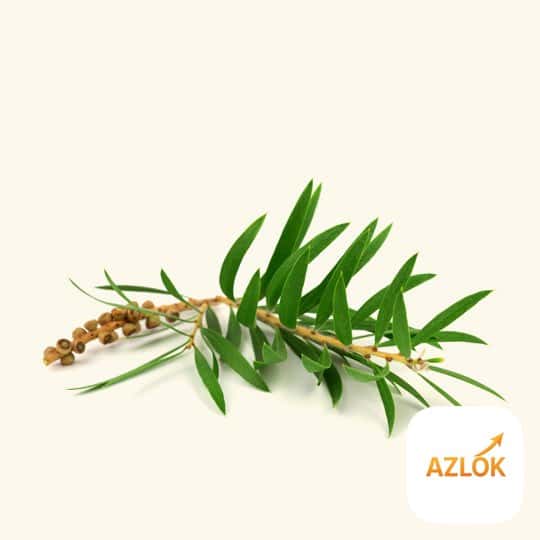
Cajeput Essential Oil
Minimum Order: 1 units
Description
Cajeput Essential Oil is steam-distilled from the leaves and twigs of Melaleuca cajuputi, yielding a colourless liquid with a fresh, camphorous, slightly fruity aroma. It is widely used for respiratory relief, acne-prone skin care, and muscle pain. CAS# 8008-98-8. Available from Azlok in sizes from 50 g to 25 kg.
History & Discovery
Cajeput oil comes from Melaleuca cajuputi, a tree native to the islands of Southeast Asia and parts of northern Australia. Its name is taken from the Malay 'kayu putih', meaning 'white wood', a reference to the tree's pale, papery bark that peels away in thin layers. In Indonesia the oil is still known as minyak kayu putih, and the Maluku islands, Buru in particular, have long been associated with its distillation. European traders, especially the Dutch, came across the oil in the seventeenth century and shipped it back along the spice routes. Over time it became a familiar item in apothecary shops in Europe and a common household oil across the Malay world. Today it is distilled in Indonesia, Vietnam and nearby regions, and reaches India mainly through trade.
Scientific & Medicinal Importance
Cajeput essential oil is obtained by steam distillation of the fresh leaves and twigs of Melaleuca cajuputi, a member of the myrtle family (Myrtaceae). It is closely related to tea tree and niaouli oils, which come from other Melaleuca species. The oil is a thin, mobile liquid, colourless to pale yellow, sometimes with a faint greenish tint, and has a fresh, camphorous aroma with a soft fruity edge. Its main component is 1,8-cineole (also called eucalyptol), which gives it a scent similar to eucalyptus. Other constituents commonly reported include alpha-terpineol, limonene, terpinolene and caryophyllene, though the exact profile varies with origin and harvest. Like other essential oils it is volatile, does not mix with water, and dissolves in alcohol and carrier oils. Its CAS number is 8008-98-8.
Ayurvedic and Traditional Uses
Cajeput is not native to India, so it does not have the long textual history of herbs grown here. It arrived through centuries of trade with Southeast Asia, and in that region it has a firm place in folk practice. In Indonesia, small bottles of minyak kayu putih are kept in many homes and are part of the wider jamu tradition of household herbal preparations. In India, cajeput oil found its way into traditional balms, rubbing oils and aromatic household blends, often alongside camphor, eucalyptus and mint. It has been used in such preparations mainly for its strong, cooling-feeling scent. When reading older references, it is best to see them as cultural history rather than guidance; any use on the body today should follow modern safety practice.
Modern-Day Applications & Benefits
Today cajeput oil is used mostly for its clean, camphorous fragrance. A few drops in a diffuser give a fresh, airy scent to a room. Formulators add it to balms, massage oil blends and roll-ons for its aroma, and soap and candle makers use it as a bright top note. It also appears in fragrance blends for homemade cleaning sprays and floor washes. It pairs well with eucalyptus, rosemary, peppermint, lavender, lemon and tea tree oils. For anything applied to skin, always dilute cajeput oil in a carrier oil such as coconut, almond or jojoba, and do a patch test first. It is for external use only; keep it away from the eyes, face of young children and pets. Consult a doctor before use if pregnant, breastfeeding or on medication.
Why Azlok's Version is Trusted Today
Azlok
Frequently asked questions
How should I dilute cajeput oil before applying it to skin?
Dilute cajeput essential oil to 1–2% in a carrier oil such as coconut or jojoba oil before topical use. For 10 ml of carrier oil, use 2–4 drops of cajeput oil. Always do a patch test on a small area first.
Is cajeput essential oil safe during pregnancy?
Pregnant women should consult a qualified doctor before using cajeput essential oil. As a general precaution, most essential oils are not recommended for use during the first trimester without medical guidance.
What essential oils blend well with cajeput oil?
Cajeput oil blends well with eucalyptus, rosemary, and thyme essential oils. These combinations are popular in chest rubs, diffuser blends, and muscle pain formulations.
What is the shelf life and storage requirement for cajeput essential oil?
Cajeput essential oil has a shelf life of approximately 2 years. Store it in a cool, dark place in a tightly closed container, away from direct sunlight and heat. Keep out of reach of children.
How is cajeput oil different from tea tree and eucalyptus oil?
All three have a fresh, camphorous character, but they come from different plants. Cajeput is distilled from Melaleuca cajuputi, a close relative of tea tree. Its aroma is softer and slightly fruity, while eucalyptus smells sharper and tea tree more herbaceous and earthy. Formulators often choose cajeput when they want a clean, bright top note that feels a little gentler in a blend.
Specifications
How to use Cajeput Essential Oil
Guides covering uses, dilution, safety and storage.