

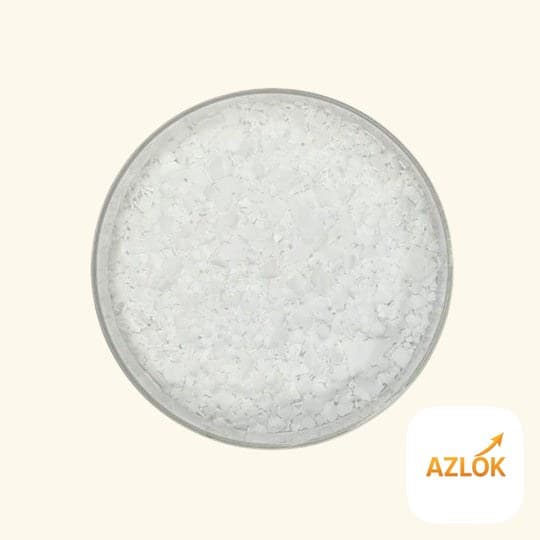

Cetyl Alcohol (Ginol 16)
Minimum Order: 1 units
Description
Cetyl Alcohol (Ginol 16) is a vegetable-derived fatty alcohol used as an emollient, emulsifier, thickener, and mild surfactant in skincare and haircare formulations. Sourced from coconut oil, it appears as odourless white flakes with 95% purity. Suitable for creams, conditioners, shampoos, and body washes.
History & Discovery
Cetyl alcohol was first isolated in 1817 by the French chemist Michel Chevreul when he heated spermaceti—a waxy substance found in sperm whale oil—with potassium hydroxide. The name comes from the Latin 'cetus' (whale). For much of the 19th and early 20th century, cetyl alcohol was sourced from marine mammals. As ethical and sustainability concerns grew, the cosmetics industry shifted to plant-based sources, primarily palm and coconut oil, which are now the dominant raw materials globally. Today, Ginol 16 is the trade designation for high-purity cetyl alcohol (hexadecan-1-ol) manufactured from coconut oil. India has become a significant producer given its abundant coconut oil supply, and Azlok sources an industrial-grade product with 95% purity (CAS 36653-82-4) suited for cosmetic and personal-care manufacturing.
Scientific & Medicinal Importance
Cetyl alcohol (C16H34O, molecular weight 242.44 g/mol) is a long-chain saturated fatty alcohol. Unlike short-chain alcohols such as ethanol, it does not dry or irritate skin; instead it forms a protective film on the skin surface, reducing transepidermal water loss. Its melting point sits around 49–50 °C, making it solid at room temperature and easy to handle as flakes, yet it melts readily into warm emulsion batches. In formulation, cetyl alcohol performs multiple roles: as an emollient it softens skin and hair; as a co-emulsifier it stabilises oil-in-water and water-in-oil emulsions; as a thickener it increases the viscosity of creams and lotions; and it contributes mild surfactant activity. Its HLB value of 15 makes it suited for oil-in-water systems. It is soluble in ethanol and oils but insoluble in water alone, so it is always added to the oil phase during hot-process emulsification. Flash point is 110 °C and boiling point 344 °C, indicating good thermal stability during standard manufacturing.
Modern-Day Applications & Benefits
Cetyl alcohol is one of the most widely used functional ingredients in modern cosmetic manufacturing. It is an approved ingredient under EU Cosmetics Regulation and is listed in the INCI dictionary as 'Cetyl Alcohol'. It is commonly found at concentrations of 1–5% in leave-on products such as moisturisers and hair serums, and up to 8–10% in rinse-off conditioners where a thicker texture is desired. For DIY formulators and small cosmetic businesses in India, Azlok offers Ginol 16 in pack sizes from 100 g up to 20 kg, making it accessible whether you are testing a new recipe or running a production batch. Typical use: melt into the oil phase at 70–75 °C, then combine with the water phase to form a stable emulsion. Store in a cool, dry place away from direct sunlight; shelf life is 24 months from manufacture. Always work in a well-ventilated area and avoid inhaling fine dust when handling the flakes.
Why Azlok's Version is Trusted Today
Azlok
Frequently asked questions
What is cetyl alcohol and is it safe for sensitive skin?
Cetyl alcohol is a fatty alcohol derived from vegetable oils (coconut oil in this case), not a drying alcohol like ethanol. It is widely regarded as non-irritating and is commonly used in products formulated for sensitive skin. However, a small number of people may experience reactions; a patch test before full use is recommended.
At what percentage should I use cetyl alcohol in a cream or lotion?
For light lotions and moisturisers, use 1–3%. For thicker creams or body butters, 3–5% is typical. Hair conditioners may use up to 8–10% for added slip and thickness. Always add it to the oil phase and heat to 70–75 °C before combining with the water phase.
Is Ginol 16 the same as cetyl alcohol?
Yes. Ginol 16 is a trade name for cetyl alcohol (hexadecan-1-ol, CAS 36653-82-4) with a carbon chain length of 16. The '16' in the name refers to this C16 chain. It meets standard cosmetic-grade specifications at 95% purity.
How should I store cetyl alcohol flakes and what is the shelf life?
Store in a sealed container in a cool, dry place away from direct sunlight and heat sources. The shelf life is 24 months from the date of manufacture. Avoid moisture ingress, which can promote microbial growth in finished formulations.
Can cetyl alcohol be used in hair care products?
Yes. Cetyl alcohol is a common ingredient in hair conditioners, deep conditioners, and hair masks. It coats the hair shaft, reduces friction, improves detangling, and adds softness. It is particularly effective in rinse-off conditioners at 4–10%.
Specifications
Documents
Safety data sheet not yet published for this product — request one below and we will email it.